


More news on this day
Rail passengers are seeing services resume after a security alert led to the full evacuation of a major train station, with the incident now declared over and transport operators beginning the process of restoring normal operations.
Get the latest news straight to your inbox!
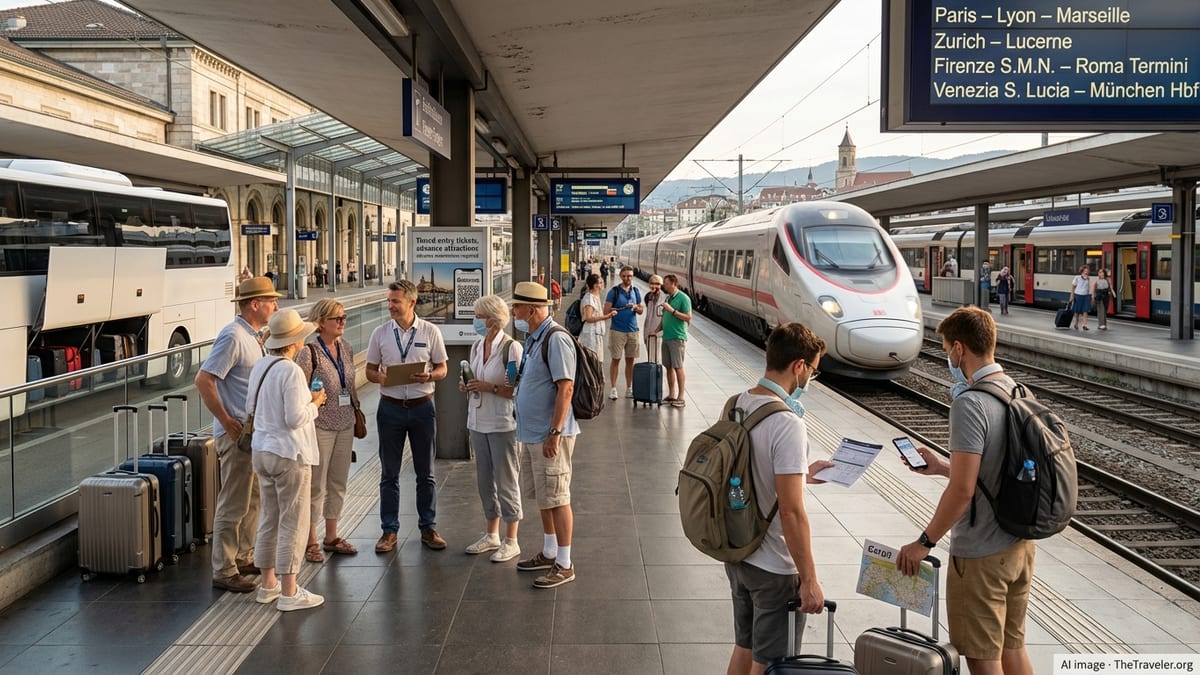
Alert lifted and station reopened to passengers
According to early reports, the incident began when a suspicious item was identified within the station complex, prompting staff to initiate a full evacuation and suspend rail traffic. Security protocols were put into effect in minutes, clearing platforms and concourse areas while trains were held outside the station or diverted to nearby hubs.
Publicly available information indicates that specialist teams assessed the scene before confirming that the item did not present an ongoing threat. Once the all clear was given, access to the building was progressively restored, with entry points reopening in stages and rail operators allowed to begin moving trains back through the affected tracks.
While the alert has formally ended, passengers are being advised to anticipate knock on effects for several hours. Trains that were held, diverted or canceled during the peak of the disruption are being worked back into the timetable, and operators are warning that crowding and altered stopping patterns remain possible as traffic is normalized.
Initial assessments suggest that no injuries were reported in connection with the evacuation itself, and most travelers were able to leave the station area on foot or via alternative transport options while the response unfolded.
Impact on rail operations and regional travel
The evacuation forced an immediate halt to departures and arrivals, creating a cascade of disruption across the wider rail network. Services already on approach to the station were held at signals outside the city, redirected to secondary terminals or terminated short of their planned final stop, affecting both local commuters and long distance travelers.
Rail planners responded by adjusting control room priorities, turning trains at intermediate stations and using available sidings to manage rolling stock. This approach kept some level of service moving on parallel routes, but led to extended journey times and required many passengers to change trains more than once to reach their destinations.
Reports indicate that connecting services, including regional and cross border trains, were among the most affected. Some intercity departures were canceled outright, while others departed from different platforms or neighboring stations to keep longer distance links open. Travelers were urged to check station departure boards and operator announcements frequently, as service patterns shifted throughout the day.
Urban transit systems that feed into the main rail hub, such as metro, tram and bus routes, also experienced heavier than usual loads as passengers diverted away from the closed station. In several cases, local authorities encouraged travelers to consider walking short central segments or using alternative corridors to ease pressure on interchanges closest to the incident site.
Traveler experience during the evacuation
Accounts shared via social media describe an orderly but sudden evacuation, with announcements instructing passengers to leave platforms, retail zones and ticket halls immediately. Many travelers reported being guided toward street level exits and nearby public squares, where they waited for updates or made arrangements to continue their journeys using taxis, ride hailing services or local buses.
Some visitors unfamiliar with the city found it challenging to navigate around road closures and temporary cordons that were established around the station precinct. Wayfinding signs and digital journey planners helped many locate alternative hubs, but crowding on sidewalks and at bus stops was a recurring theme as the response continued.
Hotel and tourism providers in the surrounding area noted a spike in last minute inquiries from travelers facing missed connections or late night arrivals. In several instances, accommodation bookings were extended or rebooked so that guests who could not continue their journeys on the same day had somewhere to stay while they waited for rail services to stabilize.
Despite the inconvenience, publicly available accounts suggest that the majority of passengers complied with instructions and prioritized safety, with many expressing appreciation online that the alert ultimately ended without serious incident.
Security protocols and evolving threat awareness
Transport security guidance for major rail hubs places strong emphasis on rapid decision making when a potential threat is identified, even when it is likely to prove a false alarm. Recent technical material on public transport safety notes that evacuations and temporary closures are disruptive by design, but are considered a necessary precaution in crowded locations where any uncertainty could have serious consequences.
Rail operators in Europe and North America have over recent years updated incident playbooks to reflect evolving threat assessments and technological tools. Many stations now combine visible measures, such as bag checks and patrols, with less visible systems including surveillance cameras, remote monitoring and real time coordination between station control rooms and wider transport networks.
False alarms and security alerts that resolve without injury can still offer valuable lessons. Reviews typically examine how quickly information flowed between station staff, rail controllers and local agencies, how clearly passengers understood public address messages, and whether signage or layout contributed to bottlenecks during the evacuation.
In this latest case, transport analysts are likely to look closely at how long it took from the discovery of the suspicious item to the initial evacuation, when trains were first halted, and how decisions were communicated to operators running services into the affected hub from other regions.
What rail passengers should expect next
With the alert over and the station reopened, the immediate priority for rail operators is to return services to a predictable pattern while keeping passengers informed about remaining disruptions. This typically involves gradually reintroducing canceled trains, turning back services to their usual termini and rebalancing rolling stock so that later departures are not affected by equipment being out of position.
Travelers planning to use the station over the next 24 hours can expect timetables to remain fragile, particularly during peak commuting periods. Trains may be busier than usual as those who postponed journeys attempt to travel, and some services may still run with altered stopping patterns or shorter formations than scheduled.
Passenger advocates often recommend allowing extra time for transfers after a major disruption, especially for those heading to airports, cruise terminals or time sensitive events. Where possible, flexible tickets, seat reservations and travel insurance policies can help reduce the stress associated with missed connections or last minute changes to plans.
For the broader travel industry, the incident serves as another reminder that security related disruptions, even when resolved safely, can have far reaching effects on itineraries. Tour operators, corporate travel planners and independent travelers alike continue to factor such risks into their planning, balancing the convenience of rail travel with the need to remain adaptable when unexpected alerts bring stations to a standstill.