


More news on this day
More than 120 EasyJet passengers were left stranded at Milan Linate Airport in mid-April after long security and border control queues caused them to miss their Manchester flight despite arriving at the terminal in what many considered reasonable time.
Get the latest news straight to your inbox!
Passport Control Bottleneck Turns Routine Flight into Ordeal
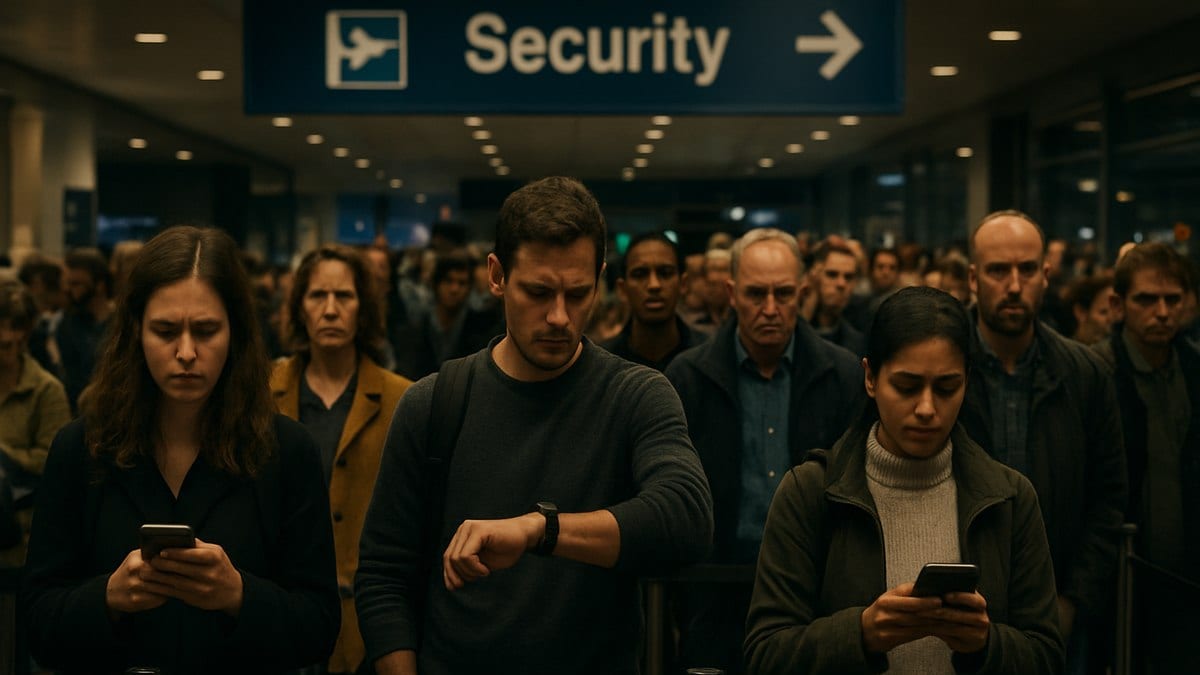
Reports from passengers and published coverage indicate that the disruption unfolded on a Sunday in mid-April 2026, when travelers bound for Manchester arrived at Milan Linate to find passport control heavily congested. Queues at non-Schengen checks reportedly stretched for hours, with lines barely moving as departure time approached.
While some passengers managed to clear checks and board, more than 120 did not reach the gate before boarding closed. The EasyJet service to Manchester departed with dozens of empty seats, leaving the majority of ticketed passengers stuck behind border control barriers with no way to reach the aircraft in time.
Accounts shared in news reports and online forums describe travelers arriving at the airport one and even two hours before departure, only to become trapped in slow-moving lines. For many, airline security screening was not the issue; instead, the bottleneck emerged at passport control, where officers were dealing with both routine checks and new biometric registration requirements for non-EU nationals.
The result was a breakdown of what is typically a tightly sequenced departure process. Even as boarding announcements were made, many passengers were physically unable to reach their gate. Once boarding closed, they emerged from passport control to discover their flight had already left.
New EU Entry Rules Add Strain to Milan Linate Operations
The disruption at Linate coincided with the first weeks of full operation for the European Union’s Entry/Exit System, a new framework that records biometric data and travel movements for many non-EU nationals. Publicly available information shows that the system is intended to strengthen border controls and reduce reliance on manual passport stamping.
In practice, early implementation has significantly lengthened first-time processing for affected travelers. At Milan Linate, UK passengers and other non-EU nationals were among those required to complete biometric enrollment, including fingerprint scans and facial images, in addition to standard document checks.
Travel advocacy sites and aviation commentators note that the combination of limited passport booths, high weekend traffic, and the more complex checks created a perfect storm. On the day of the incident, these pressures appear to have overwhelmed the terminal’s non-Schengen processing capacity, leaving border officers unable to move passengers through quickly enough to protect scheduled departures.
The situation stands in contrast with Milan Linate’s reputation for relatively efficient security screening, supported in recent years by modern scanners and streamlined cabin baggage rules. The incident suggests that while checkpoint technology has reduced traditional security queues, new layers of border control can still trigger severe disruption if staffing and infrastructure are not closely aligned with policy changes.
Stranded Travelers Face Costly Rebookings and Overnight Stays
For the more than 120 passengers who missed the Manchester flight, the immediate problem was not only the loss of their original journey but also the uncertainty of how and when they would reach the United Kingdom. Reports indicate that some travelers were able to rebook on later services, while others faced days of delay before securing alternative flights.
Accounts gathered by consumer-focused outlets describe travelers paying out of pocket for additional hotel nights, meals, and replacement tickets. Some passengers reportedly spent several days in Milan waiting for available seats on subsequent services at acceptable prices, with costs rising quickly due to last-minute demand.
Information published by passenger rights organizations highlights that the intersection of government-controlled border processing and airline operations can leave travelers in a grey area. While European rules outline compensation and assistance in many disruption scenarios, not all delays linked to external security processes are treated in the same way as airline-caused cancellations or schedule changes.
In this case, publicly available reports suggest a patchwork of outcomes, with some travelers obtaining rebookings at no additional fare and others shouldering much of the financial burden themselves. The inconsistency has intensified calls from consumer advocates for clearer guidance when state-managed procedures outside the airline’s direct control prevent passengers from reaching the gate.
Airlines and Airports Confront New Operational Risks
The Milan Linate episode has quickly become a reference point in a wider European discussion about how airlines and airports adapt to the Entry/Exit System. Industry analysts note that carriers face increasingly difficult decisions when departure times collide with long security and border queues.
Delaying a flight to wait for passengers held at passport control can ripple across network schedules, affecting onward rotations and crew duty limits. Departing on time, however, leaves large numbers of travelers stranded through no direct fault of their own. The Milan case illustrates how that choice can result in a nearly empty aircraft leaving behind the majority of its booked passengers.
Airport operators, meanwhile, are under pressure to adjust staffing and infrastructure. Operational documents for Milan Linate indicate that the terminal is designed to handle thousands of passengers per hour through its security filters, but those capacity estimates assume a certain rhythm of processing that may not reflect the added steps of biometric enrollment.
Experts in airport planning argue that short-term mitigation may require dedicated lanes for already-enrolled passengers, real-time queue monitoring, and more conservative guidance on minimum arrival times for non-EU travelers. Without such measures, they warn that similar incidents could recur at other busy European hubs during peak weekends and holiday periods.
What the Milan Incident Means for Future Travelers
In the aftermath of the Linate disruption, travel advisories and consumer publications have begun urging passengers to treat the early months of the Entry/Exit System as a transition period that carries added risk. Many now recommend arriving significantly earlier than airlines’ standard guidance for flights departing from or connecting through busy European airports.
For travelers departing Italy, especially non-EU nationals, this means allowing additional time not only for check-in and security screening but also for extended queues at passport control. The Milan case suggests that even well-prepared passengers who follow typical advice may still encounter bottlenecks if traffic surges and staffing levels do not keep pace.
The incident has also prompted wider reflection on communication inside terminals. Passengers at Linate have reported limited real-time information about the impact of border queues on their departure, leaving many unsure whether their flight would be held, delayed, or allowed to leave without them. More prominent warnings, dynamic signage, and better coordination between border control and airline staff are among the steps observers say could reduce confusion and help travelers make quicker decisions while there is still time to reach the gate.
As Milan Linate and other European airports move deeper into the peak travel seasons of 2026, the experience of the stranded EasyJet passengers is likely to serve as a cautionary tale. It underscores how a single pressure point in the departure process can cascade into large-scale disruption when policy, technology, and on-the-ground operations fall out of sync.