


Seven Mile Beach on Grand Cayman is famous for its wide sweep of pale sand and calm, clear Caribbean water, but snorkelers know there is one stretch that really stands out. Cemetery Beach, at the quieter northern end, hides one of the island’s best shore-accessible reefs just offshore. This guide walks you through exactly how to snorkel Cemetery Beach, where to rent gear along Seven Mile Beach, what marine life you are likely to see, how conditions change through the year, and when it makes more sense to join a boat tour instead of swimming from shore.
Get the latest updates straight to your inbox!
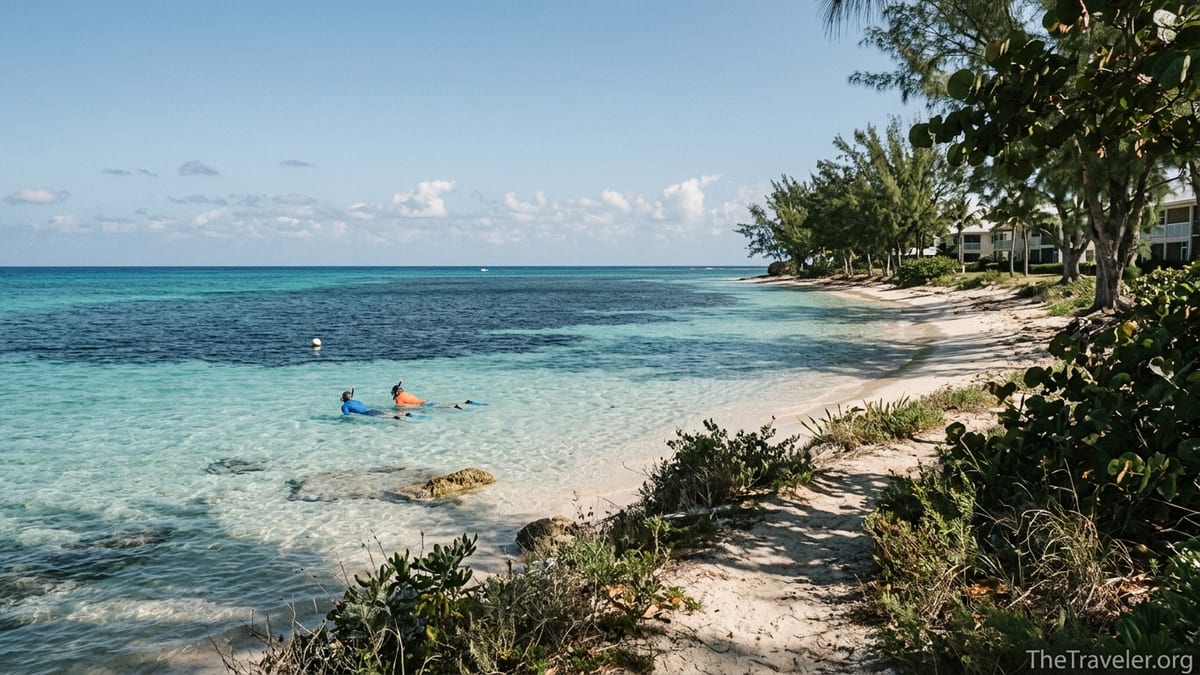
Getting Oriented: Seven Mile Beach and Cemetery Beach
Seven Mile Beach runs along the west coast of Grand Cayman, from just north of George Town up toward West Bay. In reality it now measures closer to 5.5 miles because of natural erosion, but the classic name has stuck. Most of the beachfront is lined with resorts and condos, yet the water line remains public, so you can walk and enter the sea almost anywhere. For snorkeling, though, only a handful of sections have real reef and rock that attract fish. The most reliable stretch is Cemetery Beach at the far northern end, just beyond a small local cemetery that gives the area its name.
Cemetery Beach feels very different from the busier central strip in front of the large hotels. There are no big bars or loud speakers, just a narrow sand path through sea grape trees that opens onto powdery sand and typically clear water. Locals often park in the small lot across from the cemetery and carry a cooler and mask down for a quiet afternoon swim. Because there are fewer amenities and no lifeguards, it is important to arrive prepared: bring your own water, reef-safe sunscreen, and at least basic snorkel gear, even if you plan to rent higher-end equipment elsewhere on Seven Mile Beach.
The main reason snorkelers target Cemetery Beach is the offshore reef known as Cemetery Reef. It sits a short but meaningful swim off the beach, generally in water that ranges from about 8 to 15 feet deep. The reef is a mix of scattered coral heads and small ridges rather than a single solid wall, which means you can explore different pockets of life once you find the first darker patches of water. For confident swimmers, it offers some of the best coral and fish density you can reach from the sand anywhere along Seven Mile Beach.
Because this is a natural reef in an open-water setting, conditions are not identical every day. Trade winds from the east usually leave the west-facing Seven Mile coast relatively calm, especially in winter and spring, but occasional westerly winds or passing squalls can stir up chop and reduce visibility. Before committing to a long swim toward the reef, stand at the water’s edge for a few minutes and look for a gently rippled surface and clear, turquoise color that lets you see the sand patterns several meters out.
How to Snorkel Cemetery Beach from Shore
Reaching the best part of Cemetery Reef requires a bit of navigation. From the sand entrance in front of the cemetery, most experienced visitors either swim straight out to the nearest set of dark patches or walk 5 to 10 minutes north along the beach until the buildings thin out and then enter there. Once in the water, they aim for the first white mooring buoys and dark shapes beneath the surface, which indicate coral heads. Expect roughly a 5 to 10 minute swim for a reasonably fit adult moving at a relaxed but steady pace.
As you leave the shallows, the depth drops gradually and patches of turtle grass and rubble give way to clusters of coral. You will usually first encounter low coral heads and soft fans with a scattering of small fish, then, as you continue out or slightly north, the formations grow taller and denser. It is better to take your time and zigzag over the sand channels, scanning for fish and rays, rather than sprinting straight for the farthest point. If at any stage you feel winded or notice the chop building, pause over a sandy patch, float on your back, and decide whether to continue or angle back toward shore.
There is no lifeguard coverage or designated snorkel trail at Cemetery Beach, so you must treat this as open-water swimming. Conditions that confident swimmers barely notice can feel intimidating for newer snorkelers. A simple practical check is to stand chest-deep in the shallows and see how easily you can swim 20 to 30 strokes out and back without touching the bottom. If that feels stressful, this is not the day to attempt a 200 to 300 yard swim to the outer reef. It may be better to stay inshore over the scattered rocks and seagrass, or choose a different, more protected site like Smith Cove on another day of your trip.
Traffic from small snorkel tour boats is another reason to stay alert. Operators sometimes drop guests at mooring buoys along Cemetery Reef during calm mornings. From the surface this looks like a few boats idling beyond the swimmers, but underwater you may find groups of life jacketed snorkelers and divemasters leading them along the coral. Give them space and avoid swimming too close to any boat’s bow or stern, where visibility for the captain is worst. A bright snorkel vest or rash guard helps you stand out in the water and makes it easier for skippers to spot shore-based snorkelers.
Water Clarity, Seasons, and When Conditions Are Best
The overall water clarity on Seven Mile Beach is one of Grand Cayman’s biggest assets. Even on an average day, visibility at Cemetery Reef often ranges from 40 to 60 feet, enough to see the sand channels and coral mounds clearly beneath you. On exceptional calm days, particularly in the drier winter months from December to April, you may enjoy Caribbean postcard conditions, with sunlight shafts piercing 70 feet or more of clear blue. Turbidity usually increases slightly after heavy rain or strong wind, which stirs up the fine sand bottom close to shore.
Seasonally, winter and early spring are generally the most reliable for smooth seas along the west coast, though cold fronts that locals call “northers” can briefly flip the pattern and send swells onto Seven Mile Beach. During those spells the south and east coasts often become calmer alternatives, and many local operators will steer snorkel trips away from Cemetery Beach. Summer brings warmer water, often around the mid 80s Fahrenheit, and glassy mornings, but it also carries the risk of thunderstorms and, in some years, floating mats of sargassum seaweed on other coasts of the island. The west side around Seven Mile is usually less affected than the eastern shorelines, but conditions can vary week to week.
Time of day also shapes your experience. Mornings between about 8 and 11 a.m. often combine the flattest water with strong overhead light, which penetrates to the reef and brings out the natural color of corals and fish without needing artificial filters. Afternoon sun can still be beautiful, but a stronger breeze develops on many days, building slight chop that makes long surface swims more tiring. If you are planning your first visit to Cemetery Beach and want to minimize variables, choose a calm morning near mid-tide and avoid days when large squalls are visible out at sea.
Regardless of the month, make a habit of checking conditions from shore before committing. Watch how much the palm fronds and sea grape leaves are moving. Look at how waves break on any moored boats offshore. If you arrive to find whitecaps, murky water, or a strong current pushing along the beach, it is better to enjoy a swim in the shallows or relocate to one of the main public areas of Seven Mile Beach instead of insisting on a Cemetery Reef snorkel that day.
Marine Life: What You Can Expect to See
Snorkelers are drawn to Cemetery Reef for its mix of hard and soft coral and the chance to encounter a broad cross-section of Caribbean marine life without boarding a boat. On a typical session you are likely to see schools of blue tang and other surgeonfish moving as a dark cloud across the reef, brightly colored parrotfish grazing noisily on the coral, and bands of sergeant majors hovering in midwater. Near the sand you may spot goatfish sifting with their whisker-like barbels and the occasional southern stingray half-buried except for its eyes and spiracles.
Closer inspection of the coral heads often reveals more cryptic residents. Small hawkfish perch on ledges, while cleaner gobies and shrimp set up stations where larger fish queue briefly to have parasites picked from their scales. In crevices, lobsters and moray eels sometimes peer out, especially if you circle the same coral mound slowly rather than racing across the site. Snorkelers who stay calm and float quietly are also more likely to see turtles. Green turtles occasionally cruise the sand channels, surfacing for air before dipping down again to graze on algae or sponges.
The coral itself varies from massive brain corals and star corals to delicate sea fans and sea rods that sway with the swell. In recent years, parts of the Caribbean have been affected by diseases that stress hard coral, so you may notice areas of bleached or dead skeleton next to healthier patches. Treat every structure as living habitat whether it looks pristine or not. Avoid the temptation to stand on any rock or coral head to adjust your mask or rest. Instead, move to a clear patch of sand in slightly shallower water if you need to regroup.
Larger pelagic sightings are less common this close to shore but do occur. Barracuda sometimes hover motionless just off the reef edge, using their reflective flanks to blend into the water column. They are generally indifferent to snorkelers as long as you do not corner or chase them. On very calm days snorkelers have reported spotted eagle rays gliding along the deeper side of the reef or, more rarely, a nurse shark sleeping under a ledge. These encounters are a bonus rather than a guarantee, so set your expectations around the smaller residents and treat any big-animal sighting as a gift.
Gear: Renting, Bringing Your Own, and What You Really Need
One of the practical advantages of staying along Seven Mile Beach is the sheer number of places to rent snorkel gear. Beach vendors and watersports desks attached to midrange and upscale resorts typically rent mask, snorkel, and fin sets by the day. As of mid 2026, day rates around Seven Mile commonly fall in the approximate range of 15 to 25 US dollars equivalent per person for a basic set, sometimes a little more if you are renting directly from a luxury property. Some companies also offer discounted multi-day rentals that you keep with you at your hotel or condo for the length of your stay.
If you are not staying on the beach, standalone providers near Seven Mile and in George Town rent equipment with flexible pickup, and a few operators will deliver sets to your accommodation for a flat fee. Typical packages include a tempered-glass mask with a silicone skirt, a simple snorkel, and adjustable open-heel fins. When possible, take a few minutes to test the mask seal in the shop by pressing it lightly to your face without using the strap and inhaling through your nose. It should cling for a moment without air leaks. A well-fitting mask matters more than brand names for most casual snorkelers.
Bringing your own mask and snorkel can be worthwhile if you snorkel regularly or are particular about fit and hygiene. Many frequent travelers pack a compact set with short travel fins designed to work well even without heavy kicking. For Cemetery Beach in particular, where you may face a moderate surface swim, full-size fins or efficient travel fins make a noticeable difference in comfort and safety. A lightweight snorkel vest or inflatable belt is also sensible for anyone who is not an especially strong swimmer, adding buoyancy without the bulk of a full life jacket.
Beyond the essentials, a long-sleeve rash guard or thin wetsuit top offers sun protection and slight thermal comfort during longer sessions. Water temperatures in Grand Cayman are warm for most of the year, but after 45 minutes or more in the water some snorkelers start to feel chilled, especially on overcast days. Reef-safe sunscreen, applied well before you enter the sea, helps protect both your skin and the fragile coral ecosystem you are there to see. Consider also a small dry bag or waterproof pouch to secure a car key and a bit of cash, since Cemetery Beach has shade but no formal lockers.
Beginners, Families, and Safety Basics
Cemetery Beach’s combination of beauty and relative remoteness makes it better suited to comfortable swimmers than absolute beginners. The reef’s most vibrant sections lie far enough offshore that you cannot simply stand up if you become tired. There are no lifeguards, and the beach has limited facilities. For many first-time snorkelers, a more forgiving starting point is a busier section of Seven Mile Beach closer to the main public beach, or small coves like Smith Cove further south where rock outcrops and reef sit in shallower, closer-in water with easy exit points.
If you do bring children or novice snorkelers to Cemetery Beach, plan a conservative inshore session. Stay in the shallows over the sand and broken rock where small fish and the occasional ray still appear. Keep everyone within a short swim of where they can stand, and use bright flotation devices like pool noodles or dedicated snorkel vests rather than relying on tired arms. Many families choose to tag-team: one adult swims farther out to sample the reef while the other remains closer to shore with the kids, then they swap.
Standard open-water safety practices apply. Always snorkel with a buddy, carry a visible marker like a brightly colored float or buoy if you are venturing to the outer reef, and agree on a maximum distance from shore before you start. Conditions can change subtly while you are distracted by fish, so check the shoreline frequently to ensure you are not drifting down the coast. If you notice a current pushing you in one direction, swim diagonally toward shore rather than directly against the flow. In the unlikely event that you feel significantly pulled seaward, treat it like a rip: stay calm, float, and angle across it until you feel the pressure ease, then head back to the beach.
Respect for the environment is part of safety too. Do not touch, stand on, or break coral. Avoid chasing turtles or rays, and never feed fish, which can disrupt their natural behavior. Observe local regulations about collecting shells, fishing, and protecting marine parks. On Grand Cayman, protected areas and guidelines are designed to keep popular reefs like Cemetery alive for future visitors. Taking only photos and leaving only bubbles is more than a slogan here; it is a practical way to ensure that your favorite snorkel site remains vibrant year after year.
When a Boat Tour Is the Better Choice
Even strong swimmers sometimes decide that a boat tour is the smarter way to experience Grand Cayman’s best snorkeling, especially if conditions on Seven Mile are not ideal. Guided trips typically shuttle guests directly to offshore reef sites, moor above the coral, and provide flotation devices, supervision, and an easy ladder back onto the boat. If you look out from Cemetery Beach and see chop, whitecaps, or numerous tour boats already moored off the reef, it may be a sign that you would enjoy the day more by booking a spot on a small-group excursion for the following morning.
Boat snorkel trips from Seven Mile Beach and nearby marinas range from quick 2 to 3 hour outings that combine one or two reef stops with a visit to Stingray City, to half-day tours that focus on multiple coral gardens and sometimes a shallow shipwreck. Prices vary by operator and season, but as a rough guide you can expect many shared tours to fall in a ballpark range of 60 to 120 US dollars per adult, with discounts for children. This usually includes snorkel gear, soft drinks, and the services of a guide who points out marine life and helps newer swimmers feel comfortable in the water.
For beginners who find the idea of a long surface swim daunting, a boat-based trip has clear advantages. You enter the water a few steps from the ladder, there is always someone keeping an eye on the group, and if you feel tired or anxious you can simply swim back to the boat and climb out. Families with a mix of skill levels often appreciate this structure, since confident teenagers can drift a little farther under the guide’s supervision while younger children float near the vessel in life jackets.
There is also an environmental argument for using established moorings with licensed operators instead of many separate shore snorkelers standing on fragile reef. Reputable companies anchor only at fixed mooring buoys installed to protect coral and brief guests about not touching or taking anything. If you want to explore more advanced sites like the Kittiwake shipwreck, certain walls, or less visited gardens on the island’s north or east coasts, booking with a recognized operator is not just more convenient, it is effectively the only safe and legal option.
The Takeaway
Cemetery Beach sits at the quieter tip of Grand Cayman’s Seven Mile Beach yet offers some of the liveliest snorkeling you can reach from the sand. Its offshore reef rewards confident swimmers with coral heads, schools of fish, and the occasional ray or turtle gliding through clear Caribbean water. With that reward comes responsibility: no lifeguards, limited facilities, and the need to assess wind, current, and your own stamina honestly before striking out for the outer reef.
Thoughtful planning makes the difference between a forgettable splash and a standout memory. Rent or bring well-fitting gear, choose a calm morning, go with a buddy, and set conservative limits if you are introducing children or nervous swimmers to the water. Use Cemetery Beach for what it does best, as a quiet, more advanced snorkeling outing, and lean on the island’s many boat tours or gentler coves when you want extra support or easier conditions.
Grand Cayman offers more marine experiences than any one trip can cover, from stingray sandbars to dramatic walls. Start with realistic expectations, match your choice of site to your skills, and respect the living reef beneath you, and Cemetery Beach can be a highlight of your time on Seven Mile Beach rather than a challenge. The fish, the clear water, and the soft sand under the sea grapes will take care of the rest.
FAQ
Q1. Is Cemetery Beach suitable for beginner snorkelers?
Cemetery Beach is best for confident swimmers because the main reef lies a significant swim offshore in deeper water with no lifeguard coverage. Absolute beginners usually have a more relaxed introduction at shallower, closer-in sites or on a guided boat tour.
Q2. How far do you have to swim to reach Cemetery Reef from the beach?
The distance varies with your exact entry point, but most snorkelers report a swim in the region of a few hundred yards, or roughly 5 to 10 minutes at a steady, comfortable pace in calm conditions.
Q3. Do I need to bring my own snorkel gear to Seven Mile Beach?
No, you do not have to. Many resorts and independent watersports operators along Seven Mile Beach rent mask, snorkel, and fins by the day or for multiple days, but bringing your own well-fitting mask and snorkel can improve comfort and hygiene.
Q4. What kind of marine life will I likely see at Cemetery Beach?
Common sightings include blue tang, parrotfish, sergeant majors, butterflyfish, and small reef dwellers around the coral heads, plus stingrays on the sand and, with some luck, turtles, barracuda, or eagle rays in deeper sections.
Q5. When is the best time of year to snorkel on Seven Mile Beach?
Calm, clear conditions are possible year-round, but many visitors find winter and early spring particularly reliable for gentle seas and good visibility along the west coast, provided strong cold fronts are not pushing swells onto the beach.
Q6. Are there facilities at Cemetery Beach?
Cemetery Beach offers shade from trees and a simple path to the sand, but it does not have the full set of facilities you find at the main public beach. There are no permanent restaurants or bars on the sand and usually no lifeguards, so plan to bring water and essentials with you.
Q7. Is it better to snorkel from shore or book a boat tour?
It depends on your comfort level and the day’s conditions. Strong swimmers on a calm morning often enjoy the independence of shore snorkeling at Cemetery Beach, while beginners, mixed-ability families, or anyone visiting on a windier day may have a safer, more relaxed experience on a guided boat tour.
Q8. Do I need fins to snorkel at Cemetery Beach?
Fins are highly recommended because of the distance to the outer reef and the possibility of light current. They make swimming more efficient and can be especially important if conditions change or you need to return to shore quickly.
Q9. Is snorkeling at Cemetery Beach safe for children?
The inshore shallows can be suitable for supervised children who stay close to shore, but the outer reef is not advisable for young or inexperienced swimmers. Many families choose easier, more protected sites for kids or join a family-friendly boat tour instead.
Q10. Can I touch or stand on the coral while snorkeling?
No. Coral is fragile, living tissue that is easily damaged by contact. Always keep your body and fins clear of the reef, float horizontally with gentle kicks, and stand only on clear sand if you need to adjust your gear or rest.