


More news on this day
Travel across Asia faced major disruption this week as Guangzhou Baiyun International Airport recorded more than 350 delayed departures and at least 42 cancellations, snarling operations for China Southern, China Eastern, Air China, Hainan Airlines, Shenzhen Airlines and their partners on routes linking China with Japan, South Korea, Malaysia, Qatar, Vietnam and Cambodia.
Get the latest news straight to your inbox!
Weather and Airspace Constraints Trigger Chain Reaction
Operational data and local media reports indicate that a round of intense thunderstorms over the Pearl River Delta, combined with tight airspace constraints, triggered the latest wave of disruption at Guangzhou Baiyun. The airport, one of China’s busiest hubs, has been particularly vulnerable during the early summer storm period, when convective weather often forces ground stops, runway flow restrictions and en route rerouting.
Publicly available airport monitoring dashboards show prolonged holding patterns and ground delays for departures and arrivals around Guangzhou over recent days, consistent with the reported spike in delayed flights. Congestion has been compounded by continuing infrastructure upgrades around Terminal 1 and associated transport links, which have narrowed the margin for schedule recovery when irregular operations occur.
Aviation punctuality statistics for Chinese carriers also point to a period of weaker on time performance in late May and early June, especially at large hub airports such as Guangzhou Baiyun. When combined with localized storms and saturated air corridors, these factors have contributed to the high number of delayed movements and cancellations recorded in the current disruption.
Observers note that the airport’s role as a primary transfer gateway in southern China amplifies the effect of any operational shock. Once departure waves slip by an hour or more, missed connections cascade into subsequent banks of regional and long haul flights, producing a knock on impact that can last well beyond the original weather event.
Major Chinese Carriers Bear the Brunt
Flight tracking platforms and airline schedule data show that China Southern, Guangzhou’s dominant hub carrier, has absorbed a significant share of the delays and cancellations as it operates dense banks of domestic and international services from Baiyun. High frequency shuttle routes to Beijing, Shanghai and key secondary cities have seen multiple late departures, while some rotations have been trimmed to restore network balance.
China Eastern and Air China have also been affected on trunk routes into Guangzhou, with several Beijing and Shanghai flights arriving well behind schedule and forcing rapid turnarounds or rebooking of onward passengers. The disruption has spilled into alliance and codeshare services, affecting carriers that market seats on these flights even when they are operated by Chinese airlines.
Hainan Airlines and Shenzhen Airlines, which maintain sizable domestic and regional networks through Guangzhou and nearby Shenzhen, have reported scattered cancellations and rolling delays across their schedules according to public flight boards. These issues are particularly visible on medium haul services that rely on tight aircraft rotations, where a single extended delay can remove an aircraft from position for the rest of the operating day.
Operational analysts point out that while larger airlines generally have more spare aircraft and crew to recover from disruption, they also run more complex banks of connecting flights through Guangzhou. This makes it harder to protect all itineraries once delays reach the scale seen in the current episode.
Regional Ripple Effects Across Northeast and Southeast Asia
The latest disruption at Guangzhou Baiyun has radiated far beyond southern China, with flights linking the hub to Japan, South Korea, Malaysia, Qatar, Vietnam and Cambodia among those affected. Flight information services show extended delays and schedule changes on routes to Tokyo, Osaka, Seoul, Kuala Lumpur and Hanoi, as well as services to Phnom Penh and other Southeast Asian gateways.
For Japan and South Korea, Guangzhou serves both point to point travelers and a growing flow of transfer passengers connecting deeper into China or onward to Southeast Asia. When departure slots from Guangzhou are curtailed or pushed back by several hours, return sectors to these markets often cannot depart on time, forcing late night arrivals or next day re timings that disrupt crew duty plans.
Regional routes to Malaysia, Vietnam and Cambodia have faced particular pressure because they often operate in tightly packed evening and late night waves that depend on aircraft arriving from Chinese domestic sectors. Once those inbound services are delayed, turnarounds shorten and any additional ground handling issue can result in missed departure windows or cancellations.
Connections to Qatar and other Middle Eastern hubs have also been strained where Guangzhou provides a feed of passengers from across southern and western China. Even when long haul flights operate broadly on time, late arriving domestic and regional traffic has led to higher rates of missed connections and rebooking.
Passenger Experience: Long Queues and Scrambled Connections
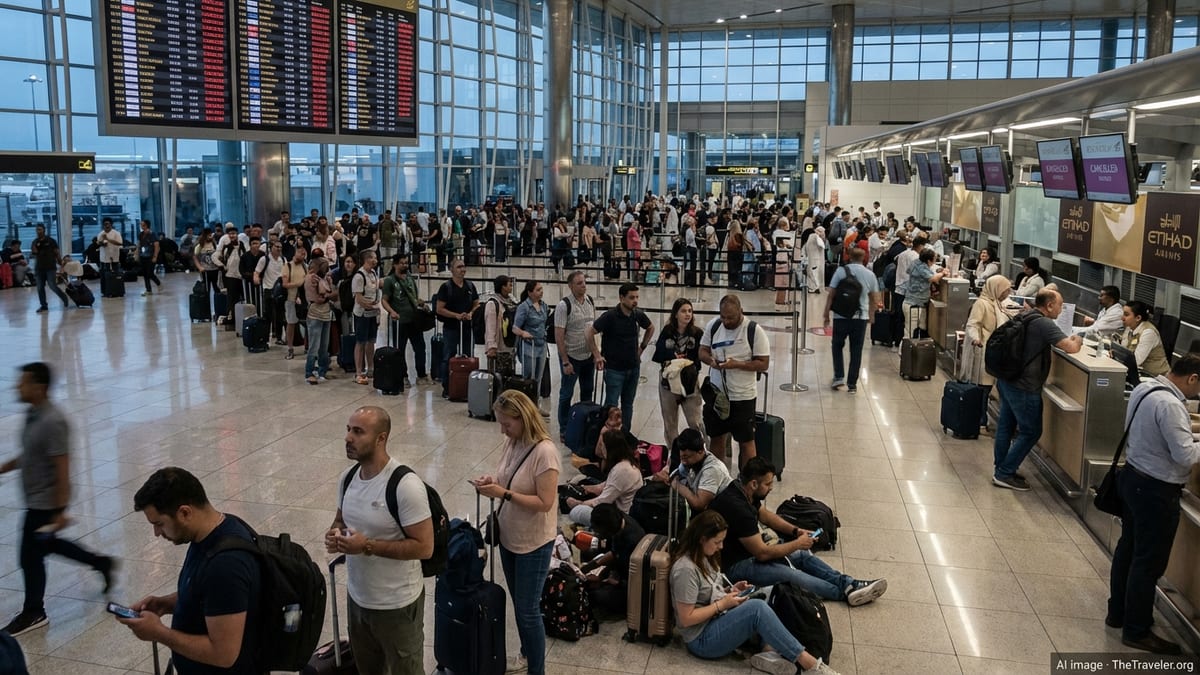
Accounts shared on social platforms and local forums describe lengthy queues at check in and transfer counters in Guangzhou as passengers attempt to rebook missed connections or adjust onward travel plans. With more than 350 delays and dozens of cancellations concentrated over a short period, customer service and ground handling resources have been stretched despite extended operating hours at some counters.
Travelers on multi leg itineraries have reported particular difficulty when connecting between domestic Chinese flights and international services to Japan, South Korea and Southeast Asia. Short scheduled connection times that are manageable on a normal day have proven insufficient amid rolling delays, forcing some travelers to spend additional nights in Guangzhou or their origin city.
Publicly accessible guidance from airline customer service channels reiterates that rebooking policies depend on ticket type and the cause of disruption, with weather related events typically handled differently from controllable operational problems. Passengers have been encouraged in official messaging and public advisories to monitor their booking status online and to use digital tools where possible to avoid the longest lines at airport counters.
Airport information feeds also highlight crowding at security and immigration during peak disruption periods, as wave after wave of delayed flights attempt to depart within compressed time slots. This has reinforced advice for travelers flying from Guangzhou in the coming days to arrive well ahead of normal check in deadlines and to allow extra time for transfer procedures.
Outlook and Practical Advice for Upcoming Travelers
Forecasts indicate that unsettled weather patterns over southern China may persist in the short term, raising the risk of further operational challenges at Guangzhou Baiyun and neighboring airports. While airlines are adjusting schedules and building in additional recovery time where possible, the airport is likely to remain sensitive to afternoon and evening storm systems during the early summer period.
For travelers planning to fly through Guangzhou in the coming days, publicly available travel advisories emphasize the importance of checking flight status frequently, particularly within 24 hours of departure. Experts also recommend selecting longer connection times when booking itineraries that rely on transfers through Baiyun, especially on journeys involving multiple airlines or tight evening curfews at the final destination.
Passengers heading to Japan, South Korea, Malaysia, Qatar, Vietnam and Cambodia from secondary Chinese cities may wish to consider whether alternative routings through other hubs offer greater schedule resilience during periods of repeated disruption. However, capacity constraints and higher seasonal demand can limit options, meaning that flexibility on travel dates and times can be as important as the choice of transit point.
In the medium term, infrastructure enhancements at Guangzhou Baiyun, including runway and terminal upgrades, are expected to support more robust operations and reduce bottlenecks once fully commissioned. Until those improvements are fully integrated into daily scheduling, the latest series of delays and cancellations serves as a reminder that peak season travel through one of Asia’s busiest aviation gateways can quickly be affected by a combination of weather, airspace congestion and complex network dynamics.