


More news on this day
Severe thunderstorms and intense summer downpours are disrupting air travel across multiple regions, with flight tracking and weather data showing rolling delays, diversions and temporary ground stops at major airports over the past two weeks.
Get the latest news straight to your inbox!
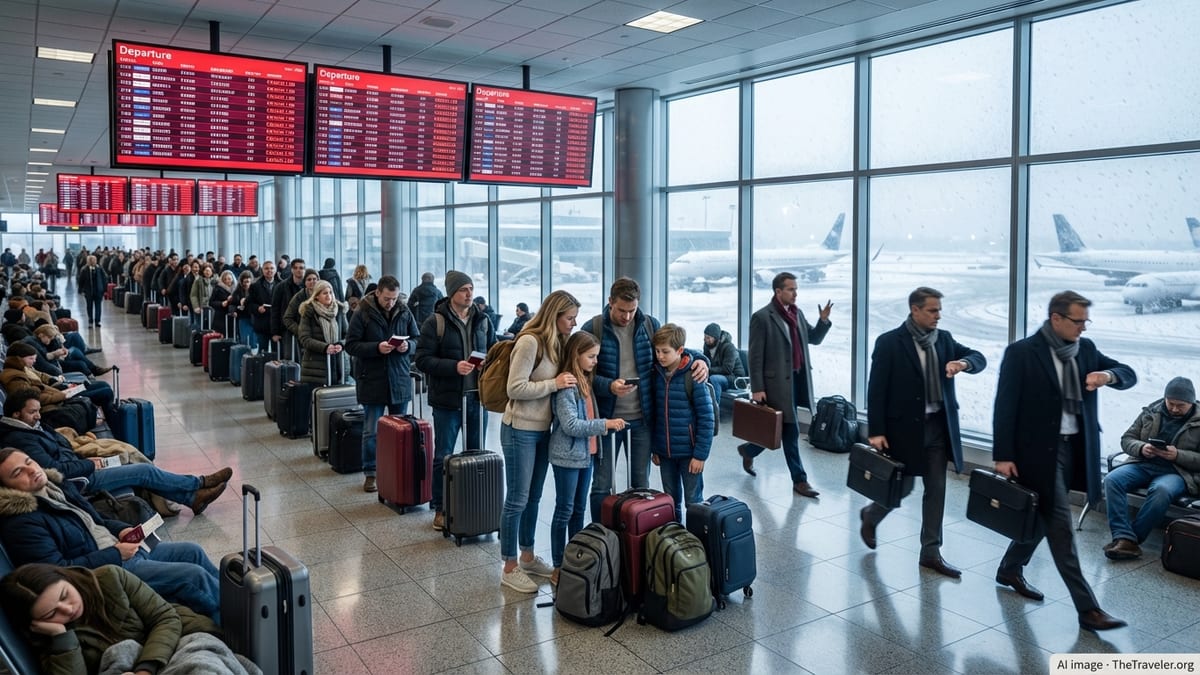
Storm cells slow traffic at major US hubs
Operational summaries from the Federal Aviation Administration indicate that recurring thunderstorms have constrained arrival and departure rates at some of the busiest US hubs since August 28, including Atlanta, New York area airports and major Florida gateways. The agency’s daily air traffic reports for Friday, August 28, flagged potential delays at Atlanta, Boston, Charlotte, Houston, Orlando, Tampa, New York and Washington as storm cells moved through busy air corridors and along the East Coast.
At times, traffic management initiatives have reduced the number of aircraft allowed to land or depart per hour, creating longer taxi times, extended holding patterns and gaps in departure flows. Publicly available flight-tracking boards show clusters of departures pushed back by 60 minutes or more during the most active storm windows, with late afternoon and evening bank structures at hub airports especially vulnerable.
The constraints have also contributed to a growing number of aircraft and crews out of position, complicating schedules into the weekend as airlines work to reset operations. Travel waivers issued by some carriers for the New York region and other storm-affected cities highlight the expectation of knock-on disruption beyond the immediate weather event.
Reports from passenger forums describe flights returning to gates after long waits on the taxiway as routings close, with some departures eventually canceled after crews reach federal duty-time limits. While these operational decisions are standard safety practice, they leave travelers facing missed connections and overnight stays when storms linger near critical departure paths.
Ground stops and diversions add to disruption
In the interior West, strong thunderstorms around Denver International Airport triggered a weather-related ground stop on August 15, with publicly shared FAA data showing average inbound delays exceeding 100 minutes at one point. Local coverage described arrival streams paused while lightning and heavy rain moved across the field, forcing some aircraft to divert temporarily and others to remain on the ground at origin airports.
Further west, severe afternoon storms over Las Vegas on August 13 led to a ground stop at Harry Reid International Airport. Regional news reports noted widespread delays as departures were held and arrivals slowed, with the FAA extending a ground delay program into the evening while cells redeveloped over the Las Vegas Valley. Passengers were advised to monitor airline communications closely as departure times shifted repeatedly.
Even when storms are short lived, the combination of reduced runway acceptance rates, ramp closures due to lightning and crews bumping up against duty limits can push disruptions well into the next day. Airlines generally prioritize reestablishing core hub flows, which can mean longer delays or rerouting for travelers bound for smaller markets when schedules are heavily constrained.
Accounts shared on aviation discussion boards from earlier in August, particularly around Chicago and Newark, describe flights diverted to alternate airports when departure corridors were shut for extended periods. In several cases, aircraft waited on the ground at outstations while operations centers sought new routings, only to cancel when no viable slot emerged before crew time expired.
International networks feel monsoon and storm impacts
The ripple effects are not limited to North America. Travel disruption monitoring by compensation and air passenger rights platforms shows a spike in schedule interruptions across Asia on August 24, driven in part by severe monsoon storms at Indira Gandhi International Airport in Delhi. Heavy rain and thunderstorms there contributed to more than 6,500 delayed flights and over 400 cancellations regionwide by late afternoon, according to aggregated operational data.
Delhi itself recorded hundreds of delayed departures along with dozens of cancellations and at least 15 diversions to alternate airports such as Jaipur, Chandigarh and Lucknow. Reports describe flooded taxiways and ramp areas that slowed ground operations even after the most intense cells passed, leaving airlines to juggle aircraft rotations and crew placements across a wide geographic area.
Within Europe, lightning and localized flash flooding around London Luton Airport on August 28 led to a suspension of operations for more than 90 minutes. Airport statements cited the combination of a lightning strike affecting air traffic management systems and severe weather in the surrounding area, which resulted in cancellations and diversions for roughly 30 flights as schedules backed up into the evening.
These episodes underscore how a single localized storm event at a major node can quickly radiate across international networks, particularly during peak summer schedules when runway and gate capacity are already running close to maximum throughput.
Travelers face cascading impacts as schedules shift
For passengers, the emerging pattern has been one of cascading impacts. Consumer travel reporting this month highlights cases in which a single weather-related cancellation at a hub city led to multi day disruptions to vacation itineraries, with travelers stranded abroad or forced to cut trips short as they waited for open seats on later departures.
Publicly available guidance from aviation regulators emphasizes that when a flight is significantly delayed or canceled for weather, airlines generally are not required to provide meals or hotel accommodation, though policies vary by carrier. Travelers retain refund rights when flights are canceled or experience major schedule changes, but many discover that rebooking options during peak periods are limited when large blocks of flights are affected.
Travel industry analysts note that storms affecting hub cities or dense airspace sectors tend to have outsized impact because of the way modern airline networks are structured. When a bank of flights into a hub is heavily delayed, crews can miss subsequent rotations and aircraft may not reach their next scheduled cities, triggering delays and cancellations far from the original weather system.
Travel forums in recent weeks contain numerous accounts of passengers routed through alternative hubs or placed on overnight connections after evening storms near New York, Chicago or Denver disrupted departure banks. Some travelers report that it took multiple days to reach their final destinations once seat availability, crew constraints and continued unsettled weather were factored in.
What forecasters and data signal for the coming days
Outlooks from the National Weather Service for the final days of August point to continued thunderstorm chances across parts of the Mid Atlantic and Northeast as hot, humid air lingers over the region. Area forecast discussions issued on August 28 and 29 reference the potential for isolated severe storms and heavy downpours, particularly during afternoon and evening hours when air traffic demand is high.
In parallel, severe weather monitoring communities tracking national radar composites and storm prediction products are highlighting scattered but intense storm clusters along key air corridors, including routes that funnel traffic into major East Coast hubs. These storms are expected to be episodic rather than continuous, but even brief periods of strong convection near approach paths can force controllers to slow arrival rates or hold aircraft outside terminal airspace.
For travelers with flights over the coming days, publicly available aviation and weather data suggest that most services are still operating, but schedules remain vulnerable to sudden adjustments when storm cells develop near high volume airports. Flexible plans, close monitoring of airline alerts and an awareness of alternative routings may help mitigate the impact if thunderstorms again intersect with peak travel periods.
Airline and airport dashboards show that recovery from each storm event can take several traffic cycles, especially when disruptions coincide with weekends or holiday travel spikes. As long as hot, unstable air masses persist over key regions, the pattern of intermittent but sometimes severe delays and diversions is likely to continue.
Denver International Airport weather delays coverage
Las Vegas Harry Reid storm delays report