


More news on this day
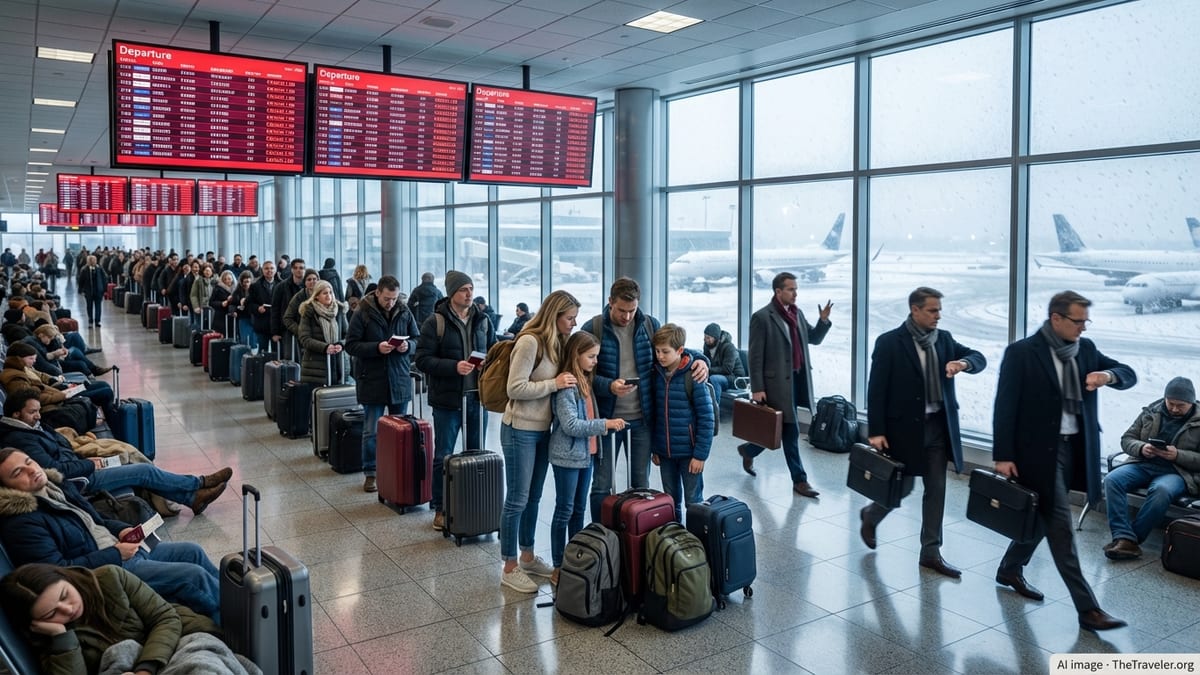
Hundreds of travelers were left sleeping on terminal floors and in departure lounges in Chicago after a wave of thunderstorms triggered at least 117 flight cancellations and 335 delays, snarling operations for American Airlines, United Airlines, SkyWest and several regional partners and disrupting routes across the United States, Canada, Mexico and Europe.
Get the latest news straight to your inbox!
Severe Weather Turns Chicago Into Network Bottleneck
The disruption built over several days as strong thunderstorms and tornado-producing cells moved across Illinois and the broader Midwest, repeatedly sweeping over the airspace feeding Chicago’s O’Hare International Airport and Midway Airport. Publicly available weather and aviation data for June 11 and June 12 indicate multiple rounds of storms tracking directly over key arrival and departure corridors, forcing air traffic controllers to slow traffic and at times pause takeoffs and landings.
Chicago’s position as one of the largest aviation hubs in North America magnified the impact. O’Hare serves as a primary hub for United Airlines and a major hub for American Airlines, while SkyWest operates numerous regional flights under the United Express and American Eagle brands. When operations at O’Hare were throttled by weather and air traffic flow programs, delays and cancellations rippled across entire route networks, affecting flights well beyond the Midwest.
Data from airline status boards and flight-tracking services on June 12 show that, combined, major carriers at Chicago airports recorded at least 117 cancellations and 335 significantly delayed departures and arrivals over the course of the afternoon and evening. Many of those flights were bound for or arriving from cities in Canada and Mexico, as well as long-haul services to destinations in Spain, Italy and other parts of Europe, amplifying the disruption for international travelers.
Travel-industry analysts note that summer thunderstorm outbreaks routinely test the limits of hub operations. However, Chicago’s latest weather-related gridlock stands out for how quickly delays compounded into widespread cancellations, as aircraft and crews fell out of position and evening banks of flights left little room to recover the schedule.
American, United And SkyWest Struggle To Recover
Operational data reviewed across multiple platforms show American, United and SkyWest among the hardest hit operators during the Chicago disruption. As storms rolled through, each airline attempted to keep limited operations running, but as the ground stops and air traffic restrictions lengthened, the backlog of waiting aircraft and crews quickly became unmanageable.
American’s Chicago operation saw a cascade of delays across both domestic and international routes. Several evening departures from O’Hare to East Coast hubs and Midwest cities were first pushed back by hours, then ultimately cancelled when crew duty-time limits were reached and aircraft missed narrow connection windows. Passengers connecting from transatlantic flights into Chicago also encountered missed onward connections to U.S. and Canadian destinations.
United’s hub operation at O’Hare experienced similar stress. Regional jets serving smaller markets across the Great Plains and Rocky Mountain regions were particularly vulnerable, with late-arriving aircraft unable to turn quickly enough for their next legs. Tracking data shows multiple United departures between Chicago and secondary U.S. cities switching from delayed to cancelled late in the evening as turnaround times became untenable.
SkyWest, which feeds both American and United’s Chicago hubs with regional services, faced additional challenges as it attempted to operate within the constraints set by its major-airline partners and by air traffic control. With a fleet heavily concentrated on short-haul routes, even modest delays can unravel carefully planned rotations. The storms over Chicago created gaps in aircraft and crew availability that could not be closed before the end of the operational day.
Network Effects Reach Canada, Mexico And Europe
Although the weather was concentrated over the Midwest, the operational fallout extended far beyond Chicago’s city limits. Flights into Chicago from Toronto, Montreal and Vancouver, as well as from major Mexican gateways, encountered holding patterns, diversions or ground delays at departure, according to publicly available tracking maps. Some services were eventually cancelled at their origin airports when it became clear that arrival slots into O’Hare would remain constrained deep into the night.
Transatlantic routes were also affected. Long-haul flights from Chicago to major European hubs in Spain and Italy faced departure pushes that put them at risk of missing overnight arrival curfews and connection banks in Europe. In some cases, travelers who had already boarded were asked to deplane as rolling departure estimates made the flights no longer viable under crew duty regulations.
Conversely, westbound flights from Europe bound for Chicago encountered uncertainty upon approach. Some were able to land during brief weather lulls, while others were diverted to alternate U.S. gateways to refuel and wait out restrictions. Those diversions produced additional passenger rebooking challenges, as airlines scrambled to find open seats on already crowded domestic services to move travelers onward to their final destinations across the United States and Canada.
Industry observers point out that the web of connections that makes hub-and-spoke systems efficient in normal conditions can turn into a vulnerability during extreme weather events. When a key node such as Chicago is constrained, the impact radiates quickly across international networks, affecting travelers on routes that never touch the Midwest on a map but rely on Chicago-based aircraft and crews.
Passengers Face Long Lines, Thin Information And Limited Options
For passengers on the ground in Chicago, the statistics translated into long lines at customer-service counters, crowded gate areas and a scramble for scarce hotel rooms. Social media posts and user reports from June 12 describe scenes of departure boards filled with red “cancelled” and “delayed” tags, with travelers clustered around outlets to keep phones charged while monitoring fast-changing flight-status updates.
With multiple carriers affected simultaneously, options for same-day rebooking quickly dried up. Many travelers reported being offered itineraries one or two days later, often involving circuitous routings through secondary hubs or overnight layovers in cities that were never part of their original plans. Others opted to cancel trips entirely, taking airline credits or refunds and seeking alternative dates.
Communication became a growing point of frustration as the evening wore on. While airline apps and airport displays updated flight statuses, rolling delay notices left many unsure whether to stay at the gate, search for a hotel or attempt a standby rebooking on alternative flights. In some cases, flights were delayed repeatedly in short increments before ultimately being cancelled, a pattern that passengers say made it more difficult to make timely decisions about lodging and onward travel.
Travel-assistance services report heightened demand during such events, as stranded passengers seek help navigating rebooking rules, schedule changes and compensation policies. Consumer advocates have continued to call for clearer, more standardized passenger protections for weather-related disruptions, noting that even when airlines are not legally required to provide hotel rooms or meal vouchers, more proactive support can ease the burden on travelers caught in mass disruption events.
What The Disruption Signals For Peak Summer Travel
The Chicago episode is an early test for airlines heading into the busiest weeks of the Northern Hemisphere summer travel season. Federal transportation data shows that weather remains one of the primary drivers of delays and cancellations in U.S. aviation, and forecasts point to another active season of severe thunderstorms across key hub regions.
Operational specialists say the clustering of cancellations and long delays in Chicago underlines how thin the margin for error remains when airlines operate at or near full summer schedules. With aircraft utilization high and spare capacity limited, a single evening of storms at a major hub can cascade into next-day disruptions across multiple continents as planes and crews start the morning out of position.
Travel planners advise passengers with time-sensitive trips to build in extra buffer days and to favor earlier departures during storm-prone periods, when there are more opportunities to be rebooked later in the day if problems arise. They also recommend monitoring weather forecasts along key hub corridors and signing up for airline and third-party status alerts to catch schedule changes as early as possible.
As airlines work through the backlog from Chicago and reposition aircraft and crews, some lingering delays and isolated cancellations are likely to persist on affected routes into the following day. For travelers, the events in Chicago serve as a reminder that in peak season, even a few hours of severe weather over a major hub can reverberate across an entire continent, and far beyond.