


More news on this day
South African Airways operations have come under fresh scrutiny after severe weather in South Africa led to significant disruption on key domestic routes, including a diversion that left one Airbus A320 landing with critically low fuel reserves.
Get the latest news straight to your inbox!
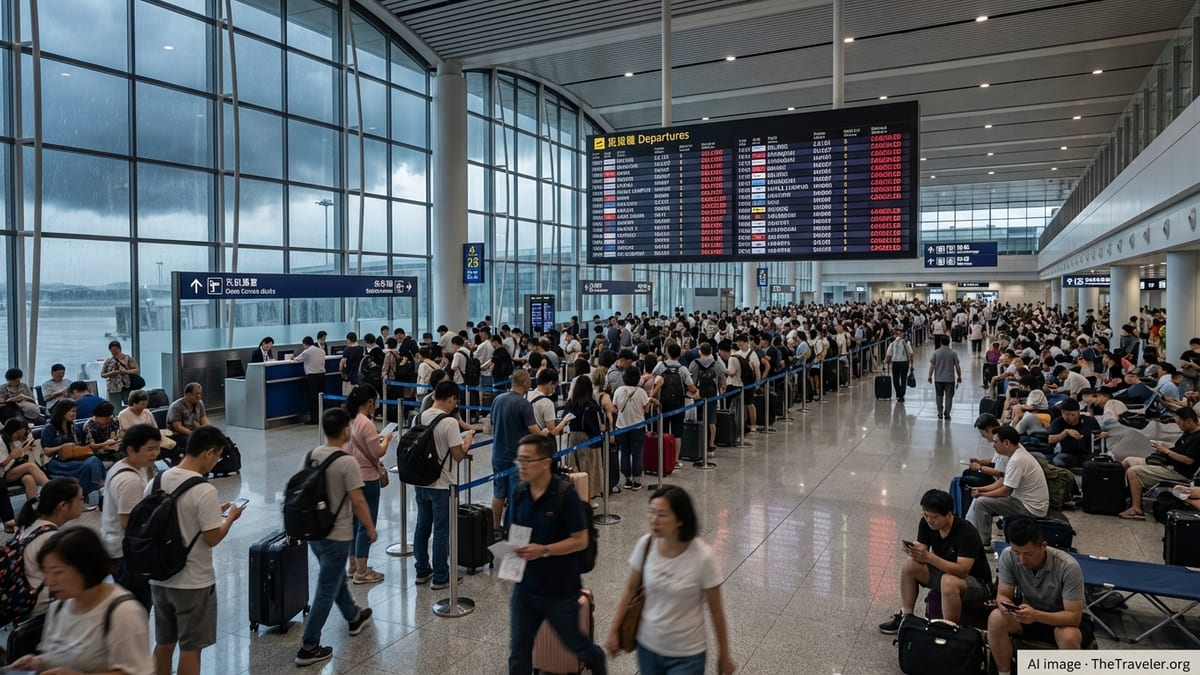
Storm Systems Upend Western and Southern Cape Schedules
Recent cut off low pressure systems over South Africa in early May brought intense rainfall, low cloud and strong winds to parts of the Western and Eastern Cape, creating challenging conditions for airlines serving Cape Town, George and Port Elizabeth. Publicly available meteorological summaries describe several days of persistent storms, with flooding and reduced visibility affecting road and air travel across the region.
According to flight tracking data and local aviation coverage, South African Airways was among the carriers forced to make short notice changes to operations as conditions deteriorated. Approaches into Cape Town International were periodically constrained, prompting holding patterns, delays and a series of diversions as aircraft sought alternates with more favorable weather and runway conditions.
The disruption highlighted the vulnerability of South Africa’s coastal air corridors to slow moving weather systems at the start of the Southern Hemisphere winter season. It also underscored how quickly a routine domestic service can become stretched when several airports in the same region are affected at once.
Reports indicate that during the height of the storms, passengers on some routes experienced extended flight times, missed connections and unscheduled stops at secondary airports while crews and operations teams attempted to manage fuel, crew duty limits and air traffic flow constraints in real time.
Johannesburg to Cape Town Flight Diverted Twice
The most widely discussed incident in the current disruption wave involves South African Airways flight SA313 from Johannesburg to Cape Town on 11 May. Aviation incident reporting sites describe how the Airbus A320 left Johannesburg on what is normally a roughly two hour sector, only to encounter weather that made a safe landing in Cape Town temporarily impossible.
With conditions below operational minima at the primary destination, the crew initially diverted to George, a smaller airport along the Garden Route. As the same weather system impacted George, the aircraft was unable to land there either, and the flight was subsequently routed to Gqeberha, still commonly referred to as Port Elizabeth, further up the coast.
By the time the aircraft landed in Port Elizabeth, incident summaries state that fuel remaining on board had fallen to around 420 kilograms, a quantity described as below the operator’s specified minimum reserve level for that stage of flight. While the landing itself was safe, and there were no injuries, the figure has drawn considerable attention from aviation analysts and travelers alike.
South African Airways has acknowledged that severe weather in the Western Cape contributed to the diversion and that the event triggered internal reporting and investigation protocols. The airline’s public messaging emphasizes adherence to regulatory requirements and standard procedures, but the precise decision making timeline and fuel planning assumptions remain a focus of discussion within South African aviation circles.
Operational Pressures and Passenger Experience
The multiple diversion sequence on SA313 illustrates how weather driven disruption can quickly escalate into operational complexity for a carrier that is still in the process of rebuilding its network. With a relatively small fleet allocated to domestic trunk routes, the need to reposition aircraft and crews after an unscheduled arrival hundreds of kilometers from the planned destination can ripple across the rest of the day’s schedule.
Flight tracking services show that the Johannesburg to Cape Town corridor remains central to South African Airways operations, alongside services to regional destinations such as Lusaka, Windhoek and Victoria Falls. When one aircraft becomes tied up in extended diversions, schedules on these other routes can tighten, increasing the risk of further delays, missed rotations and last minute swaps.
For passengers, the current disruption has translated into long days of travel, uncertainty over onward connections and, in some cases, overnight stays far from their intended destination. Social media posts and forum discussions describe confusion at departure gates as estimated times shifted repeatedly while operations teams assessed weather updates and air traffic restrictions.
Consumer advocates note that such events test airlines’ communication strategies as much as their operational resilience. Clear information on the reasons for delays, realistic estimates of onward travel options and guidance on accommodation or rebooking rights can mitigate some of the frustration that accompanies extended disruption.
Safety, Oversight and Confidence in a Rebuilding Flag Carrier
The incident involving a landing with fuel below a declared minimum has inevitably revived debate about oversight and safety culture at South African Airways, a carrier that has emerged from business rescue into a more compact, domestically focused operation. Historical records show that the airline now runs a lean all Airbus fleet across a limited set of domestic and regional routes, a model that can concentrate both risk and scrutiny.
Aviation specialists quoted in regional media coverage emphasize that fuel emergencies and diversion chains are not unique to any one airline, and that crews are trained to manage rapidly changing conditions through a combination of regulatory minima, company policies and real time judgment. However, when final fuel figures fall close to or below declared thresholds, regulators, operators and the public are likely to examine whether earlier decisions could have reduced the margin of risk.
In the South African context, public confidence in major carriers has already been shaped by several years of restructuring, shifting market share to low cost competitors and ongoing infrastructure challenges at some airports. Disruptions tied to extreme weather therefore intersect with broader questions about resilience, investment in navigation and landing aids, and capacity within air traffic control to handle surges in holding and diversion activity.
For travelers planning journeys in and out of the Western and Eastern Cape in the coming weeks, the recent disruption serves as a reminder to allow additional buffers for connections, monitor flight status closely and be prepared for route changes during periods of unsettled weather.
What the Latest Disruption Means for Future Travel
As South Africa moves deeper into the winter season, meteorologists highlight an increased likelihood of frontal systems and cut off lows affecting coastal regions, bringing periods of poor visibility and high winds. The early May disruptions at South African Airways offer a case study in how even a modest storm system can cascade through a compact national network.
Industry observers suggest that airlines operating in the region may need to revisit contingency planning for diversions, including fuel policies, crew deployment and agreements with alternate airports for handling unscheduled arrivals. Enhanced coordination between carriers, airports and air navigation services during severe weather windows could help minimize the risk of aircraft reaching alternates with critically low fuel reserves.
For the traveling public, the episode underscores the importance of flexible itineraries and travel insurance that explicitly addresses weather related disruption. Passengers connecting from domestic South African Airways services to regional or intercontinental flights may benefit from longer connection times and careful review of ticket conditions covering delays and missed onward sectors.
While the current disruption period has been driven primarily by exceptional weather rather than systemic failure, the questions raised by the SA313 diversion and fuel figures are likely to remain part of the conversation about South African Airways for some time. How the airline responds operationally and communicatively in the weeks ahead will shape both regulatory scrutiny and customer confidence as it continues its post restructuring journey.