


More news on this day
On 1 September 2026, Seville City Council formally presented "Sevilla N.O.D.E.", a 2.8 million euro smart‑tourism project that connects the city’s tourism data systems with Spain’s national Smart Destinations Platform so officials and businesses can use real‑time restaurant, mobility and events data to shape how visitors move, eat and spend time in the city.
Get the latest news straight to your inbox!
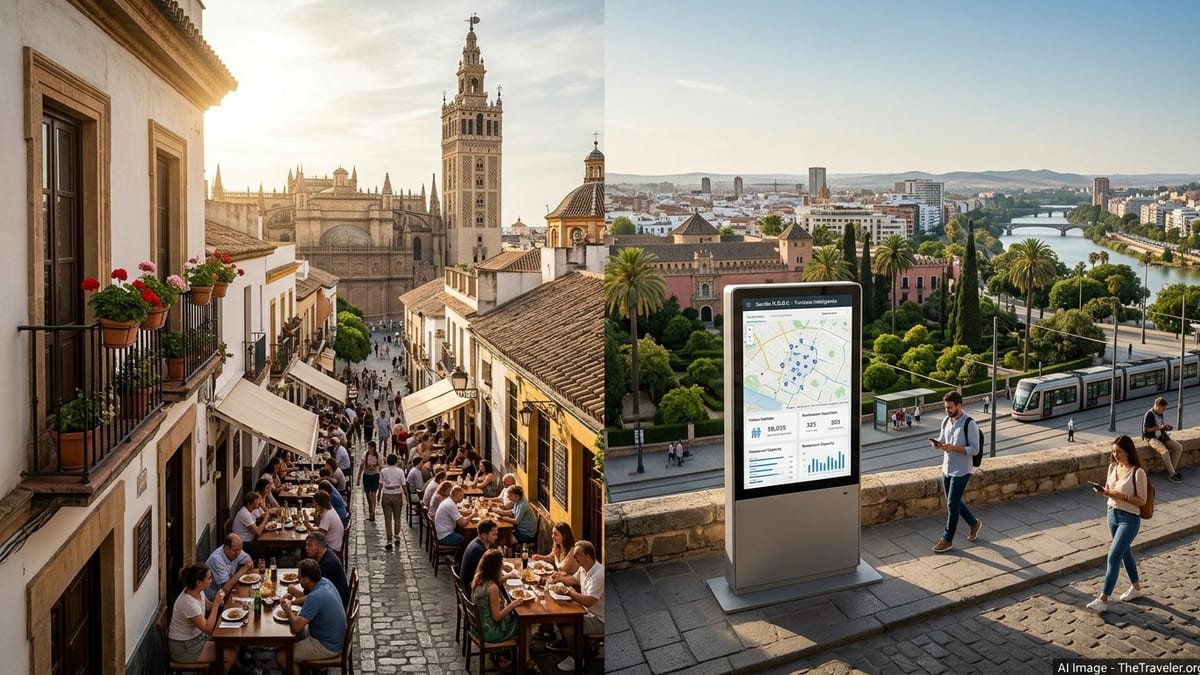
The Core Development: Sevilla N.O.D.E. Goes Live
The launch of Sevilla N.O.D.E. at the Real Alcázar on 1 September 2026 marked the first time Seville’s existing tourism data tools were integrated into a single environment tied to Spain’s national Smart Destinations Platform, managed by state‑owned tourism technology agency Segittur. According to the City Council, the project mobilises more than 2.8 million euros to strengthen Seville’s position as a certified smart tourism destination and to give local stakeholders shared access to data that were previously scattered across departments and companies.
City officials describe Sevilla N.O.D.E. as both a technical and governance project. On the technical side it connects the city’s Tourism Intelligence System, smart‑city sensors and third‑party platforms, while on the governance side it aligns Seville with the national Destinos Turísticos Inteligentes framework so that tourism indicators can be compared with other Spanish cities using a common methodology. That combination allows Seville to plug into a wider ecosystem where restaurant bookings, mobility flows and cultural calendars are interpreted in the same way as in cities such as Málaga or Valencia.
The development is significant for travelers because it moves Seville from ad hoc monitoring to structured, comparable metrics. The City Council highlights that tourism data, including spending and mobility linked to hospitality zones, will now be analysed in near real time rather than compiled weeks or months after events. While the effects will not be visible overnight, decisions about where to promote restaurants, how to signpost alternative areas and which neighborhoods should host new events will increasingly rest on measured patterns instead of intuition.
How Seville’s Tourism Intelligence System Uses Restaurant and Activity Data
At the heart of the new setup is the Seville Tourism Intelligence System (Sistema de Inteligencia Turística, SIT), already in operation and now being scaled under Sevilla N.O.D.E. The Smart Tourism Office explains that the SIT collects, transforms and visualises large volumes of data for the local sector, supporting predictive and diagnostic analysis. Its published dashboards cover indicators such as travelers and overnight stays, origin markets, air connectivity, visits to points of interest and employment in tourism.
For gastronomy and activities, the SIT ingests booking data from digital platforms such as GetYourGuide, alongside other sources. This allows city managers to monitor reservations and interest in food tours, cooking classes and restaurant‑linked experiences in specific districts. By comparing these data with hotel occupancy and event calendars, Seville can identify where demand for dining out is rising faster than capacity and where new gastronomic products could be promoted without adding pressure to already crowded areas.
The Smart Tourism Office notes that SIT indicators are accessible to the tourism industry, meaning restaurant owners and tour operators can consult aggregated trends without seeing individual competitors’ figures. For example, a cluster of tapas bars near a major monument might use the system’s visitor flow and activity‑booking information to justify opening earlier on high‑demand evenings, while another neighborhood could use relatively low visitation data to lobby for inclusion in city marketing campaigns focused on “authentic” dining outside the historic core.
Measuring Visitor Mobility To Balance Dining Hotspots
Sevilla N.O.D.E. introduces a specific mobility‑measurement component that translates city data into Segittur’s national data model. The project documentation explains that Seville is building an integrated database updated with information from mobile network operators, urban sensors and digital platforms active in the destination. Previously, many of these datasets were stored in separate files and required extensive processing; under the new system they can be queried within seconds.
By aligning this database with the national Smart Destinations Platform, Seville can compare visitor flows with other smart destinations and feed its own figures into Spain’s tourism data space. The city reports that it crosses mobility information with events, weather, cultural offerings and seasonality to understand where visitors enter, how long they stay in each zone and how patterns vary by traveler profile and time of year. Although the city does not publish raw counts for every corridor, the emphasis is on identifying real patterns rather than relying solely on anecdotal feedback from businesses.
This mobility analysis has direct implications for restaurant areas. When combined with reservations and card‑spending data from hospitality districts, the system can flag streets or plazas where evening crowds regularly exceed comfortable levels or where queues for popular eateries spill into narrow lanes. Officials say the objective is not to cap visits arbitrarily but to design alternative routes, promote dining options in less saturated neighborhoods and adjust public‑space management so that residents and visitors share the city more comfortably.
From Data to Traveler Experience: Practical Changes and Limits
For visitors, Sevilla N.O.D.E. is expected to surface mainly through information services rather than visible infrastructure. The City Council plans an integrated City Agenda that aggregates cultural, sports, congress and leisure events from municipal and private sources. In practice, this should make it easier for travelers to find up‑to‑date listings of food festivals, local markets and restaurant‑adjacent cultural events in a single digital environment instead of having to check multiple calendars.
The smart‑destination tools could also influence how crowding is managed around popular restaurant quarters such as Santa Cruz or Triana. By monitoring occupancy and booking trends, city planners may adjust communication campaigns to highlight alternative dining districts on peak days, or work with mobility services to recommend walking paths that spread footfall more evenly. Over time, this could mean that visitors find shorter waits and more options away from the most photographed streets, although the City Council has not set specific numerical targets for redistribution.
There are limits to what the current systems can guarantee. The city does not promise fixed waiting times, nor does it publish live table‑availability data. Price levels still depend on individual businesses, and travelers should still expect significant variations between high‑demand weekends and quieter weekdays. While national and local tourism statistics show that Seville remains one of Spain’s most visited urban destinations, the new tools are best understood as decision‑support infrastructure rather than a guarantee of smoother experiences in every case.
What Travelers Should Watch As Seville’s Data Project Evolves
Most components of Sevilla N.O.D.E. are being rolled out gradually following the September 2026 presentation, and the city has not yet set a public end date for full deployment. The Tourism Intelligence System is already operational and feeding data into the smart‑destination framework, while the integrated City Agenda and more advanced mobility analytics will be incorporated as technical work progresses. Travelers planning trips from late 2026 onward may notice more consistent event information and clearer digital guidance about where and when to explore certain neighborhoods.
Seville’s participation in Spain’s Smart Destinations network means its data practices will evolve alongside national standards developed by the State Secretariat for Tourism and Segittur. Future upgrades, such as more granular restaurant‑spending indicators or additional real‑time dashboards for the private sector, will depend on regulatory conditions and funding decisions at both city and national levels. For now, visitors who are particularly sensitive to crowding or interested in culinary exploration may benefit from consulting official tourism channels, which increasingly reflect the underlying analytics used by city planners.
Because the systems focus on aggregated indicators rather than individual itineraries, travelers should still treat them as one input among many when making choices. Checking opening hours directly with restaurants, booking tables in advance on busy dates and confirming whether festivals are going ahead as scheduled remain essential steps. If the Sevilla N.O.D.E. project proceeds as outlined, these familiar practices could gradually be supported by richer, more coherent information about when and where the city’s restaurant scene is likely to feel at its best.