


More news on this day
On November 16, 2026, Southwest Airlines and French bee launched a new interline partnership that lets travelers book single-ticket journeys from Southwest’s domestic network to French bee’s long haul flights from Los Angeles, Miami and San Francisco, creating new one stop options from many US cities to Paris Orly, Tahiti and Réunion and reducing the hassle of separate bookings and baggage recheck.
Get the latest news straight to your inbox!
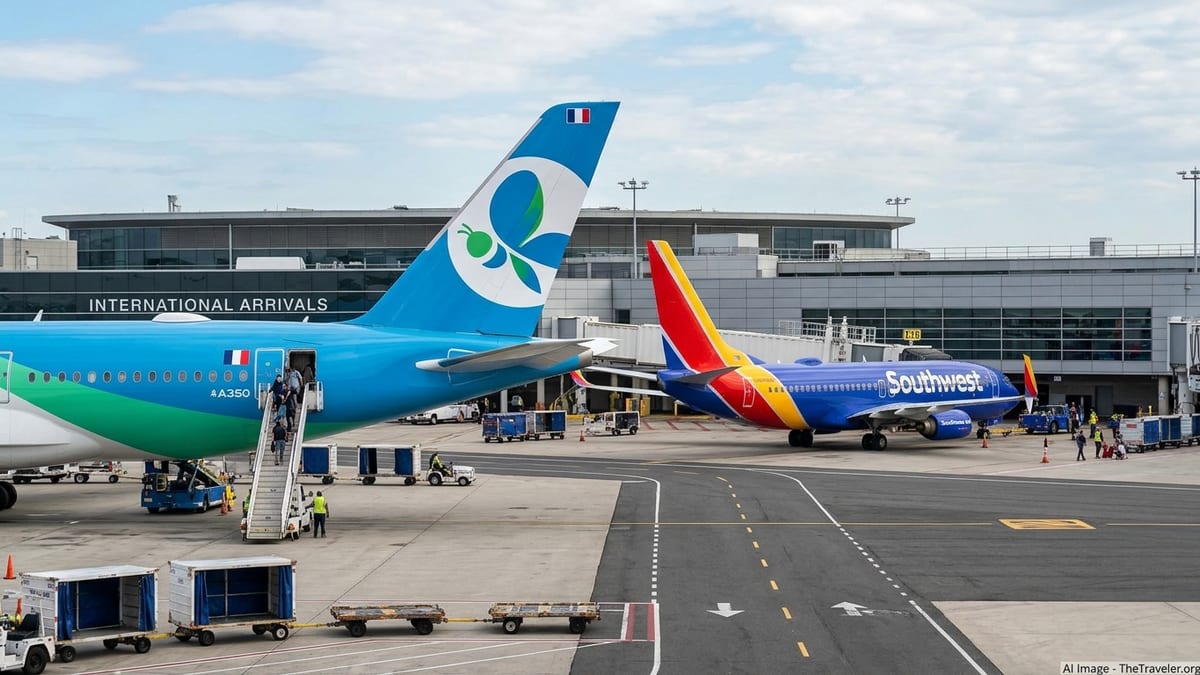
What exactly Southwest and French bee have agreed to
Southwest describes the new arrangement with French bee as an interline partnership that connects its domestic network with French bee’s long haul services at three US gateways: Los Angeles International, Miami International and San Francisco International. The deal sits alongside Southwest’s other interline partnerships and is explicitly not a full codeshare, meaning each airline continues to operate and market its own flight numbers while coordinating on ticketing and baggage for connecting itineraries.
Industry reporting and company statements indicate the partnership became effective on November 16, 2026, with bookings available from that date for travel that combines both carriers on a single ticket. Unlike earlier nonrev or informal cooperation, this agreement is focused on revenue passengers who previously had to stitch together separate Southwest and French bee tickets if they wanted to use both airlines on one trip.
French bee has used interline partnerships before, including with Alaska Airlines, to extend its reach beyond its limited set of US gateways. The Southwest deal is its broadest access yet to US domestic feed, tying into an airline that serves more than 100 destinations across the United States and nearby international points. For Southwest, French bee becomes part of a growing stable of international partners that already includes carriers such as Icelandair, aimed at giving its customers more long haul options without operating those routes itself.
New routings and destinations now reachable on one ticket
The most immediate change for travelers is the ability to buy single itineraries that combine a Southwest domestic leg with a French bee transoceanic segment. French bee’s published network from the United States includes nonstop flights from Los Angeles and San Francisco to Paris Orly, and from San Francisco to Papeete in French Polynesia, as well as service from Miami to Paris Orly. From Paris Orly, French bee also flies to Saint Denis on Réunion Island and has announced services linking Paris Orly with Malé in the Maldives and Colombo in Sri Lanka, though not all of these are operated from US gateways.
Southwest’s network breadth means that customers in cities with no nonstop service to Europe or Tahiti may now reach those destinations with a single booking and coordinated baggage handling. For example, a traveler from Kansas City could fly Southwest to San Francisco and then connect to French bee to reach Paris Orly on one ticket, instead of booking two separate trips. Similar one ticket options are now possible from many Southwest cities into Los Angeles or Miami for onward French bee flights.
At present, official information highlights Los Angeles, Miami and San Francisco as the connection points where the two airlines’ operations overlap. Other airports where both carriers are present, such as New York area airports, are not mentioned as part of this specific partnership, and there is no confirmation that interline ticketing will be offered there. Travelers should therefore assume that the new single ticket options are concentrated on the three named gateways unless and until the airlines update their guidance.
How the interline works in practice for passengers
In an interline arrangement, passengers can generally check baggage through to their final destination and receive boarding passes for both airlines when starting their trip, avoiding the need to reclaim and recheck bags during a connection. Southwest’s explanation of interline partners confirms that such agreements are intended to simplify check in, ticketing and baggage handling when more than one airline is involved, although the exact procedures can vary by airport and route.
Booking channels for the Southwest–French bee partnership are still evolving. Reporting from aviation and travel outlets indicates that itineraries are available through global distribution systems used by travel agencies and may appear on French bee’s booking channels tying into Southwest’s domestic segments. Southwest’s public materials emphasize that this is an interline rather than a codeshare, and there is currently no clear indication that French bee flights can be purchased directly via Southwest’s consumer website in the same way that Southwest sells its own services.
Travelers should also be aware of limits commonly associated with interline deals. Unlike deeper codeshare partnerships or alliance membership, there is currently no indication that Southwest Rapid Rewards points can be earned on French bee operated flights, nor that French bee’s frequent flyers can accrue benefits on Southwest sectors within these itineraries. Seating policies, onboard service standards and ancillary fees such as baggage charges remain those of the operating carrier, so a passenger connecting from a Southwest flight to a French bee service will experience two distinct products on a single ticket.
Benefits and constraints for US travelers using the new link
For many US based travelers, the main advantage of the new partnership is risk reduction and convenience compared with booking separate tickets. With a through ticket, if a Southwest domestic sector is delayed, the passenger typically has more protection for rebooking onto a later French bee departure than if they held independent reservations, where the onward airline could treat a missed connection as a no show. Through checked baggage also reduces the time and stress of connections, which is particularly valuable at busy hubs or during tight transfer windows.
The deal could widen access to relatively low cost long haul fares on French bee for customers in cities that previously had to connect via other carriers to reach French bee’s gateways. While French bee has marketed headline fares such as sub 300 euro one way tickets between Paris and New York or other US points in past campaigns, current prices vary significantly by date and route and must be checked at the time of booking. The interline agreement itself does not guarantee lower fares; instead, it makes it easier to combine a French bee long haul leg with a Southwest feeder flight under one reservation.
There are also constraints travelers should consider. As an interline rather than a joint commercial venture, schedule coordination remains limited, so some connections may be long or involve overnight stays. Each airline’s baggage policies continue to apply per segment, and some itineraries may involve checked bag fees on French bee even for passengers used to Southwest’s two free checked bags on domestic flights. Travelers should carefully review the fare rules and included services on both carriers when pricing itineraries that use the new partnership.
What to watch next and how to book safely
The November 16, 2026 launch is the starting point rather than the endpoint of the Southwest–French bee relationship. Future developments could include additional connection points if operational and commercial conditions support them, or expanded booking options through consumer websites and mobile apps. Neither airline has publicly committed to a timeline for any deeper cooperation such as codesharing, so those possibilities remain speculative.
For now, travelers who want to use the new partnership should focus on itineraries that clearly show a single ticket covering Southwest and French bee segments, whether booked via a reputable travel agency, an online booking platform that supports interline tickets, or French bee’s own channels where domestic feed from Southwest is offered. Passengers should verify that baggage is checked through to the final destination at check in and keep an eye on minimum connection times, especially when changing terminals between a Southwest domestic flight and an international French bee departure.
Because both airlines retain control over their own schedules and route networks, travelers booking well in advance should monitor for potential timetable changes and aircraft rotations that could affect planned connections. Anyone planning complex trips, such as reaching Réunion or future Indian Ocean and South Asia destinations via Paris Orly, may benefit from working with an agent familiar with interline ticketing so that any disruptions are handled under the single reservation rather than as multiple standalone bookings.