


More news on this day
Wizz Air’s net profit for the six months to 30 September 2026 dropped about 67 percent to roughly €108 million, even as passenger numbers and revenue increased, highlighting how rising fuel costs and intense competition from low cost rivals Ryanair and Turkey’s Pegasus Airlines are reshaping Europe’s budget travel landscape and putting pressure on fares and margins for millions of price‑sensitive travelers.
Get the latest news straight to your inbox!
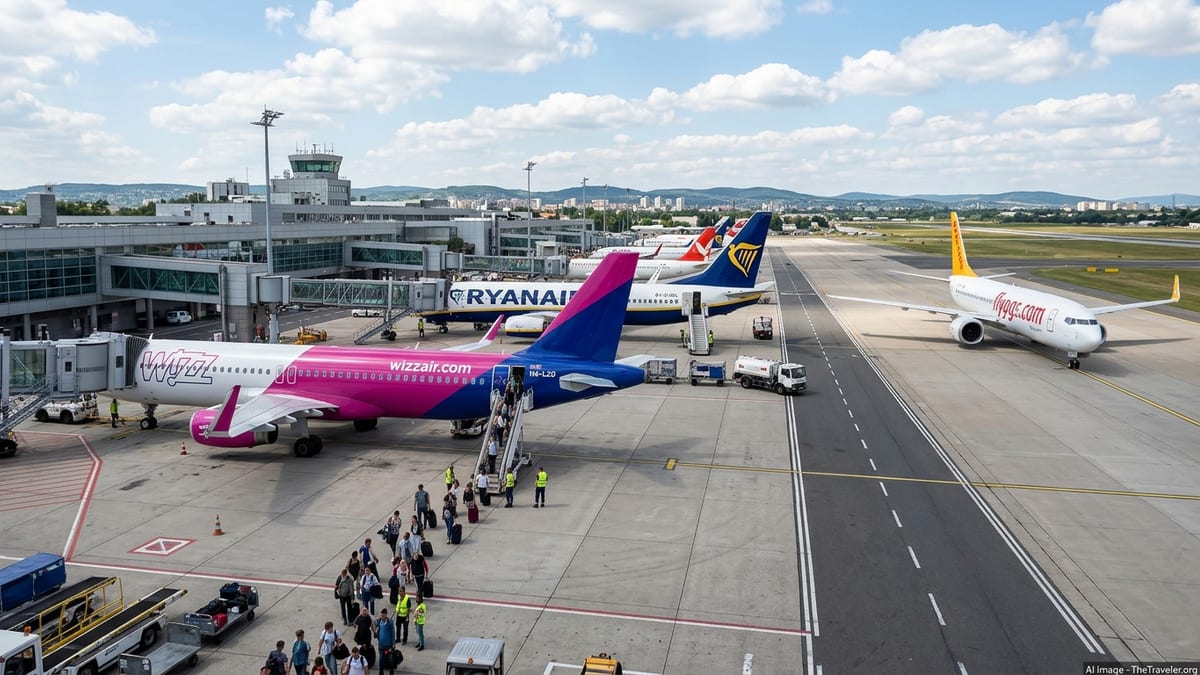
What Wizz Air’s Latest Results Actually Show
In its unaudited results released on 12 November 2026 for the first half of financial year F27, Wizz Air reported revenue of about €3.80 billion, up nearly 14 percent year on year, and passenger numbers of 46.1 million, up around 26 percent. Yet net profit attributable to shareholders fell to about €108 million, roughly one third of the figure reported a year earlier, as a higher fuel bill and softer average fares eroded margins even while the airline flew more people and more capacity.
The airline’s operating profit for the same six month period fell by close to 40 percent, to around €265 million, and its EBITDA margin slipped to about 24 percent. At the same time, unit revenue per available seat kilometre declined by almost 3 percent, while total unit costs rose by just over 4 percent, reflecting more expensive fuel and other operating costs. This combination left Wizz Air earning significantly less from each seat it flew, even though its planes remained heavily used across Central and Eastern Europe, the Middle East and parts of Western Europe.
The headline 67 percent profit drop is concentrated in the first quarter of the financial year. In the three months to 30 September 2026, Wizz Air’s second quarter net profit actually rose about 7 percent compared with the same quarter a year earlier, supported by strong summer demand and slightly higher unit revenue. For travelers, this means that the weakness is not the result of an immediate collapse in bookings, but of a more gradual squeeze between what passengers are willing to pay and what it now costs Wizz Air to operate each flight.
Ryanair’s Scale Advantage in Europe’s Low Cost Market
Wizz Air’s more fragile profitability contrasts sharply with Ryanair, which reported profit after tax of roughly €2.2 billion for the year to 31 March 2026 on traffic of around 208 million passengers. Ryanair’s latest annual report shows it operating a short haul fleet of nearly 650 aircraft across its group airlines, giving it far greater scale and bargaining power with airports, fuel suppliers and maintenance providers than smaller low cost rivals.
Ryanair’s management has repeatedly highlighted its fuel hedging strategy, stating that around 80 percent of its jet fuel for the year to April 2027 is hedged at about 67 dollars per barrel. This kind of locked‑in pricing helps shield the Irish carrier from the full impact of the oil price spikes seen after the closure of the Strait of Hormuz in 2026, and allows it to keep cutting fares or adding capacity when competitors are forced to slow growth or raise prices more aggressively.
For Europe’s budget travelers, Ryanair’s cost advantage often shows up as lower headline fares, especially on routes where it faces smaller rivals or legacy airlines rather than another large ultra low cost carrier. The airline’s reported profit per passenger in its latest financial year works out to just over €10, which still leaves room to undercut many competitors on price. That puts added pressure on carriers like Wizz Air to find profitable niches, focus on secondary airports where Ryanair is less dominant or offer connectivity to regions such as the Western Balkans and Caucasus where its bigger rival is less active.
Pegasus Expands From Turkey While Keeping Costs Tight
Turkey’s Pegasus Airlines has also become an important player in the wider European budget market. As of October 2026, Pegasus serves more than 160 destinations in 57 countries across Europe, Asia and North Africa, with Istanbul Sabiha Gökçen as its main hub. While detailed profit figures for 2026 are not yet fully reported, the carrier has historically positioned itself as a low cost operator with a dense short and medium haul network linking European cities with Turkey and onward points in the Middle East and Central Asia.
Pegasus benefits from a cost base that is partly anchored in Turkey, where local currency wage and airport cost trends differ from those in the eurozone or the United Kingdom. Its growing network into Central and Eastern Europe gives price‑sensitive leisure travelers more options from cities that Wizz Air also targets, such as routes from Poland, the Balkans and the Baltics into Turkish coastal resorts or city destinations. Where Pegasus competes directly with Wizz Air on Turkey or Middle East routes, the additional capacity can make it harder for Wizz Air to raise fares enough to offset higher fuel and maintenance costs.
Unlike Ryanair, Pegasus is not yet the largest carrier in any major EU country, but for travelers in markets around the Black Sea and Eastern Mediterranean it effectively acts as a regional low cost champion. Its presence increases the number of one stop itineraries available between smaller European airports and destinations in Asia and North Africa, but it also segments price competition: Wizz Air increasingly has to fight for passengers not only against Ryanair on intra‑EU routes but also against Pegasus on flows in and out of Turkey and neighboring regions.
What This Means for Travelers Booking Budget Flights
For travelers, the immediate impact of Wizz Air’s weaker half year profit is subtle. The airline has not announced large scale route cuts as of mid November 2026, and its capacity guidance for the current winter suggests only modestly slower growth rather than outright contraction. However, the combination of higher fuel costs, pressure on unit revenue and strong competition could limit how many additional low fare seats Wizz Air adds on marginal routes, particularly from smaller regional airports where operating costs per passenger are higher.
Ryanair’s and Pegasus’s positions influence fares most strongly on overlapping routes. Where Ryanair is present, Wizz Air may be constrained in raising prices, since Ryanair can cross‑subsidize individual city pairs from its much larger network and lower costs. On routes linking the European Union to Turkey or nearby markets, Pegasus can often match or undercut Wizz Air’s fares while offering dense frequencies via its Istanbul hub. Travelers who can be flexible with airports and travel days are likely to see continued fare competition, but those dependent on a single carrier from a smaller base could face more limited choice if Wizz Air trims underperforming services.
There is also a timing element. Ryanair has indicated publicly that it does not expect short haul fares in Europe to rise enough in the coming year to fully offset fuel cost increases, and is therefore reviewing internal costs instead. If higher fuel prices persist through 2027, the gap between airlines that hedged successfully and those more exposed to spot prices could widen. For passengers, that may translate into aggressive seat sales at airports where Ryanair has space to grow, more competitive pricing from Pegasus in key leisure markets, and a more cautious approach by Wizz Air to new or marginal routes until its profitability improves.
Key Dates and What to Watch Next
Wizz Air’s first half F27 results cover the period from 1 April to 30 September 2026, with the figures and outlook published on 12 November 2026. The airline has indicated that capacity in the current third quarter, running from October to December 2026, is expected to grow by a little more than 10 percent in seat‑kilometre terms, with seats offered rising by close to 20 percent compared with a year earlier. Early indications from October suggest unit revenue grew at a mid single digit rate, which, if sustained, could help stabilize profit trends through the winter schedule.
Ryanair’s financial year runs to 31 March 2027, and its latest full year numbers to March 2026 confirm that it entered the current period with strong cash reserves and significant fuel hedging already in place. Any update from Ryanair on winter capacity or fare trends will be an important signal for what travelers can expect on core intra‑European leisure routes in summer 2027. Pegasus is expected to provide fuller financial and network guidance for 2026 and early 2027 over the coming months, which will clarify how aggressively it plans to expand in Central and Eastern Europe and on links between Europe and the Middle East.
For travelers planning trips in 2027, the most practical step is to compare fares across these three carriers on specific dates and routes, paying attention to total trip cost including bags and seat selection rather than just the headline ticket price. Wizz Air’s current financial squeeze does not yet translate into a clear reduction in capacity, but it is a warning that smaller ultra low cost airlines may adjust growth plans or exit weaker routes faster if fuel prices and competition remain intense. Monitoring schedule changes in the months before departure, especially from secondary airports heavily served by a single budget carrier, will help travelers avoid surprises and secure the best available deals.