


More news on this day
Hotel and travel technology surveys released in 2026 show a clear shift in guest expectations, with most travelers now wanting to book tours, activities and airport transfers digitally through the same online channels they use for rooms, pushing hotels to upgrade in-destination booking tools or risk losing ancillary revenue to online platforms.
Get the latest news straight to your inbox!
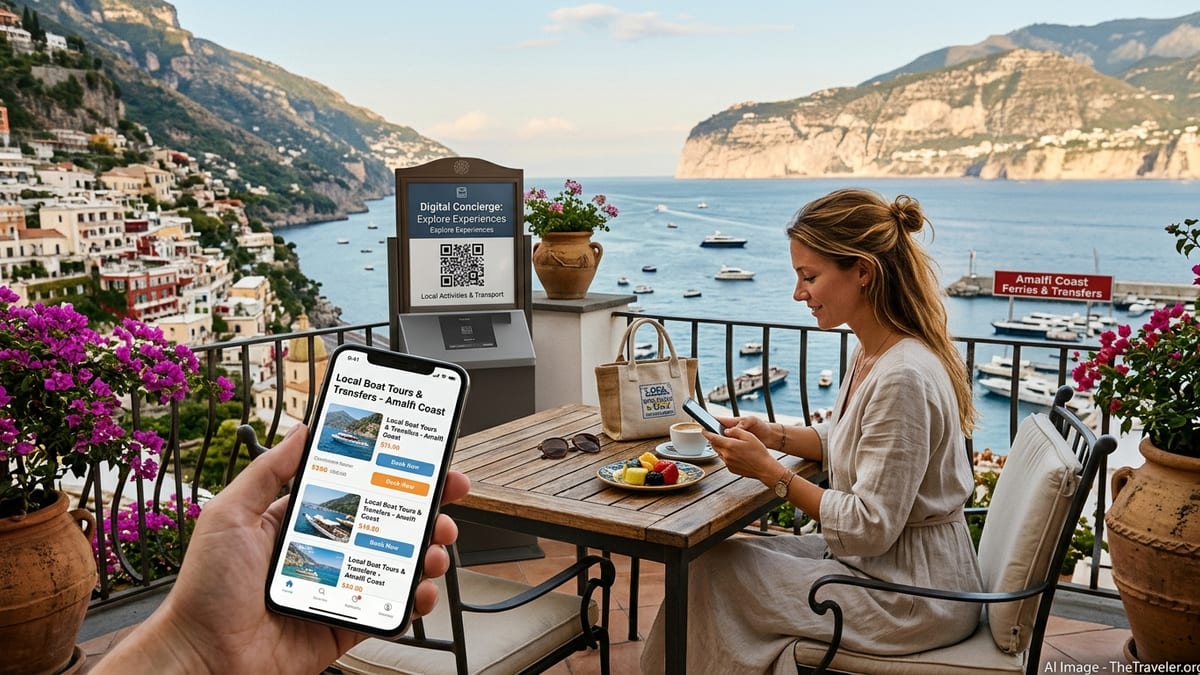
The Core Finding: Guests Expect Digital Access To Local Experiences
The most concrete development underpinning this shift comes from large traveler surveys conducted this year by firms such as SiteMinder, Mews and McKinsey–Skift, which together indicate that travelers increasingly expect the hotel booking journey to include ancillary services like excursions and transfers, handled digitally rather than via phone calls or paper-based concierge desks. SiteMinder’s Changing Traveller data for 2026 highlights that most guests now begin hotel research on online travel agencies or hotel websites and express strong interest in letting digital tools manage more of the practical side of their stay, especially price tracking and add-ons that can be added with a few clicks as part of the booking flow.
Complementing this, research for a McKinsey and Skift report published in September 2026 found that travelers keep researching options after booking accommodation and frequently change plans when a better offer appears, underscoring how dynamic and digital the decision window has become for everything around a stay, from the hotel itself to day tours and transportation. This behavior makes traditional, last-minute, in-person tour booking at a hotel desk less central than in the past because guests are already comparing activities on their phones before and during the trip.
A separate 2026 survey of more than 3,000 travelers by property-management platform Mews, summarized by Hospitality Net, shows that guests are comfortable using technology for what they see as functional tasks, such as monitoring room rates or managing aspects of their stay, but remain cautious about giving up full control of trip planning. This suggests strong demand for practical digital booking of add-ons like transfers and tours, provided that guests can still review choices themselves.
How Travelers Now Prefer To Book Tours, Activities And Transfers
While room reservations remain the anchor, multiple 2026 studies indicate that travelers increasingly prefer to organize on-the-ground services through the same digital ecosystems they already use for flights and hotels. A joint McKinsey–Skift survey of more than 1,000 U.S. travelers shows that search engines, online travel agencies and direct airline or hotel sites remain the most common tools not only for accommodation but for planning the broader trip, including experiences at the destination. In parallel, Skift’s broader travel behavior work finds direct websites or providers outpacing multi-brand platforms across several categories such as flights and hotels, reflecting traveler comfort with transacting online when they trust the brand.
Several industry reports note that a majority of travelers would like to bundle at least some ancillary elements, such as airport transfers or local excursions, with their core travel purchase, or at minimum book them from the same digital account. An Amadeus-commissioned study on “The Intelligent Journey” referenced in European industry coverage this month describes how a growing share of global bookings are already flowing through AI-supported or highly automated channels, including packaged trips that bring together transport, accommodation and in-destination services in a unified digital itinerary.
Independent data on transfers supports the same direction of travel. Specialist ride and shuttle platforms report that a large and rising portion of their bookings originate from integrations with airline, online travel agency and hotel websites, where a traveler is prompted to add an airport transfer after locking in their room or flight. Although precise market shares vary by provider and region, the consistent pattern in public filings and company updates is that web and app bookings vastly outnumber offline reservations made at a hotel desk.
Why Hotels Are Under Pressure To Upgrade Their Own Digital Tools
For hotels, the main implication of these findings is competitive: if digital booking for tours, activities and transfers is not available through official channels, that demand does not disappear, but shifts to third parties. SiteMinder’s 2026 report emphasizes that online travel agencies have now overtaken search engines as the primary starting point for hotel discovery and notes that guests trust booking platforms with their data more than individual hotels. This trust gap, combined with frictionless cross-selling capabilities, gives intermediaries an advantage when selling in-destination services alongside rooms.
At the same time, McKinsey–Skift research stresses that travelers still value control and transparency and are willing to switch providers if they find a better offer or smoother experience, even after booking. This raises the stakes for hotels: failing to offer clear, digital pathways to book vetted local tours or transfers can make a property feel less convenient compared with platforms that surface options, reviews and prices in one place.
Surveys highlighted by Hospitality Net about AI in travel underline a nuanced message for hoteliers considering upgrades. Many guests say they welcome AI or automation for practical support such as rate alerts or translation and are open to personalization when it is based on data they knowingly provided, but fewer want automated tools to decide their full itinerary. That means hotels that add digital experiences marketplaces or transfer booking to their websites or apps are more likely to see uptake if they present these tools as options the guest can control, rather than opaque recommendation engines.
What Changes For Travelers Booking Stays In 2026 And 2027
For travelers booking hotel stays now, the gradual shift to digital booking of tours and transfers means that it is increasingly realistic to organize most of a trip online before departure or via a mobile device on arrival. On many brand and independent hotel sites, guests can already add airport pickups, local transport passes or specific excursions at checkout, mirroring the ancillary menus long offered by airlines. Where hotels do not provide these options directly, the same services are often accessible through an online travel agency or ride platform in a few steps.
However, the pace and depth of adoption differ significantly between regions and property types. Surveys cited in global hotel trend reports note that while large chains and urban properties have been quickest to add mobile check-in and on-property messaging, smaller hotels and resorts in some markets remain more reliant on in-person concierges and phone calls for arranging experiences. Travelers heading to remote or less digitized destinations may therefore still need to rely on local desks or call centers, even as city hotels increasingly embed tour and transfer booking into their apps.
Price transparency is another practical consequence. Because digital booking tools usually display multiple offers side by side, guests can more easily compare hotel-organized transfers or tours with independent operators. Industry analysts point out that this can benefit travelers, who may spot lower prices or better-reviewed experiences, but it also requires closer attention to fare conditions, cancellation rules and what is actually included in each offer. Hotels that want to compete in this environment are increasingly positioning their own packages on the basis of convenience, flexible change terms or trusted local partners rather than attempting to be the absolute cheapest option.
What Travelers Should Watch For As Hotels Expand Digital Experiences
Looking ahead to late 2026 and 2027, industry reports suggest that more hotels will integrate digital booking of tours, activities and ground transport through partnerships with specialist platforms or by expanding their own apps. Technology vendors that power hotel websites and property-management systems report growing interest in modules that expose real-time inventory for local experiences, while travel payment providers highlight experiments with letting AI or automation handle parts of the booking and payment flow once a traveler has set broad preferences and budgets.
For travelers, the most useful step in the near term is to check, at the booking stage, whether a chosen hotel or intermediary offers add-ons like transfers and excursions in a way that fits their comfort with digital tools, as availability can vary by brand and location. Where options are offered, guests should review whether bookings are handled directly by the hotel or through a third-party marketplace, as this affects who is responsible if an excursion is canceled or a transfer driver does not show up.
Because surveys this year consistently show that travelers want technology to reduce friction without removing choice, the likely path over the next couple of seasons is incremental rather than abrupt: more hotels will add digital choices for tours and transfers, and more guests will use them, but traditional concierges and desks will continue in parallel. Travelers planning trips for 2027 may therefore find it worthwhile to experiment with new digital booking features as they appear, while still confirming key arrangements, such as early-morning airport transfers or high-value excursions, with a named provider before departure.