


More news on this day
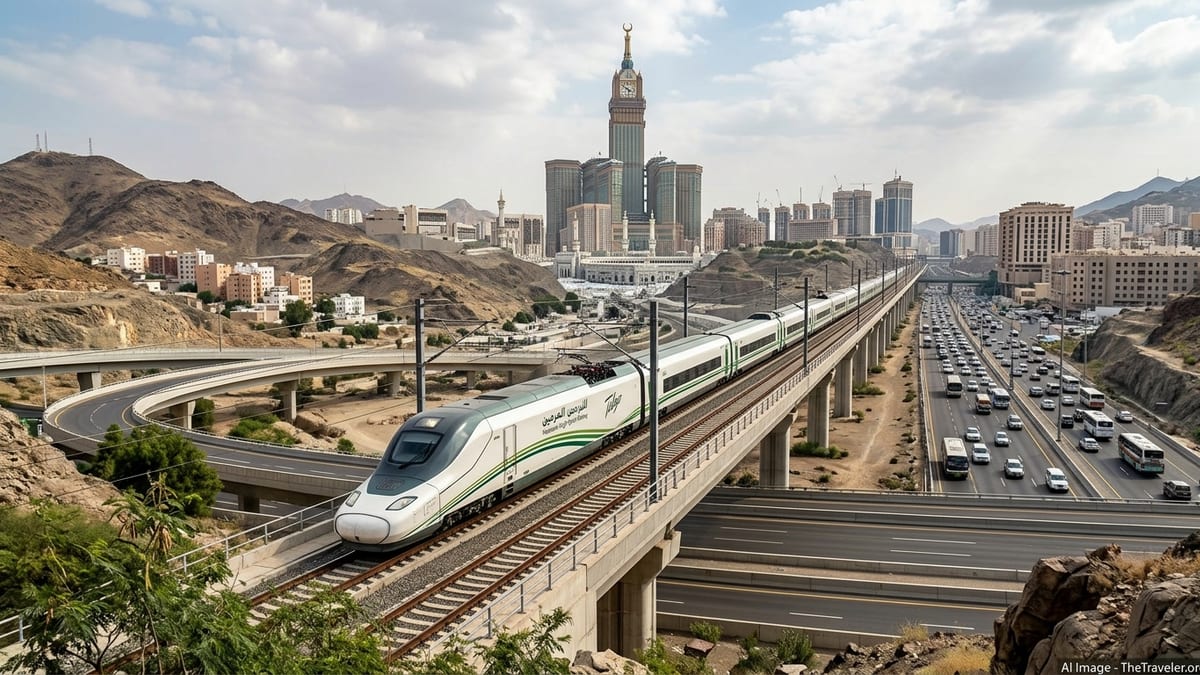
Saudi Arabia’s Haramain High-Speed Railway carried more than 1.16 million passengers between Makkah and Madinah during the 1447 AH Hajj season, Saudi Arabia Railways confirmed on 11 June 2026, underscoring how the 300 km/h line has become the main long-distance link between the two holy cities for pilgrims and other travelers.
Get the latest news straight to your inbox!
What the new Hajj passenger record confirms about the line
Saudi Arabia Railways’ statement in June 2026 described the 1447 AH Hajj operational plan as a success, with 5,569 Haramain services running between Makkah, Madinah, Jeddah Main Station, King Abdulaziz International Airport in Jeddah and King Abdullah Economic City. The 1.16 million passenger figure refers specifically to Hajj season travel, not a full year, highlighting how concentrated demand is around the pilgrimage period.
The kingdom’s Pilgrim Experience Program, which oversees initiatives linked to Vision 2030, has consistently cited a maximum operating speed of 300 km/h on the 453 km Haramain corridor and regular end to end journey times of about 2 hours 15 minutes between Makkah and Madinah. For many Hajj and Umrah visitors, that cuts a road journey that can take four hours or more in heavy traffic to roughly half the time, with far more predictable arrival times.
Transport General Authority statistics for 2026 show how central the route has become in Saudi intercity rail. In the second quarter of 2026, the authority reported that Haramain services carried around 1.6 million passengers systemwide, while in the third quarter Haramain accounted for roughly three quarters of all intercity rail passengers in the kingdom, confirming that the Makkah–Madinah corridor dominates long distance passenger rail demand.
Saudi planning documents for Vision 2030 have highlighted the Haramain line as one of the country’s flagship public transport projects in the western region. Annual reports from the Pilgrim Experience Program state that on time performance on the route has exceeded 95 percent since the start of operations, an important factor for travelers trying to connect flights at King Abdulaziz International Airport or coordinate hotel check in and group itineraries during tightly scheduled pilgrimage programs.
How the 300 km/h Makkah–Madinah service operates
The Haramain High-Speed Railway is an electrified double track line running about 453 km between Madinah and Makkah, with intermediate stations at King Abdullah Economic City near Rabigh, Jeddah’s main city station and the dedicated station at King Abdulaziz International Airport. The infrastructure and rolling stock have been developed to European high speed standards, and the operating company reports a normal commercial speed of up to 300 km/h.
According to Saudi government material and operator information, most non stop or limited stop services cover the full Makkah–Madinah distance in around 2 hours 15 minutes. The shorter city pairs are considerably quicker: Jeddah Airport to Makkah typically takes under an hour by rail, compared with road journeys that can exceed 90 minutes when traffic and security checks are heavy, especially in the days before and after Hajj.
Operational plans published around recent Hajj seasons describe intensive peak timetables, with thousands of trains scheduled over roughly two to three months and capacity measured in millions of seats. For the 1447 AH season, official planning figures referenced more than 2.2 million available seats and over 5,300 planned trips systemwide, suggesting the line is now sized to move very large daily flows between the two holy cities and the Jeddah metro area.
The operator has indicated that the current fleet consists of dozens of high speed trainsets, with additional units being added to support growing demand. The trains run dedicated services for different passenger segments during Hajj, and crowd management procedures at stations are coordinated with the Ministry of Hajj and Umrah and security agencies to separate flows and keep platforms and concourses from becoming over congested at peak times.
What this means in practice for pilgrims and other travelers
For individual Hajj and Umrah pilgrims arriving by air, the main practical shift is that the Haramain line turns King Abdulaziz International Airport into a true rail hub for the holy cities. A traveler landing at Jeddah can move from the arrivals area to the airport station and board a high speed train to either Makkah or Madinah without using highway coaches or taxis for the long intercity leg, reducing time on the road and exposure to traffic delays.
Saudi authorities increasingly frame the rail option as the default long distance mode between Makkah and Madinah during busy seasons, with buses and private cars playing more of a feeder role between stations and hotels or neighborhood districts. For pilgrims who are elderly or traveling with children, the combination of step free access at stations, air conditioned concourses and reserved seating on board can make the journey more predictable and less physically demanding than multiple bus transfers on congested ring roads.
Typical journey times and on time performance also make it easier for packaged Hajj groups to plan tightly timed itineraries, which often require holding specific prayer times in Makkah, scheduled visits in Madinah and fixed return flights. With rail travel from central Makkah to central Madinah usually taking a little over two hours once on board, operators can build more precise timetables than when they had to allow for wide variations in highway traffic conditions.
For independent travelers, the line offers an alternative to chartered vans or taxis, particularly outside the core Hajj days. However, price comparisons remain route and date specific. Publicly available booking examples and traveler reports suggest that fares between Makkah and Madinah can rise closer to departure and during peak demand periods, so rail is not always the cheapest option for large families, even though it usually offers the shortest and most comfortable journey once station access is factored in.
Booking, capacity and limitations travelers should know about
The Saudi government promotes Haramain tickets as bookable through the operator’s official digital channels and, for pilgrims, via the Nusuk platform. The national e government portal describes Haramain booking as an electronic service integrated into Nusuk for pilgrims, meaning that many Hajj and Umrah packages now include or encourage rail segments. Separate operator apps and websites also exist for the general public, although users have at times reported difficulties with website performance or app access from abroad.
One practical constraint is that detailed timetables and precise booking windows can vary by season. Official material confirms that Hajj specific operational plans are drawn up each year, with significantly more trains and seat capacity during pilgrimage months than at quieter times. Travelers planning trips for late 2026 or beyond should therefore treat the 1447 AH Hajj figures as evidence of current maximum capacity, not a guarantee that the same number of daily services will run year round.
Another limitation is geographical coverage. The high speed line directly serves only the five Haramain stations. Travelers staying in hotels some distance from these locations still need taxis, ride hail services or group buses to complete the first and last legs. For some groups, especially those booked into accommodation near Jeddah’s northern districts or in outlying neighborhoods of Makkah and Madinah, a direct highway coach can still be simpler even if it is slower overall.
There are also capacity pinch points at very specific times, such as the immediate post Arafat and post Eid periods, when demand for seats out of Makkah can be intense. The 1.16 million passenger figure for the 1447 AH Hajj season shows that the system can move very large numbers, but it does not eliminate crowding for travelers who have little flexibility in their departure day or time.
Next steps for the corridor and what travelers should check
Saudi planning documents and transport statistics indicate that Haramain’s role is growing as part of a wider rail expansion strategy, with intercity passenger numbers on the route rising year on year. The 2025 data from the Transport General Authority and other official publications suggest that Haramain is consistently one of the busiest rail services in the country, and authorities describe it as a backbone for west coast mobility during pilgrimage seasons.
Future enhancements already mentioned in government and operator statements include increasing the train fleet, further boosting seasonal capacity and integrating ticketing more deeply with digital platforms used by pilgrims. However, most of these references are framed as plans or ongoing improvements rather than dated, fully confirmed projects, so travelers should not assume that specific new stations or dramatic timetable changes will be in place by a certain year until formal operating notices are issued.
For now, the most important confirmed development for travelers is that the 300 km/h link proved capable of carrying more than 1.16 million passengers in a single Hajj season in 2026 while maintaining high punctuality levels, according to official figures. Anyone planning Hajj or Umrah itineraries that involve both holy cities should check current Haramain schedules, station locations in relation to their hotels and whether their package includes rail segments before committing to nonrefundable flights or accommodation.
Because fares, departure times and booking channels can change from season to season, prospective passengers should always verify details directly with official Saudi platforms or the operator shortly before travel. The strong 1447 AH performance suggests the train will remain a central option for years to come, but the precise way it fits into individual itineraries will continue to depend on up to date schedules and prices rather than on historical averages or past Hajj plans.