


More news on this day
Shanghai Hongqiao International Airport has introduced one of China’s most aggressive domestic check-in windows, allowing some passengers to complete formalities just 15 minutes before departure in a move aimed at business travelers and time-sensitive corporate itineraries.
Get the latest news straight to your inbox!
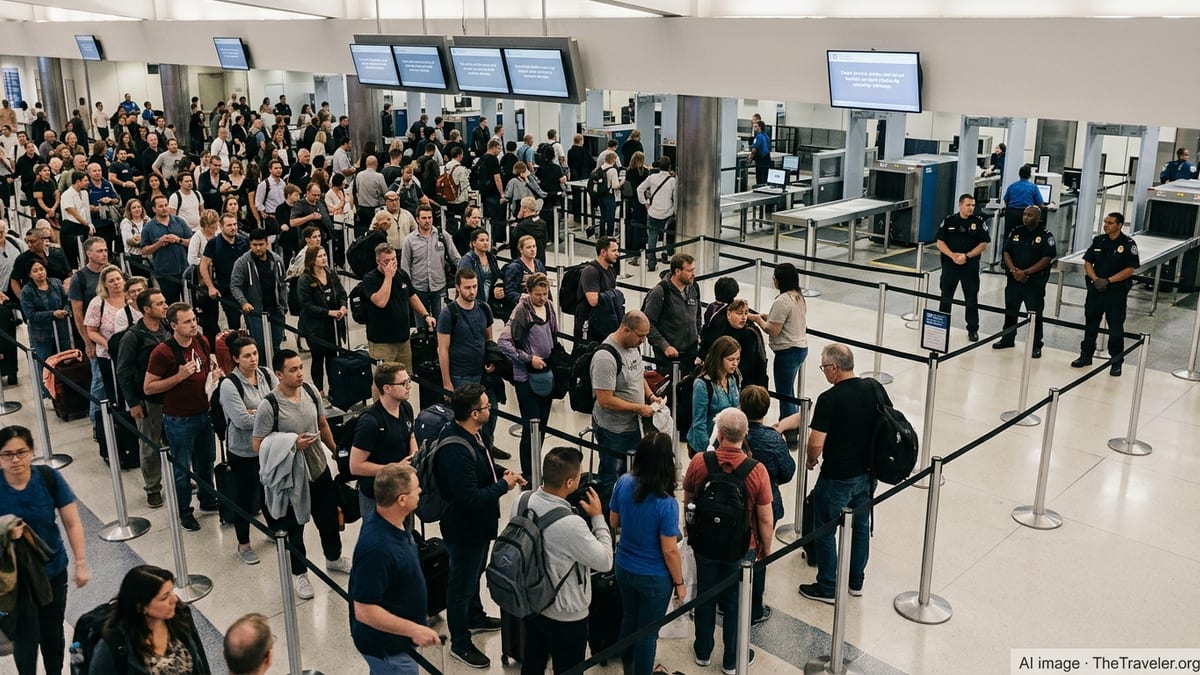
New Cutoff Rules Redefine Last-Minute Boarding
Publicly available information indicates that from late June 2026, passengers without checked baggage on domestic flights operated by China Eastern Airlines, Shanghai Airlines and China United Airlines at Shanghai Hongqiao can complete airport check-in as little as 15 minutes before departure. The change sharply tightens existing cutoffs that were already considered relatively generous by regional standards.
The latest adjustment builds on earlier phases of reform. In January 2025, Hongqiao trimmed its domestic check-in deadline from 45 minutes to under 35 minutes, followed by an October 2025 revision that brought the cutoff for carry-on-only travelers down to 30 minutes before takeoff. Selected services, such as Spring Airlines operations from Terminal 1, were reported to be experimenting with even shorter windows.
By pushing the cutoff down to 15 minutes for a targeted group of domestic passengers, the airport is signaling increasing confidence in its ability to process travelers at speed. The change is framed in local coverage as part of a broader modernization drive across Shanghai’s two major airports, which serve a mix of regional shuttles, long-haul international flights and high-yield corporate traffic.
While the published rules focus on passengers without checked luggage and on specific carriers, the initiative effectively rewrites what “last minute” means at one of China’s busiest domestic hubs. For corporate travel planners, the new standards allow tighter scheduling around client meetings, rail connections and same-day returns.
Protecting Corporate Road Warriors From Disruptions
Hongqiao’s evolving check-in policy comes against a backdrop of increasingly complex travel patterns for business and conference travelers in China’s Yangtze River Delta. The airport sits adjacent to Shanghai Hongqiao Railway Station, a key node on the country’s high-speed rail network, and serves dense shuttles to cities such as Beijing, Guangzhou, Shenzhen and Chengdu that are heavily used by corporate travelers.
Shorter check-in cutoffs give companies more room to navigate the knock-on effects of delayed high-speed trains, urban traffic congestion and seasonal weather systems that can ripple through travel schedules. With a 15-minute window for eligible domestic passengers, itineraries that once required conservative buffers of an hour or more can now be re-optimized to preserve meeting time and reduce unproductive dwell at the airport.
Industry commentary suggests that corporate travel managers are increasingly under pressure to balance employee wellbeing with productivity. Allowing staff to remain on site with clients for longer, while still maintaining a realistic chance of making evening departures from Hongqiao, aligns with that push. In periods of disruption, the shorter cutoff also creates more flexibility to switch to alternative domestic departures without fully reworking same-day plans.
The move is also strategically timed around major trade and investment events hosted in Shanghai, such as the annual China International Import Expo, which had already prompted earlier reductions in check-in deadlines at Hongqiao. High-profile exhibitions compress vast volumes of meetings into a few days, and any extra travel slack reclaimed through faster processing tends to be prized by visiting executives.
Behind the Acceleration: Process, Tech and Layout
The ability to cut check-in deadlines without compromising operational stability depends on years of gradual process redesign. Official service benchmarks from Shanghai Airport Group describe coordinated improvements across check-in, baggage handling, security screening and boarding, supported by expanded use of self-service kiosks, biometrics and automated bag drops.
Hongqiao has previously piloted near end-to-end self-service journeys on selected routes, reducing some check-in interactions to under two minutes. Reports on terminal operations highlight reorganized queuing areas, more consistent peak-hour staffing at security and closer integration between airline and airport systems so that boarding gate changes, seat assignments and baggage status updates can be shared in real time.
Another enabling factor has been the streamlining of entrance security at both Shanghai airports. Over the past two years, terminal entry checkpoints that once required a second baggage scan before check-in have been removed or scaled back, shifting the main security touchpoint to the consolidated screening zones after check-in. Travelers and local media have noted visibly shorter lines at terminal doors compared with the pre-adjustment period.
The physical relationship between Hongqiao Airport and the adjacent high-speed rail hub also plays a role. Shared metro links and transfer corridors allow corporate travelers to move between rail platforms, offices in the nearby Hongqiao central business district and the airport terminals with relatively predictable timing, which in turn makes a 15-minute cutoff more viable for hand-baggage-only passengers accustomed to the layout.
Comparisons With Other Hubs and Remaining Risks
In a global context, Hongqiao’s latest domestic cutoff appears notably aggressive. Many large international hubs still advertise domestic check-in closing times in the range of 30 to 45 minutes, with airlines often advising passengers to arrive much earlier to absorb security screening and potential queues at boarding document checks.
Shanghai’s approach reflects a broader regional trend toward compressing ground time for short-haul travelers, but Hongqiao now sits at the leading edge of that shift. Its focus on passengers without checked bags mirrors developments at several Asian and European airports, where fast-track or “express” products are marketed specifically to frequent business travelers and premium cardholders.
Despite the headline figure of 15 minutes, travel experts caution that the window does not erase standard risk factors. Passengers still need to clear security, walk to the gate and be present before boarding closes, all of which can be affected by weather, peak holiday traffic or irregular operations. For those unfamiliar with the airport, relying fully on the minimum cutoff may leave little margin for unexpected delays.
Corporate travel policies may therefore treat the new standards more as a safety net than a target. While the shorter cutoff helps protect itineraries when meetings run over or urban traffic stalls, many firms are expected to keep internal guidelines that recommend more conservative arrival times at Hongqiao, especially during major holidays or when connecting from international flights at Shanghai Pudong.
What Travelers Should Expect on the Ground
For travelers planning upcoming trips through Hongqiao, the practical impact of the policy depends on carrier, ticket type and baggage. The most aggressive 15-minute cutoff applies only to a subset of domestic flights and passengers without checked luggage, and individual airlines retain their own boarding deadlines that can differ from airport-level benchmarks.
Publicly available schedules and advisories recommend that even eligible travelers account for walking distances, possible security queues and the time needed to locate gates in the terminal. Those connecting from high-speed rail at Hongqiao Station are likely to benefit most, as the new cutoff effectively extends the viable range of rail arrivals that can connect to evening departures with minimal waiting.
On days of severe weather or system disruption, the condensed check-in window could also be used to rebook affected corporate travelers onto later departures that would previously have been considered too tight. That flexibility may reduce the need for overnight stays in Shanghai after missed flights, especially for travelers operating within the dense domestic network served from Hongqiao.
For now, the changes underscore Shanghai’s ambition to position Hongqiao as a flagship hub for fast, multimodal business travel. As other Chinese airports study similar process improvements, frequent flyers across the region may see more aggressive domestic check-in cutoffs becoming a competitive feature of airport service, rather than an exception reserved for niche express products.