


Sheki, tucked into the forested foothills of the Greater Caucasus about 5 hours west of Baku, is one of Azerbaijan’s most atmospheric small cities. With a UNESCO‑listed historic center, a caravanserai where you can still sleep in stone chambers, and a food scene built around slow‑cooked piti stew and syrupy Sheki halva, it rewards travelers who linger at least a night or two. This guide brings together the most useful, up‑to‑date details on how to get there, what to see, what to eat, and the small local tips that make a short stay in Sheki feel much richer.
Get the latest updates straight to your inbox!
Why Sheki Belongs on Your Azerbaijan Itinerary
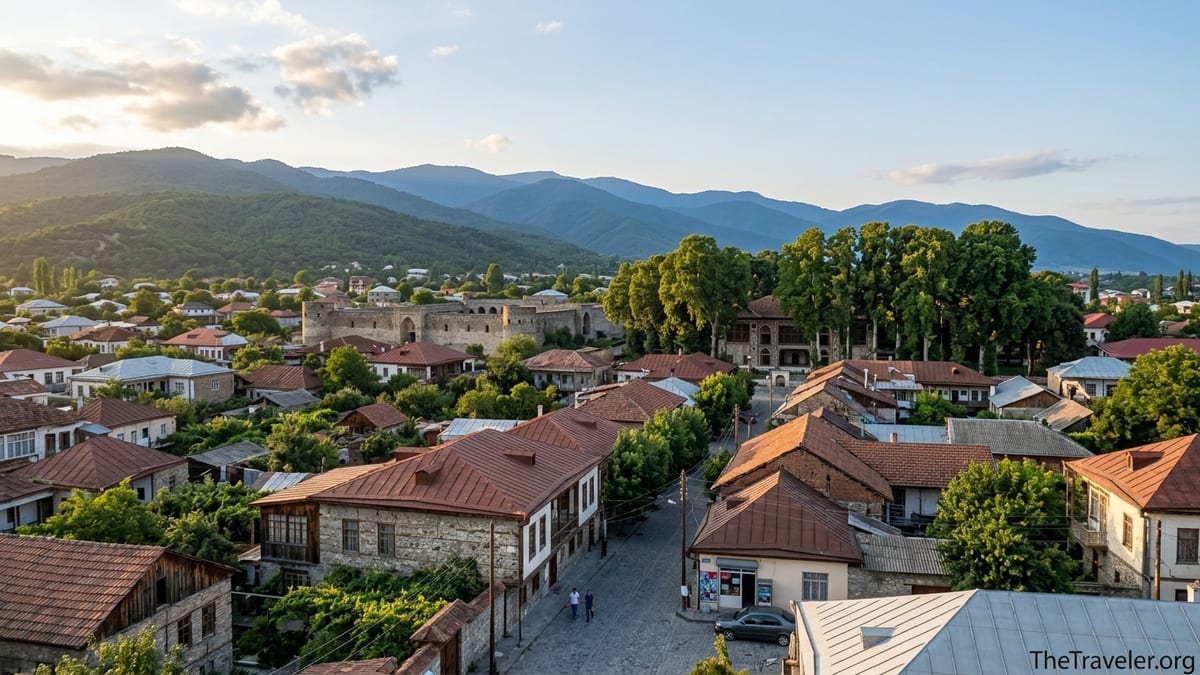
Sheki feels very different from Baku’s seaside boulevards. Low red‑tiled houses spread across green hillsides, walnut trees shade quiet streets, and in the distance you see the first ridges of the Caucasus. The historic center was inscribed on the UNESCO World Heritage list in 2019, thanks to its blend of 18th and 19th century architecture, including the famous Khan’s Palace and merchant houses decorated with stained glass and carved wood. For travelers, that translates into a compact, walkable old town where most of the main sights sit within a 10 to 15 minute stroll of one another.
Unlike some bigger Silk Road hubs that have turned heavily toward large tour groups, Sheki still functions mainly as a regional town. You will see farmers coming to the bazaar from nearby mountain villages in the early morning and families using the same teahouses that tourists favor in the afternoon. English is less widely spoken than in Baku, but younger staff in hotels, cafes and museums usually speak at least some, and simple words of Azeri or Russian go a long way. The pace is slower, costs are lower, and a couple can comfortably eat, sleep and sightsee here for much less than in the capital.
Because of its location, Sheki also works well as a base for exploring the northwest of Azerbaijan. Day trips to nearby villages such as Kish, with its ancient Albanian church, or onward travel toward the forested town of Qabala are straightforward by taxi or local bus. Many visitors now slot Sheki into a one‑week Baku and countryside itinerary, coming by bus or train from the capital, spending one or two nights, and then looping back or continuing deeper into the mountains.
Getting to Sheki and Getting Around
Most travelers reach Sheki from Baku. As of mid‑2026, the most popular option is the marshrutka or coach bus from Baku’s main Avtovagzal bus terminal on the western edge of the city. Buses and minibuses to Sheki typically take around 4.5 to 5 hours, depending on traffic and stops, and cost roughly 10 to 12 Azerbaijani manat per person, which is about 6 to 7 US dollars. Tickets can usually be bought on the day at the terminal ticket windows, though around local holidays seats can sell out and it is wise to go earlier or ask your Baku hotel to book ahead via local apps.
The rail connection is an alternative many travelers now consider because of comfort. Azerbaijan Railways runs a daily service between Baku and Sheki, including an overnight option on some days. The journey time is around 5 hours and a second‑class ticket tends to be in the range of 7 to 10 US dollars equivalent. Sheki’s railway station actually lies outside town, roughly 15 kilometers from the center, so when you arrive you will need to take a taxi. Expect to pay approximately 8 to 12 manat for the ride into the old city if you agree the price in advance.
Private transfers from Baku are also possible and are increasingly advertised by local transport companies and guesthouses. A typical sedan transfer for up to three passengers usually costs around 55 to 70 US dollars one way, depending on whether you book through a hotel or directly with a driver. The advantage is door‑to‑door service and the option to stop at places like Shamakhi or Lahij village on the way. If your time in Azerbaijan is short, a private transfer can make sense for one direction and public transport for the other.
Once in Sheki, getting around is simple. The historic quarter around the Khan’s Palace and caravanserai is compact and walkable, though streets can be steep and cobbled in places. Taxis are plentiful and inexpensive; most short hops in town cost the equivalent of 1 to 3 US dollars. There is no metro or formal city bus system useful to visitors, and rideshare apps can be unreliable, so the easiest approach is to ask your hotel to call a trusted driver or flag a licensed taxi at the main square or bus station. For nearby excursions, such as the village of Kish about 15 minutes away, hiring a taxi for a half‑day is practical and still relatively affordable.
Top Sights and Experiences in Sheki
The single most famous attraction in Sheki is the Khan’s Palace, an 18th century summer residence built for the local khans when the city was a semi‑independent center on the Silk Road. The building is small in footprint, but its facade of wooden latticework and colorful shebeke stained glass is intricate and unique to this region. Inside, wall and ceiling frescoes depict hunting scenes, floral patterns and geometric designs. Photography rules can change, but visitors are often asked not to take photos inside, so plan to enjoy the details with your eyes instead of through a lens. Entry fees remain modest, usually just a few manat per person.
Just downhill from the palace lies the Karavansaray, a 18th century caravanserai built around a large stone courtyard that once hosted traders and their animals. Today it functions partly as a simple hotel and partly as an atmospheric restaurant and teahouse. Even if you do not stay overnight, it is worth visiting for dinner or an evening tea under the huge plane trees, with stone arches lit by warm yellow lights. Room prices are often in the budget range compared with modern hotels; many travelers book a night for the experience of sleeping in what feels like a historic roadside inn.
Sheki’s bazaar is another key stop, particularly in the morning. Here you see local life close up: stalls selling fresh herbs, cheeses, nuts, honey from the surrounding forests and seasonal fruits like mulberries and persimmons. Small stands sell fresh tandir bread straight from clay ovens, and it is easy to put together an inexpensive picnic for a few manat. On the edge of the bazaar and in nearby streets, specialist sweet shops sell Sheki halva in large trays or neatly packed boxes, which locals buy both for home and as gifts.
For a change of scenery, many visitors make a short trip to the village of Kish, about 5 to 6 kilometers from town. The main attraction, the Church of Kish, is associated with the ancient Caucasian Albanian Christian tradition and has been restored as a small museum with a peaceful garden and views of surrounding mountains. You can reach Kish by taxi for a modest fare, and some drivers will wait an hour or two while you explore for an agreed price. In summer, there are also simple roadside cafes near Kish where you can sit beside small streams and drink tea in the shade.
Eating in Sheki: Piti, Halva and More
Food is one of the biggest reasons people come to Sheki. The city is considered the home of piti, a slow‑cooked lamb and chickpea stew flavored with saffron and often chestnuts, cooked and served in individual clay pots. Eating piti has its own ritual. First, the broth is poured over chunks of day‑old bread in a separate bowl and eaten as a soup. Then the remaining meat and chickpeas are mashed and eaten with pickled onions and sumac. In Sheki, piti is traditionally a hearty winter dish, but because of visitor demand it is now available most of the year in popular restaurants.
You can find piti at many local spots, but travelers often mention dedicated piti houses and traditional restaurants just downhill from the palace and around the bazaar. An individual portion of piti with bread usually costs the equivalent of 4 to 7 US dollars, depending on the setting. This makes it an excellent value main meal, especially at lunch. A typical local experience is to sit at a wooden table in a simple tiled dining room, with a samovar of tea on a side table and Azerbaijani music playing softly in the background.
Another emblematic specialty is Sheki halva, also known as Sheki pakhlava. Unlike versions of baklava you might know from Turkey or the Middle East, the Sheki style is built from very thin layers of rice flour pastry, finely chopped local nuts and aromatic syrup scented with saffron and cardamom. The top is usually decorated with a lattice pattern. Boxes of halva from established producers in town are a classic souvenir; expect to pay in the range of 3 to 5 US dollars for a small box, more for larger gift tins. Shops can pack purchases carefully if you plan to fly onward.
Beyond these headline dishes, menus in Sheki often feature kebabs cooked over charcoal, saj platters of meat and vegetables cooked on an iron griddle, dolma made with vine leaves from nearby vineyards, and a range of salads heavy on tomatoes, cucumbers and fragrant herbs. At mid‑range places such as popular family restaurants in the center, a full dinner for two with a shared salad, two main dishes and non‑alcoholic drinks typically runs between 20 and 35 US dollars equivalent. For a cheap but filling meal, small canteens and simple eateries around the bazaar can feed you for much less.
Where to Eat and Drink: Concrete Recommendations
In and around the old city, several restaurants and cafes consistently attract both locals and visitors. Traditional courtyard restaurants near the caravanserai are popular for dinner in warm months, when tables spill into open air and musicians sometimes play mugham or light folk music in the evenings. Many visitors praise the combination of setting and value: one traveler might order piti, a plate of grilled vegetables, bread and two teas and pay well under 15 US dollars for the whole table.
Elsewhere in town, standalone restaurants specialize in classic Azerbaijani dishes. Some are known for their version of piti and others for grilled meats or soups. Prices remain moderate by international standards; it is unusual to pay more than 8 to 10 US dollars for a main course even at one of the better‑known spots. A few newer cafes have opened near the main streets and parks, serving decent espresso alongside cakes and local sweets, which appeals to younger locals and travelers who want a change from teahouse fare.
For dessert and snacks, it is worth visiting one of the established halva workshops and sweet shops just outside the most touristy strip. Here you can sometimes watch parts of the process of stretching dough or cutting trays into diamond shapes. Many shops also sell other regional sweets such as walnut preserves or fruit leathers. Picking up a box of halva and a jar of walnut jam for under 10 US dollars together is normal and makes a practical edible gift to take back to Baku or home.
Tea culture is very present. Instead of coffee bars on every corner, you see teahouses where men sit for hours over tulip‑shaped glasses of strong tea. As a visitor, you will be welcome, especially in mixed or family‑oriented venues. Tea is usually served with sugar cubes, jam or sweets, and often appears automatically after a meal at mid‑range restaurants, sometimes as a complimentary gesture. This is a moment to slow down and watch daily life rather than rush to the next sight.
Where to Stay and How Long to Spend
Sheki offers a range of accommodation, from simple guesthouses to atmospheric stays in historic buildings. The caravanserai hotel inside the old complex is the most distinctive option. Rooms are basic, with thick stone walls, simple furnishings and modest bathrooms, but spending a night there gives you the rare chance to walk in a quiet historic courtyard after day visitors leave. Standard doubles here often cost considerably less than a comparable boutique hotel in Baku, making it attractive for budget‑minded travelers who prioritize character.
In and around the old town, several small hotels and family‑run guesthouses occupy renovated traditional houses. They typically offer clean en‑suite rooms, breakfast included, and friendly hosts who can help arrange taxis, recommend eateries and share local tips. Nightly rates for a double room generally range from 30 to 70 US dollars depending on comfort level and season. In peak summer and during national holidays, it is sensible to book at least a few days ahead, while in shoulder seasons you can sometimes negotiate rates in person.
Larger modern hotels sit a little further from the historic center, often along main roads with easier car access and parking. These tend to appeal to local business travelers and tour groups, with features like conference rooms and larger restaurants. If you are traveling by rental car or prefer elevators and standardized amenities, they can be a convenient base. However, if your main aim is to soak up Sheki’s old‑world character, staying within or near the historic quarter usually feels more rewarding.
In terms of time, one full day and one night is the bare minimum: you could arrive around midday, visit the Khan’s Palace and caravanserai, eat piti and halva, and leave the next afternoon. However, two nights gives you a more relaxed rhythm and allows for a side trip to Kish, extra time at the bazaar, or simply an unhurried evening over tea under the trees. If you are building a week‑long itinerary in Azerbaijan, splitting it between Baku, Sheki and one other mountain area such as Qabala or Lahij village makes practical sense.
Money, Safety and Practical Local Tips
Sheki is generally considered safe for visitors, including solo travelers. Crime rates are relatively low, and incidents involving tourists are rare. That said, you should follow common‑sense precautions: keep valuables out of sight, avoid leaving bags unattended in crowded transport hubs, and be cautious when walking on unlit streets late at night. Traffic rather than crime is more likely to be a hazard; some streets lack sidewalks, and drivers do not always slow down for pedestrians, so be careful when crossing roads.
The local currency is the Azerbaijani manat, and Sheki is still a mostly cash‑based economy. A few hotels and higher‑end restaurants accept credit cards, but many small eateries, taxis and market stalls only take cash. There are ATMs around the main square and along central streets, though they can sometimes be out of service. It is wise to withdraw enough cash in Baku or at your first opportunity in Sheki to cover at least a day or two of expenses. Prices for everyday items are modest compared with Western Europe: a bottle of water from a small shop costs a fraction of a US dollar, and a simple local lunch rarely exceeds a few dollars.
Dress is casual but relatively conservative. In summer, light clothing is fine, but both men and women will feel more comfortable in shorts that reach at least mid‑thigh and tops that are not overly revealing, especially outside the most touristy areas. If you plan to visit mosques or churches, bring a scarf to cover your head and shoulders if required. Sheki’s climate features warm summers and cool, sometimes snowy winters; spring and autumn are often the most pleasant times to visit, with sunny days and comfortably cool evenings.
Language can be a small barrier, but it is usually manageable. Azerbaijani is the main language, and older residents often speak Russian as a second language. English is more common among younger people and those working in tourism. Carrying the name of your hotel or key destinations written in Azerbaijani script can be helpful for taxis. A friendly attitude and a willingness to mime or point at maps tend to smooth over misunderstandings, and locals are generally patient and hospitable.
The Takeaway
Sheki is not a city of grand monuments or flashy attractions, but rather a place where smaller experiences add up: the filtered light through stained glass at the Khan’s Palace, the first spoonful of rich piti broth over bread, the quiet of the caravanserai courtyard after dark, and the sight of mountains rising beyond red roofs in the morning. For travelers who appreciate atmosphere, food, and a glimpse of everyday life in the Caucasus, it offers excellent value and a memorable contrast to Baku.
Plan at least one or two nights, arrive with some cash in manat, build time for slow meals and teahouse pauses, and be ready for a slightly less polished but more personal travel experience. With realistic expectations and a flexible schedule, Sheki is likely to be one of the most vivid stops on your journey through Azerbaijan.
FAQ
Q1. How many days do I need in Sheki? Most travelers find that one full day and one night is the minimum to see the main sights, but two nights allows a more relaxed visit and time for a side trip to Kish village.
Q2. What is the best way to get from Baku to Sheki? The most common options are the bus or marshrutka from Baku’s main bus terminal, which takes about 4.5 to 5 hours, or the train, which takes around 5 hours but is often more comfortable; both are inexpensive by international standards.
Q3. Is Sheki safe for solo travelers? Sheki is generally safe, with low levels of serious crime affecting tourists; standard precautions such as looking after valuables and avoiding poorly lit streets late at night are usually sufficient.
Q4. Do I need to book accommodation in advance? Outside peak summer and national holidays, you can sometimes find rooms on arrival, but booking at least a few days ahead is sensible if you want specific places like the caravanserai hotel or small guesthouses in the old town.
Q5. Can I visit Sheki as a day trip from Baku? It is technically possible but not recommended, because the journey each way takes around five hours; an overnight stay is much more enjoyable and gives time to see the main attractions without rushing.
Q6. What should I definitely eat in Sheki? Make time to try piti, the local lamb and chickpea stew served in clay pots, and Sheki halva, the syrupy nut‑filled pastry that is a regional specialty and popular gift.
Q7. Is English widely spoken in Sheki? English is not as common as in Baku, but staff in hotels, main restaurants and tourist sites often speak some; learning a few basic phrases in Azerbaijani or Russian is helpful but not essential.
Q8. What is the price range for meals and hotels? A typical meal in a mid‑range restaurant might cost 8 to 15 US dollars per person, while double rooms in guesthouses or smaller hotels usually range from around 30 to 70 US dollars per night, depending on season and comfort level.
Q9. When is the best time of year to visit Sheki? Spring and autumn are ideal, with mild temperatures and greener landscapes; summers can be hot in the middle of the day, while winters are quieter and colder but can be atmospheric if you do not mind chilly weather.
Q10. Can I use credit cards, or do I need cash? You may be able to pay by card in some hotels and larger restaurants, but many smaller businesses, taxis and market stalls only accept cash, so carrying manat is important for everyday expenses.