


More news on this day
British holidaymakers are being urged to rethink how they pay and protect themselves overseas, after travel expert Simon Calder highlighted a series of “red flag” risks facing anyone flying abroad this summer.
Get the latest news straight to your inbox!
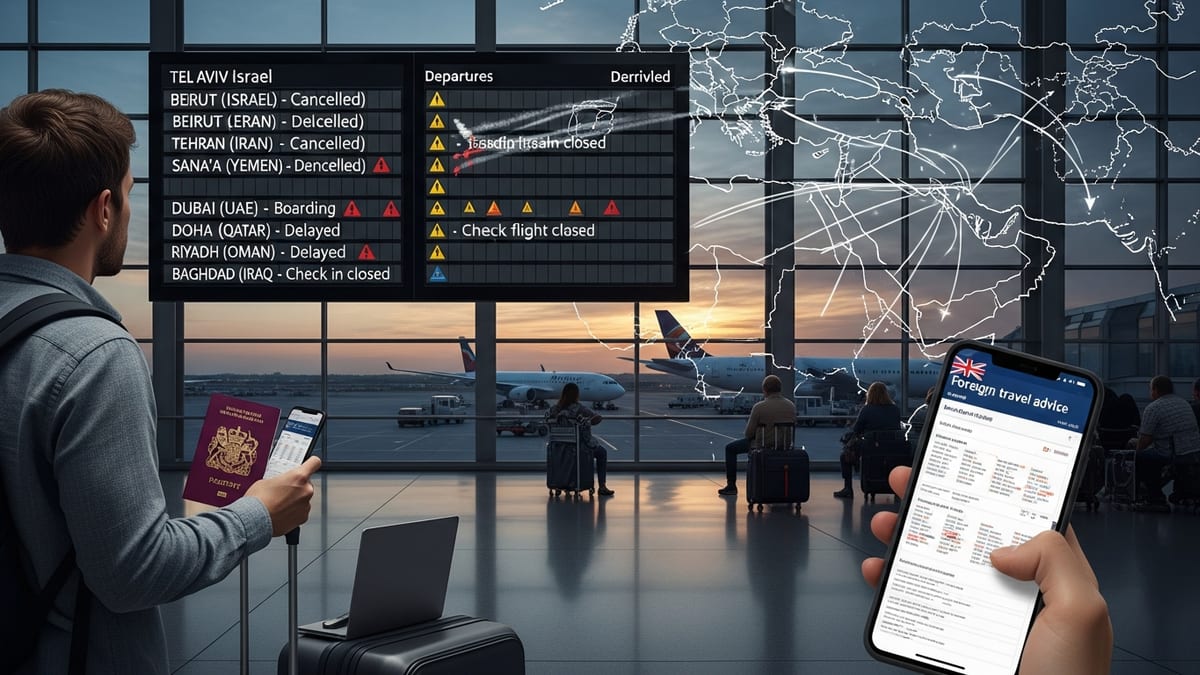
Focus on medical cover as millions travel without insurance
Recent research published by insurer Admiral shows that nearly six million UK travellers are planning trips abroad this year without any medical cover, a gap Simon Calder has described in broadcast and print commentary as a major red flag for anyone boarding a plane. The figures indicate that a significant share of British holidaymakers still rely on luck, or on limited reciprocal arrangements in Europe, rather than comprehensive policies that cover emergencies, repatriation and cancellations.
Publicly available information from Admiral’s study highlights that medical treatment in popular destinations can lead to five-figure bills, with emergency repatriation to the UK from Europe alone estimated in the thousands of pounds. Travel specialists note that costs can escalate even further in North America or long-haul locations, particularly if intensive care or air ambulance services are involved.
Calder has consistently pointed out in media appearances that many travellers focus on headline flight deals and hotel discounts but overlook the financial impact of being taken ill overseas. Industry analysis suggests that some Britons wrongly assume their European Health Insurance Card or Global Health Insurance Card will pick up all medical costs, when in fact these schemes generally only provide access to state healthcare and do not cover private treatment, mountain rescue or getting home.
Insurance comparison data indicates that basic single-trip policies can cost less than an airport meal, yet are often bought at the last minute or not at all. Consumer groups say this behaviour leaves travellers exposed if they fall ill before departure, as they have no protection for cancelling a trip, one of the biggest sources of claims.
Payment problems and frozen cards at foreign terminals
Alongside gaps in insurance, Calder has raised a separate red flag about how British travellers pay for goods and services abroad, warning that relying on a single card or payment method can quickly unravel a trip. Guides on card use overseas note that banks are increasingly sophisticated at spotting unusual patterns, but they may still block or query foreign transactions, particularly in locations associated with higher fraud rates.
Recent advisories on using credit and debit cards overseas explain that many international terminals are configured differently from the UK, often requiring a four-digit PIN and sometimes declining contactless payments for security reasons. Travellers who have never set a PIN for a credit card, or who store that information only in a phone they cannot unlock, can find themselves unable to pay at restaurants, toll booths or fuel stations.
Financial education sites also highlight the quiet costs attached to the wrong card choice. Foreign transaction fees, dynamic currency conversion at card machines and cash-advance charges at ATMs can add between 3 and 10 per cent to everyday holiday spending. Calder has repeatedly urged travellers in his consumer commentary to check card terms before departure and, where possible, use specialist travel cards that waive overseas fees and provide clearer exchange rates.
Experts increasingly recommend that British holidaymakers carry at least two different payment cards, ideally from separate networks, and keep a modest cash reserve in widely accepted currencies such as euros or US dollars. This layered approach is designed to protect against local terminal outages, frozen accounts or lost wallets, all of which can strand travellers without funds.
Digital dependence exposes gaps when systems go offline
Another concern flagged by Calder and other travel commentators is the growing dependence on digital tools that can fail at critical moments. Travel planning guides published this summer describe a pattern in which boarding passes, hotel confirmations, map directions and even train tickets are stored exclusively in apps or email accounts that require a live data connection.
When airport Wi-Fi or mobile roaming fails, travellers can find themselves unable to display barcodes at check-in, verify booking references at hotel desks or locate accommodation addresses. Recent online travel checklists urge passengers to build “offline readiness” into every trip by downloading boarding passes locally, saving maps for offline use and printing or screenshotting key details before leaving home.
Reports on offline payment processing also underline the fragility of modern systems. Many chip-and-PIN terminals in shops, bars and small guesthouses are configured to seek real-time authorisation for every transaction. If the connection drops, some businesses simply switch to cash only, catching out visitors who assumed cards would always be taken. Calder has warned that in smaller resorts or rural areas, particularly in parts of southern Europe, it is unwise to arrive with no cash at all.
Travel safety resources now commonly advise a blend of technologies: paper copies of crucial documents, digital backups stored on a separate device or cloud account, and an awareness of how to access bookings without relying on a single app. These measures, while simple, directly address the vulnerabilities that have disrupted trips in recent peak seasons.
Brexit-era border rules and new entry systems for Europe
Beyond money and insurance, British travellers continue to face complex post-Brexit border rules that Calder has repeatedly dissected in newspaper columns and broadcast segments. Since leaving the European Union, UK passport holders must comply with the 90-days-in-180 rule for stays within the Schengen area, as well as new validity requirements that can catch out those travelling on older burgundy passports.
Travel industry briefings stress that many UK travellers still misunderstand these rules, assuming they can take extended stays or multiple lengthy trips without tracking days. Airlines and border agencies, however, are now using automated systems to calculate time spent in the Schengen zone, and overstays can lead to denied boarding, fines or entry bans. This mismatch between expectation and enforcement is one of the reasons Calder characterises European border formalities as a standing red flag for unprepared holidaymakers.
The rollout of the European Union’s Entry/Exit System, which began in phases from late 2025, adds another layer of complexity. Public information from European authorities explains that the scheme will record biometric data and automatically log entries and exits for non-EU nationals, including Britons. While designed to streamline checks in the long term, the early stages have already prompted warnings about longer queues at busy airports and ports as operators adjust.
Travel advisers recommend that British passengers leave extra time for border formalities at peak periods, double-check passport issue and expiry dates well ahead of travel, and watch for airline reminders about documentation. Calder has noted that modest preparation here can prevent missed connections, especially for those booking tight self-made itineraries involving separate tickets.
Practical steps for British travellers ahead of peak season
With the main summer getaway approaching, the red flag message from Calder and other specialists coalesces around practical preparation rather than alarm. Industry guidance suggests that travellers should start by confirming that every member of their party has valid photo ID, the right visas where required and appropriate insurance in place from the day a trip is booked.
Financially, consumer advocates advise checking which cards in a wallet charge foreign transaction fees, ordering a specialist travel card if necessary and setting up secure ways to contact the bank from abroad. Recording emergency numbers on paper, rather than only in a phone contact list, is described as a simple but often overlooked safeguard.
On the technology side, travel planners increasingly urge passengers to pretend, at least briefly, that they will have no data connection during the journey. If essential information cannot be accessed under that scenario, it should be downloaded, printed or written down before departure. This approach directly addresses the situations highlighted in recent travel coverage, where connectivity, card systems or apps fail at the same time, leaving unprepared travellers struggling.
For Calder, the core warning is that a modern holiday can go wrong not just because of storms or strikes but because of small administrative oversights that are fully within a traveller’s control. By tackling weak spots in insurance, payments, documents and digital backups before heading to the airport, British holidaymakers can reduce the chance that their next trip abroad is remembered for a crisis rather than a break.