


More news on this day
Ryanair is publicly warning that several major leisure airports in Spain and Italy are among the worst affected by delays linked to the European Union’s new Entry Exit System, as long queues at passport control spill into flight schedules at the start of the summer season.
Get the latest news straight to your inbox!
Spanish holiday gateways under pressure
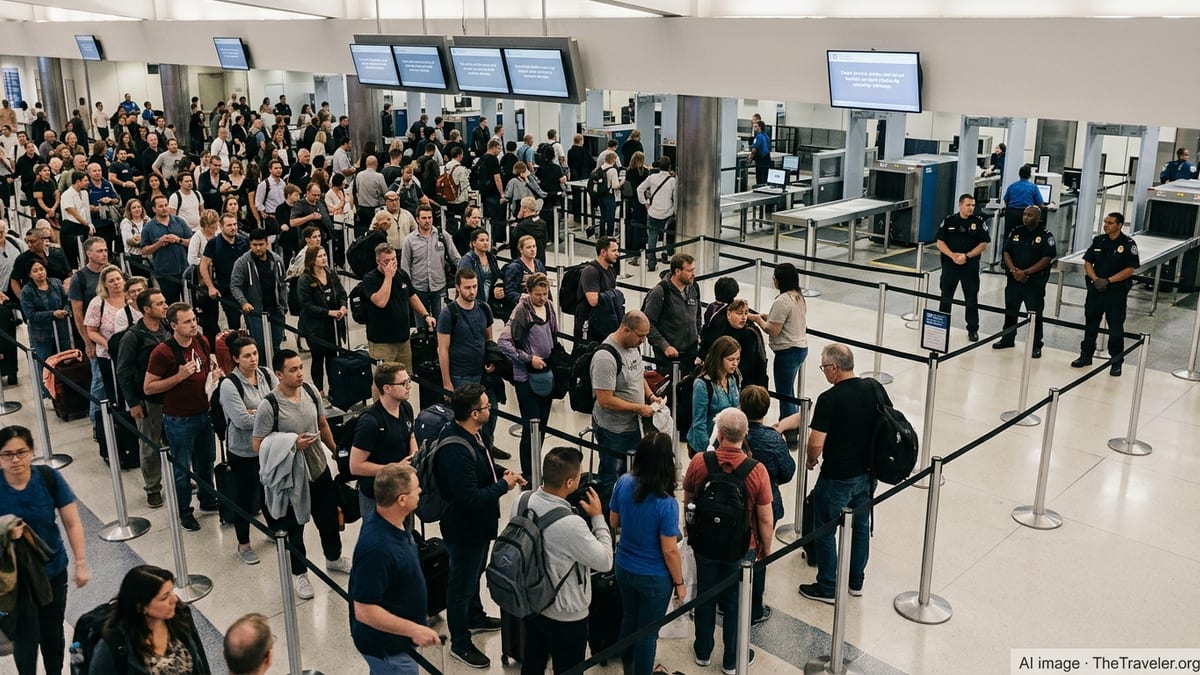
According to recent coverage in Spanish and international media, Ryanair has singled out a cluster of popular coastal and island airports as facing some of the heaviest disruption from the EU’s biometric border regime. Reports from the May Day bank holiday period described long queues and missed flights at Malaga and Alicante on the mainland, as well as at Lanzarote, Tenerife South, Gran Canaria, Reus and Fuerteventura, where large volumes of non EU leisure traffic meet limited passport control capacity.
Ryanair has used these incidents to argue that the Entry Exit System, which records fingerprints and facial images of non EU nationals entering and leaving the Schengen area, is not yet compatible with peak holiday traffic at airports that rely heavily on short turnaround times. Public statements and open letters cited in European travel media show the airline urging Spain to follow Greece in pausing or softening implementation until after the summer rush, warning that current wait times risk snowballing into knock on delays across its network.
Local business groups in the Canary Islands have also voiced concerns that congestion at border control could undermine tourism recovery. Coverage from Lanzarote, for example, has highlighted episodes where simultaneous arrivals of multiple non EU flights overwhelmed passport booths, feeding into Ryanair’s broader case that the system is exposing structural weaknesses at airports that were already operating close to capacity in peak season.
Italy’s Milan Bergamo highlighted as problem hotspot
Beyond Spain, Ryanair oriented reports indicate that Milan Bergamo in northern Italy has become another emblematic example of how the Entry Exit System can spill over into airline punctuality. Recent accounts in UK focused travel and consumer media describe Ryanair passengers stranded at Bergamo after lengthy queues at passport control caused them to miss departures, with the carrier subsequently attributing the disruption to the new border checks.
The Italian hub is a key base for the low cost airline and a major gateway for budget conscious travelers heading to and from central and northern Europe. Because Ryanair’s business model relies on very rapid aircraft turnarounds, delays at front line border booths can quickly ripple through outbound schedules, even when the airline’s own ground handling and operational performance remains within normal limits.
Industry analysis suggests that airports such as Bergamo, which serve a high proportion of non EU passengers on short haul point to point routes, are particularly exposed to Entry Exit System bottlenecks. Each additional minute spent capturing biometric data and resolving technical glitches at the border can erode the buffer built into tight schedules, making knock on delays more likely as the day progresses.
Airline and airport sector warns of wider saturation risk
Ryanair’s warnings about individual airports sit within a broader wave of concern from airline and airport associations over the Entry Exit System’s impact on Europe’s air travel capacity. Groups representing carriers and airport operators have repeatedly cautioned, in open letters and position papers, that the combination of biometric registration, uneven staffing and variable national rollout strategies risks creating saturation at border checkpoints during the peak summer season.
Recent analyses from European travel outlets describe queues of up to several hours at some Schengen entry points since the system went fully live in April 2026, with reports of missed flights and rebookings affecting both low cost and network airlines. Ryanair has aligned itself with other major carriers in calling for greater flexibility in how the rules are applied, along with additional staffing and infrastructure at the most affected airports.
Publicly available commentary from EU officials acknowledges that some member states are still struggling to adapt fully to the new technology, and that performance varies significantly between airports. While institutions in Brussels maintain that the overall impact remains limited at most hubs, airline data on punctuality and anecdotal passenger accounts point to specific choke points where the Entry Exit System has become a defining factor in daily operations.
What the delays mean for summer travelers
The identification of Spanish coastal airports and Milan Bergamo as particular trouble spots gives travelers an early indication of where to expect the longest waits this summer. Travel advisories and consumer rights organisations already recommend that passengers flying to or from these airports, especially non EU nationals, build in extra time for border checks in addition to standard security and boarding procedures.
Ryanair’s operational updates and travel industry guidance suggest that delays rooted in border control systems typically fall outside traditional EU flight compensation rules, since they are not directly controlled by airlines. However, long queues can still result in missed departures, rebookings and disrupted itineraries, particularly for passengers with tight connections or separate onward tickets.
For the airline itself, the Entry Exit System has become another external variable to manage alongside air traffic control constraints and weather. By publicly identifying airports that appear to be struggling most, Ryanair is exerting pressure on national authorities to reinforce border control resources, while also signaling to passengers that punctuality issues on certain routes may stem from factors beyond the carrier’s own operations.
Pressure builds for short term fixes and long term upgrades
As the summer peak approaches, Ryanair’s focus on airports such as Malaga, Alicante, the Canary Islands gateways and Milan Bergamo adds momentum to calls for both emergency and structural responses to Entry Exit System related delays. Industry bodies are urging national governments to deploy additional staff, open more booths and adjust shift patterns at the busiest times, while also investing in upgraded infrastructure and more resilient IT systems.
European travel media report that some countries have already experimented with pragmatic measures, such as temporarily easing the proportion of passengers who must be fully enrolled in the system during high demand windows, or piloting more user friendly kiosks to speed up the capture of biometric data. Nonetheless, sector commentary suggests that it could take several seasons before the Entry Exit System operates smoothly across all major airports.
In the meantime, Ryanair’s decision to publicly identify those airports it views as struggling most with Entry Exit System delays is likely to keep pressure on local and national authorities. With passenger numbers forecast to exceed pre pandemic levels on many leisure routes, the performance of a relatively small number of border control points could shape traveler perceptions of European air travel reliability throughout the 2026 holiday season.