


More news on this day
Flights at New York’s LaGuardia Airport faced fresh disruption on May 20 after a sinkhole discovered on one of the airfield’s two runways forced an immediate shutdown and rippled delays across the busy Northeast travel corridor.
Get the latest news straight to your inbox!
Runway Damage Disrupts Operations at Key New York Hub
Publicly available information indicates that the sinkhole was detected during a routine inspection of the airfield, leading to the closure of one runway while the second remained in use. Coverage from multiple outlets describes a depression that appeared in the pavement surface near the center portion of the runway, raising concerns about the structural integrity of the affected area.
LaGuardia operates with two primary runways, which already limits flexibility during irregular operations. With one strip out of service, airlines have reduced movements and adjusted schedules, prompting a mix of cancellations and significant delays, particularly during the morning and evening peaks. Reports indicate that some flights have been diverted to other New York area airports, including John F. Kennedy International and Newark Liberty International, to ease congestion.
LaGuardia is one of the nation’s busiest short-haul airports, serving dense business and leisure routes up and down the East Coast. Even partial disruptions can quickly echo through airline networks, affecting travelers far beyond New York. Early accounts from airline tracking data and local coverage show departure banks compressed and arrival flows staggered as controllers and carriers work within the reduced runway capacity.
Initial assessments shared in news coverage suggest that while the incident has not resulted in injuries or aircraft damage, the discovery of a sinkhole in an active runway environment is being treated as a serious infrastructure event, with safety margins prioritized over schedule reliability.
Engineers Assess Extent of Sinkhole and Airfield Risk
According to published coverage, airport and engineering teams have cordoned off the affected portion of the runway to evaluate the extent of the subsurface void and any contributing damage to surrounding pavement. Specialists are expected to perform ground surveys and potentially use imaging tools to determine whether the sinkhole is isolated or part of a wider issue beneath the runway structure.
Reports indicate that initial visual inspections identified a noticeable opening in the surface, with disrupted asphalt and underlying material exposed. The precise size of the sinkhole has varied across descriptions, but the location within the active runway environment leaves no margin for partial use, requiring a full closure until the area is stabilized and repaired.
Infrastructure experts note in broader aviation reporting that sinkholes on airfields, while uncommon, can develop from a combination of aging pavement, water infiltration, and subsurface erosion. At low-lying coastal airports such as LaGuardia, which sits along the edge of Flushing Bay, long term exposure to moisture and frequent freeze thaw cycles can place additional stress on runway foundations.
Publicly available information shows that the current response involves both short term repair planning and longer range analysis of whether drainage, utilities, or soil conditions under the runway need additional reinforcement. The duration of the closure will likely depend on how deep the void extends and whether further excavation is needed to prevent recurrence.
Travelers Face Delays, Cancellations and Rebookings
Flight tracking data and airline statements referenced in local and national coverage indicate that dozens of departures and arrivals have been delayed or canceled as a direct result of the runway shutdown. With one runway carrying all operations, airlines are extending block times, spacing arrivals further apart, and in some cases trimming schedules for the remainder of the day.
Passengers traveling through LaGuardia on May 20 and into the evening have been advised through airline channels to monitor their flight status closely and allow extra time at the airport. Some carriers are issuing travel waivers that permit customers to rebook to later dates or alternative New York area airports without change fees, reflecting the expectation of ongoing disruption until the runway is fully restored.
Published reports describe crowded terminal gate areas as travelers navigate rolling delays, along with longer waits for aircraft and crew repositioning. Because LaGuardia heavily serves business routes to cities such as Boston, Washington and Chicago, even short holds on the ground can produce a chain reaction of missed connections and late arrivals elsewhere in the network.
While the remaining runway allows the airport to maintain limited operations, the constrained capacity during peak periods is likely to affect airlines differently depending on their schedule density at LaGuardia. Observers note that carriers with large hub style operations at the airport may need to prioritize certain flights and temporarily reduce frequency on others.
Recent Safety Strains Highlight Vulnerability at LaGuardia
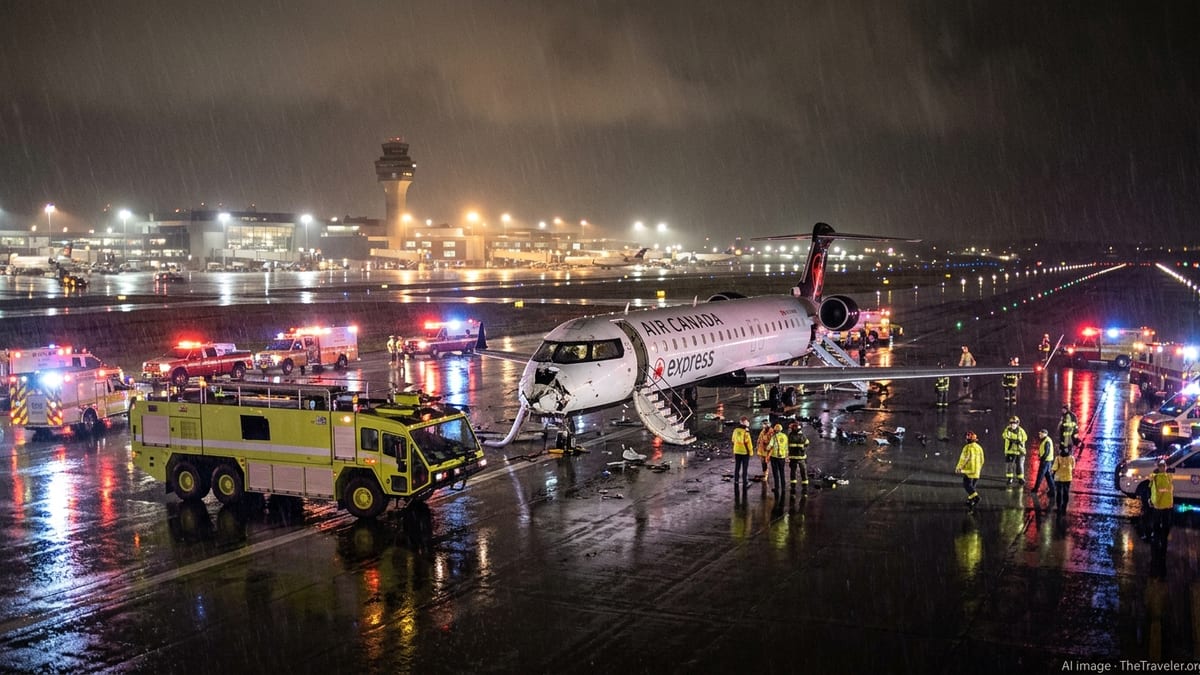
The sinkhole incident arrives amid a period of heightened scrutiny for LaGuardia, following a deadly collision earlier this year between an Air Canada regional jet and a firefighting vehicle that temporarily shut the airport and kept one runway out of service for days. Public records and prior reporting have also detailed a series of runway incidents over past decades, underscoring the operational pressure that comes with limited airfield geometry and intense traffic.
According to aviation safety analyses, LaGuardia’s compact layout leaves minimal buffer for disruptions. With only two intersecting runways and tight taxiway spacing, any closure can sharply reduce throughput, especially during peak morning and evening waves. The current sinkhole related shutdown illustrates how quickly operations can be constrained when a single strip is removed from service.
Industry observers point out that the airport has been undergoing extensive terminal and landside modernization in recent years, but the underlying airfield remains constrained by geography and long established runway alignments. Events such as structural pavement failures or on runway accidents therefore have an outsized impact compared with larger airports that operate three or more runways.
Published commentary in aviation and transportation outlets notes that the combination of high demand, compact infrastructure and increasingly volatile weather patterns around New York places added emphasis on resilience measures, including robust inspection regimes and faster turnarounds for critical repairs on runways and taxiways.
Repair Timeline and Broader Infrastructure Questions
As of the afternoon of May 20, publicly available information does not provide a definitive timeline for when the closed runway will reopen. Engineering teams are expected to continue assessments into the evening, after which a more detailed repair plan and approximate duration are likely to emerge through official public channels.
Short term work is likely to involve excavating the affected area, stabilizing the subsurface with new fill material, and restoring multiple layers of pavement to aviation standards. For a major commercial runway, this process can range from intensive overnight work to multi day projects, depending on the size of the void and whether any underlying utilities or drainage systems need modification.
The incident is also prompting broader questions about infrastructure resilience at LaGuardia and other aging airports built on fill or waterfront land. Transportation analysts highlight that climate related factors, including heavier rainfall events and rising groundwater levels, can accelerate subsurface erosion and place additional stress on older foundations and drainage systems.
According to recent planning and environmental assessments for LaGuardia, ongoing capital programs already target airfield improvements, including pavement upgrades and drainage enhancements. The appearance of a sinkhole directly on a runway is likely to sharpen attention on how those projects are prioritized and whether additional monitoring technology, such as more frequent surface scans and subsurface sensing, could help detect emerging weaknesses before they disrupt operations.