


More news on this day
Middle East air connectivity is set for a partial rebound as Turkish Airlines and Cebu Pacific move to restore key routes to Dubai, offering new options for travelers after months of war-related disruptions and airport constraints across the region.
Get the latest news straight to your inbox!
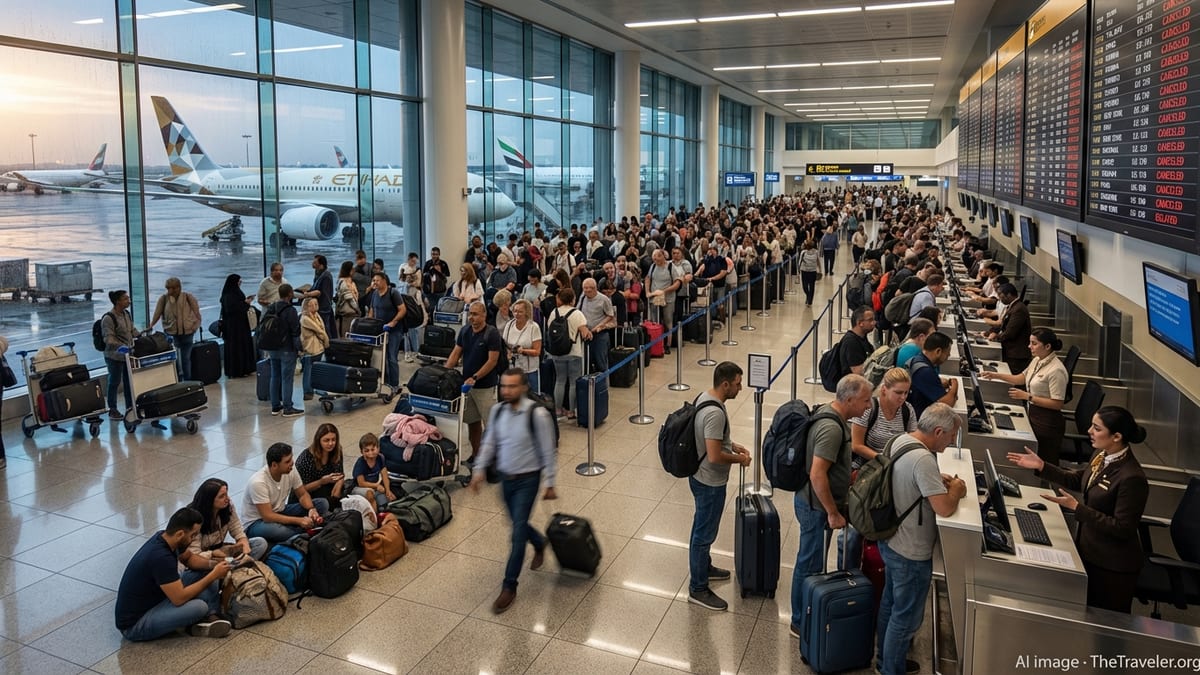
Turkish Airlines pins June restart for Istanbul–Dubai route
Publicly available schedule information and regional aviation coverage indicate that Turkish Airlines plans to resume passenger flights between Istanbul and Dubai in early June 2026, following an extended suspension linked to the Iran conflict and broader security risks affecting Middle East airspace.
Industry reports describe the route as one of the carrier’s most important links to the United Arab Emirates, feeding long haul traffic via Istanbul to Europe, North America and Africa. The restart is expected to begin with a limited schedule and gradually scale up, reflecting ongoing capacity constraints and cautious demand projections.
Timetables referenced by travel trade publications point to flights restarting in the second week of June, restoring at least daily services between Istanbul and Dubai. This follows weeks of rolling cancellations that left many passengers rerouting through other Gulf hubs or postponing trips altogether.
Aviation analysts note that the return of Turkish Airlines on the Dubai corridor will reintroduce a competitively priced, one-stop option for travelers heading from the Gulf to secondary cities in Europe and beyond, a segment that has been heavily reliant on Emirates, Qatar Airways and other Gulf carriers during the suspension.
Cebu Pacific sets July 2 return on Manila–Dubai services
On the Philippines–UAE corridor, Cebu Pacific has confirmed plans to resume Manila–Dubai flights from July 2, 2026, after halting operations earlier in the year due to the deteriorating security situation in the Middle East and airspace restrictions that complicated routing.
According to Cebu Pacific’s own advisory and coverage in Philippine business media, the low cost carrier will initially operate four weekly round trips on the Manila–Dubai route. The rotation will be built around flight numbers 5J 14 and 5J 15, with additional services 5J 18 and 5J 19 also scheduled as part of a phased ramp up.
The move follows an earlier blanket suspension of Cebu Pacific’s Dubai flights until at least the end of April 2026, a step that significantly reduced budget options for the large Filipino expatriate population based in the United Arab Emirates. The restart date suggests that the airline has completed fresh risk assessments and coordinated with Dubai airport authorities on revised operating conditions.
Travel reports emphasize that Cebu Pacific’s return will be especially significant for price sensitive passengers, including overseas Filipino workers and family visitors, who have faced higher fares on remaining carriers during the suspension period.
Gradual restoration after months of cancellations and detours
The planned resumptions by Turkish Airlines and Cebu Pacific come after months in which Middle East travel was dominated by rolling cancellations, rerouted flights and sharply reduced capacity into Dubai and neighboring hubs. As conflict flared and key air corridors closed in late February 2026, many airlines either suspended Dubai entirely or diverted via longer, more expensive routings.
Dubai International Airport has progressively restored operations, but the patchwork of flight bans and insurance restrictions over certain airspaces has continued to complicate network planning. Some carriers maintained skeleton services, while others, including Cebu Pacific, opted for full suspensions on specific routes pending clearer risk assessments.
Aviation commentaries suggest that Turkish Airlines’ and Cebu Pacific’s return to Dubai marks the beginning of a broader, though still fragile, normalization. However, schedules remain subject to short notice adjustments, and airlines are generally avoiding the rapid, across the board capacity increases that characterized the post pandemic recovery period.
Analysts also point out that the current rebound is taking place within a more challenging cost environment. Elevated fuel prices, complex detours around conflict zones and additional security measures have all contributed to higher operating costs, which could limit how quickly frequencies are restored to pre crisis levels.
What the new schedules mean for travelers
For passengers in Istanbul, Manila and the wider region, the confirmed restart dates create clearer planning horizons after weeks of uncertainty. Travel advisers note that Turkish Airlines’ early June return provides a new one stop option from Dubai to a wide range of European and North American cities, which may help ease pressure on fares that surged during the suspension.
For travelers between the Philippines and the UAE, Cebu Pacific’s four times weekly Manila–Dubai schedule from July 2 adds back a crucial low cost choice alongside full service rivals. Observers expect strong initial demand from overseas Filipino workers reuniting with family and from leisure travelers who had postponed trips during the suspension.
Passenger rights advocates and airline advisories alike are urging travelers to monitor booking platforms and airline notifications closely, given the potential for further short term schedule changes if the regional security picture shifts. Flexible tickets, travel insurance and careful connection planning are being highlighted as especially important in the current environment.
Airport information channels for Dubai also stress the need to arrive early and verify terminal assignments, as airlines have made a series of gate and terminal changes while operations were reduced and are now gradually reverting to more regular patterns.
Broader impact on Middle East capacity and competition
Beyond the immediate benefit to passengers booked on Turkish Airlines and Cebu Pacific, the restoration of these Dubai services is likely to influence pricing and competition on several key corridors. With more seats returning to the market, fare trackers anticipate at least partial relief on routes that have seen sustained price spikes since March.
For Turkish Airlines, the Dubai restart reinforces its strategy of using Istanbul as a mega hub for traffic between Europe, the Americas, Africa and Asia. Industry observers expect the airline to prioritize connecting banks that feed its long haul network, especially on routes where rivals based in the Gulf have gained market share during the suspension.
Cebu Pacific’s reentry, meanwhile, underscores the importance of Dubai as a gateway for Filipino migrant workers and business travelers. The carrier’s decision to resume with a limited but regular schedule signals confidence in underlying demand while allowing operational flexibility should conditions in the Middle East shift again.
Overall, the twin resumptions suggest that airlines see enough stability to begin rebuilding their Dubai operations, even as they continue to flag security conditions and regulatory constraints as key variables. For travelers, the message is cautiously optimistic: more options are returning to the skies, but flexibility and vigilance remain essential when flying to and from the Middle East.