


More news on this day
A Skymark Airlines Boeing 737-800 operating a domestic flight from Tokyo Haneda to Fukuoka made an emergency return to Haneda on May 25 2026, after suspected damage to one of its tyres led the crew to request priority landing, according to multiple media reports and publicly available operational data.
Get the latest news straight to your inbox!
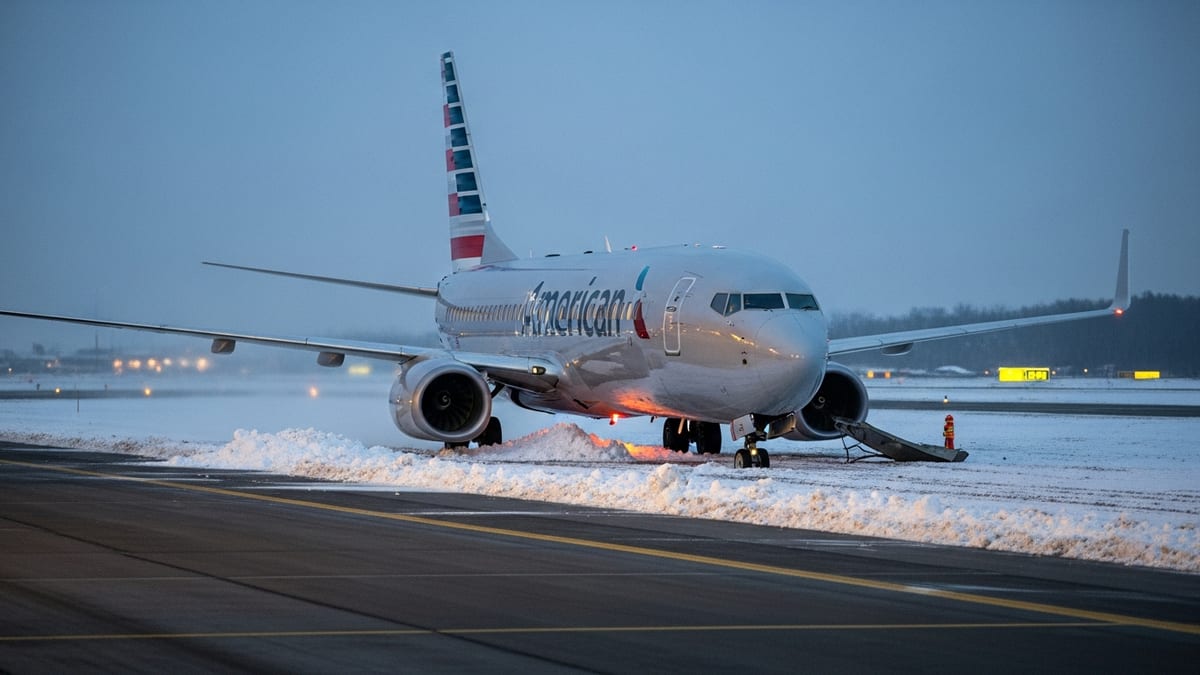
Aircraft returns to Haneda after en route tyre alert
Publicly available coverage indicates that the incident involved Skymark flight 19 from Tokyo Haneda to Fukuoka on the afternoon of May 25. The Boeing 737-800 departed Haneda shortly after 3 p.m. local time and was en route to southwestern Japan when an anomaly associated with the landing gear or tyres was detected.
Reports describe the crew declaring an emergency and opting to discontinue the flight, turning back toward the departure airport rather than continuing to Fukuoka. Tracking information cited in local media shows that the aircraft remained airborne for roughly two hours before lining up to land at Haneda.
After touchdown, inspections on the ground revealed that one of the aircraft’s tyres had ruptured, consistent with the in-flight warning indications. Coverage from Japanese news outlets notes that no fire or secondary structural damage was reported, and the aircraft was brought to a controlled stop on the runway.
The aircraft type, a Boeing 737-800, is a widely used narrowbody jet in Skymark’s fleet and across domestic networks in Japan. While tyre and landing gear issues are not uncommon in global airline operations, precautionary returns are typically treated conservatively because of the high loads imposed on wheels and brakes during landing.
Runway closure and disruption at busy Tokyo hub
The event unfolded at Tokyo’s Haneda Airport, one of Japan’s primary domestic and international hubs. According to Japanese-language reports summarizing airport operations on May 25, the aircraft’s landing prompted a temporary closure of Runway C so that airport staff could examine the surface and confirm there was no debris or structural damage.
Runway closures for tyre failures are a standard precaution. Fragments of rubber or wheel components can pose a foreign object risk to other aircraft using the same surface. In this case, published coverage indicates that checks and recovery operations continued for several hours before the runway reopened in the evening.
During the closure, some flights using Haneda experienced delays and minor diversions as air traffic controllers adjusted operations to the remaining runways. Domestic news outlets described the disruption as limited in scope, reflecting the airport’s ability to redistribute traffic even when one runway is unavailable.
Visual material shared by local media appears to show at least one main-gear wheel with a severely damaged tyre, with the aircraft stationary on the runway surrounded by airport vehicles. The jet was later towed from the active surface for more detailed inspection and maintenance.
Passengers unharmed as evacuation deemed unnecessary
According to multiple news reports, all 169 people on board, including passengers and crew, were unharmed. The aircraft taxied to a safe position after landing, and passengers disembarked via regular procedures once ground staff confirmed that an emergency evacuation using slides was not required.
The absence of injuries is consistent with the nature of most modern tyre incidents, where the primary risks relate to directional control on landing and potential collateral damage to surrounding structures rather than to the cabin itself. In this case, publicly available information suggests that braking and steering remained sufficient for a controlled rollout.
Standard operating procedures for Japanese carriers call for cabin crews to prepare passengers for a possible abnormal landing once a return decision is made. While detailed accounts from inside the aircraft have not been widely reported, coverage indicates that the situation remained orderly and that airport emergency services were positioned alongside the runway as a precaution.
After disembarkation, passengers were re-accommodated on later flights or alternative services. Timetable and reservation data on Skymark’s public channels show that the airline operates multiple daily frequencies between Tokyo and Fukuoka, a factor that can help limit longer term disruption for travellers caught up in such events.
Focus on inspection and safety protocols
Information released through media channels referencing the transport ministry’s Tokyo airport office indicates that officials have opened a standard occurrence review, focusing on the condition of the damaged tyre, the landing gear assembly and recent maintenance records. Such reviews are intended to determine whether the event points to isolated wear, operational factors such as debris on the runway, or any broader pattern affecting a specific fleet or route.
For a high-cycle domestic aircraft such as the Boeing 737-800, tyre replacement and inspection are routine tasks, guided by manufacturer manuals and national regulations. Published commentary from aviation specialists on similar cases highlights that modern jet tyres are designed to absorb substantial loads but can still fail due to foreign objects, underinflation, overloading or manufacturing defects.
Data compiled by international aviation safety databases show that tyre damage events rarely lead to serious outcomes when crews have full control of steering and braking. However, they are treated seriously because fragments can impact wings, fuselage structures or critical systems, and because a rejected takeoff or landing in marginal conditions can escalate risks.
In Japan, the Japan Transport Safety Board typically decides whether to open a detailed safety investigation based on the severity of damage and any evidence of systemic risk. For the Haneda event on May 25, early reporting suggests that the emphasis is on confirming the technical cause and verifying that inspection intervals and operational procedures remain appropriate for Skymark’s high-frequency domestic services.
Incident comes as Skymark refreshes narrowbody fleet
The tyre damage incident occurred on the same date that Skymark publicly showcased a new Boeing 737-8 aircraft at Haneda, described in industry coverage as Japan’s first example of the latest generation 737 MAX family to enter domestic service. The unveiling underscores the airline’s strategy of operating a single-type fleet while transitioning gradually from the 737-800 to newer models.
Skymark’s existing 737-800 fleet has long formed the backbone of its network connecting Tokyo with major regional cities such as Fukuoka, Sapporo and Naha. The introduction of the 737-8 is expected to offer improved fuel efficiency and range, while maintaining a similar passenger experience and cockpit commonality for pilots.
Aviation analysts note that even as airlines adopt newer aircraft, legacy fleets continue to operate intensively for many years, making robust maintenance programs for landing gear, tyres and braking systems essential. In domestic markets with short sector lengths and high daily utilisation, such as Japan, wheels can experience frequent cycles of high-speed takeoffs and landings.
Industry observers are likely to watch whether the May 25 tyre incident prompts any targeted inspections or procedural refinements across Skymark’s 737-800 operations. For passengers, the event is a reminder that precautionary returns and emergency landings are part of a safety system designed to identify and contain technical issues before they escalate, even when flights ultimately conclude without injury.