


More news on this day
A SkyWest Airlines regional jet operating as American Airlines flight AAL5480 from San Francisco to Arcata–Eureka diverted back to San Francisco International Airport on June 23, 2026, interrupting a key Northern California route and leaving passengers facing unexpected disruption.
Get the latest news straight to your inbox!
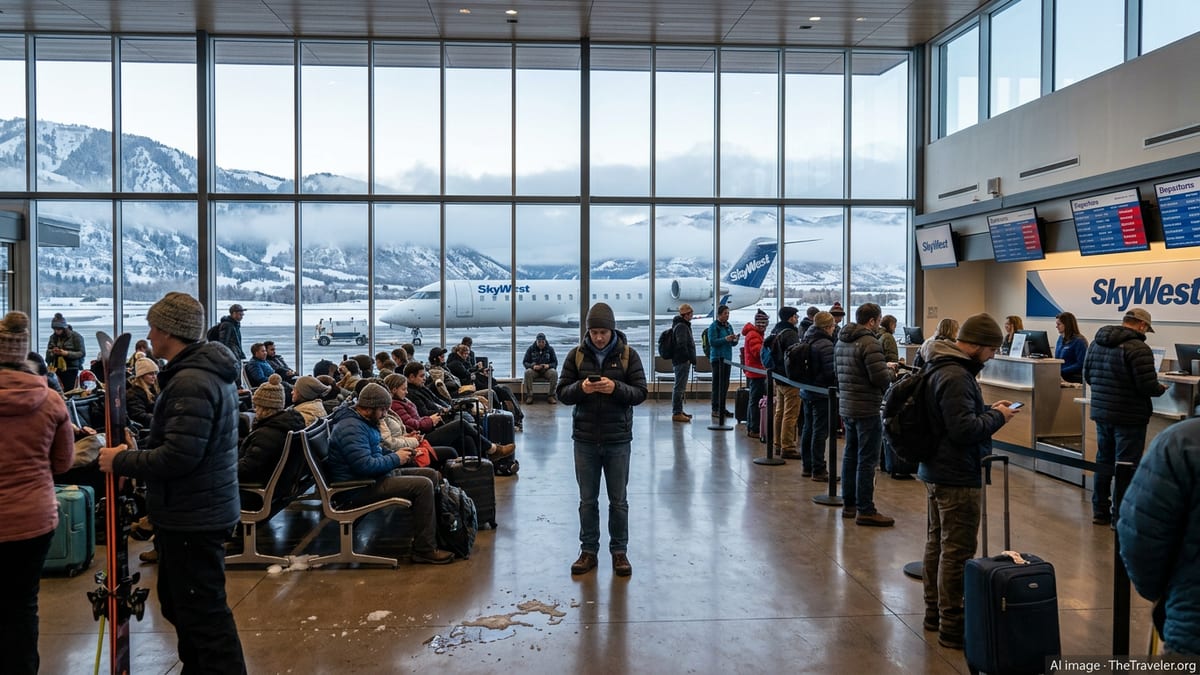
Unscheduled Return to San Francisco on SFO–Arcata Route
Publicly available flight-tracking and schedule data indicate that the aircraft, a Canadair Regional Jet CRJ-700 registered N787SK, departed San Francisco International Airport in the evening of June 23 bound for California Redwood Coast–Humboldt County Airport, which serves the Arcata–Eureka region. Instead of completing the short sector along the North Coast, the jet turned back and landed again at San Francisco, where the flight was recorded as diverted rather than arriving at its planned destination.
Arrival boards and online flight-status tools for Arcata–Eureka show a United-branded regional service from San Francisco, listed as UA5480 and operated by SkyWest, marked as diverted on June 23. Aviation reference data maintained by federal regulators connect the registration N787SK with a CRJ-700 operated by SkyWest Airlines, aligning with the regional jet type routinely deployed on the SFO–ACV corridor.
As of June 25, there has been no public indication of any onboard injury or damage related to the diversion, and the event is being characterized within industry coverage as a precautionary operational decision rather than a major in-flight emergency. The aircraft returned to a large hub with extensive maintenance and staffing resources, a common pattern when flight crews or airline operations centers identify a condition that warrants closer inspection or different operating conditions than those available at a smaller regional field.
The diversion took place against the backdrop of generally busy summer traffic in the Bay Area and along the West Coast. Federal aviation system summaries for June 23 pointed to a mix of localized flow constraints and ground-delay programs in parts of the national network, although there is no direct public evidence linking broader traffic management initiatives to the specific decision affecting flight AAL5480.
Impact on Passengers and Northern California Connectivity
For passengers booked between San Francisco and Arcata–Eureka, the mid-evening turnaround translated into missed arrivals, late-night rebooking and, in some cases, the prospect of overnight delays. Social media and aviation discussion forums quickly highlighted the diverted regional flight in the context of a series of weather, traffic and operational disruptions that have periodically affected West Coast services in June.
Because Arcata–Eureka is served by a relatively small number of daily mainline and regional flights, even a single disrupted leg can have an outsized effect on the local travel market. Published airport information describes the SFO connection as one of the primary links between Humboldt County and the broader United States, with SkyWest operating regional jets on behalf of major network carriers. When an aircraft returns to San Francisco instead of landing at Arcata–Eureka, passengers may have limited same-day alternatives and must often rely on rebooking through other hubs or waiting for the next available regional departure.
The disruption on June 23 followed other recent irregular operations involving SkyWest in the northern California region. Separate coverage described a June 24 San Francisco–Arcata flight under a different SkyWest number that also returned to SFO, reinforcing concerns among some travelers about the robustness of regional links to smaller coastal and mountain airports. While each event is handled individually, clusters of diversions and delays can influence traveler perceptions of reliability on thinly served routes.
Travel planners note that such irregular operations can ripple beyond the immediate passengers. Missed connections in San Francisco may affect itineraries to other US destinations or international gateways, particularly where regional flights feed into evening bank departures. For local communities, repeated disruptions strain confidence in air access that supports tourism, business travel and essential trips such as medical journeys to larger urban centers.
What Is Known About Aircraft N787SK and CRJ-700 Operations
Regulatory and fleet reference documents list N787SK as a SkyWest-operated Canadair Regional Jet series 700 configured for regional network service under major-carrier brands. The CRJ-700 family typically seats around 65 to 70 passengers in mixed or all-economy layouts and is widely used in the United States to link large hubs with smaller regional airports that may not sustain larger mainline jets.
SkyWest’s published fleet overview shows a sizable inventory of CRJ-700 and related models, alongside Embraer 175 aircraft, forming the backbone of its regional operations across the West and Mountain West. These aircraft regularly operate into airports with challenging geography and changeable weather, including coastal fields like Arcata–Eureka, which sits near the Pacific shoreline and is surrounded by terrain that can present additional operating considerations in marginal conditions.
Industry reporting on other recent SkyWest diversions, including a June 24 CRJ-700 service from San Francisco to Arcata that returned to SFO, emphasizes that such turns are often precautionary and may be driven by factors such as visibility, wind, runway conditions, or technical indications that warrant closer examination at a maintenance base. In many cases, there is no confirmed evidence of severe technical failure, but airlines elect to prioritize safety margins and logistical predictability by returning to a hub.
The CRJ-700’s performance profile allows crews to make relatively swift decisions to hold, divert to alternates, or return to origin when operational parameters are not fully met. For passengers, this can be disconcerting, particularly on short routes where the aircraft may appear to be nearing its destination before turning back. For airlines and regulators, however, such diversions are treated as part of a layered safety system that seeks to keep flight operations well within established limits.
Regional System Strain and Passenger Frustration
The June 23 diversion of AAL5480 fits into a broader pattern of regional network strain reported across several West Coast carriers this month. Travelers using airline status pages and flight-tracking tools have pointed to recurring delays and cancellations involving SkyWest-operated services for multiple partner brands, attributing the disruption to a combination of crew availability, aircraft rotations, weather impacts and congestion at key hubs such as San Francisco and Seattle.
Online discussions among affected passengers paint a picture of growing frustration with communication and contingency support when irregular operations unfold late in the day. Some travelers describe uncertainty over whether aircraft will be re-dispatched, rolled into a new flight number or simply cancelled, while others recount waiting in long customer-service lines at regional counters staffed by contract or ground-handling personnel with limited authority to make exceptions.
For communities like Arcata–Eureka, where the majority of scheduled commercial traffic is provided by a small number of regional flights, these disruptions can undermine public confidence in air travel just as the peak summer season builds. Local tourism and hospitality stakeholders monitor such events closely, aware that visitors deterred by perceived unreliability may shift to driving long coastal highways or choosing alternative destinations altogether.
Analysts note that smaller markets are especially sensitive to aircraft and crew imbalances because each individual flight represents a larger share of total capacity. If a CRJ-700 returning to San Francisco cannot be quickly repositioned or replaced, an entire day’s worth of connectivity for dozens of travelers may hinge on whether the next scheduled flight can operate on time, making operational resilience a central concern for both airlines and community leaders.
Safety Practices and Expectations Going Forward
Aviation safety specialists consistently describe diversions such as the June 23 AAL5480 incident as evidence of conservative decision-making rather than failure. While the details of any specific return to origin may remain limited in public records, the pattern of flights diverting to better-equipped hubs reflects an industry framework that encourages crews and operations controllers to err on the side of caution.
SkyWest points in its public materials to long-standing training and compliance programs aligned with federal regulations, emphasizing that regional operations under major-carrier brands are subject to the same overarching standards that govern mainline fleets. These standards include requirements for recurrent crew training, aircraft maintenance oversight and operational control procedures that cover diversions, missed approaches and alternate-airport planning.
For passengers on routes like San Francisco to Arcata–Eureka, the repeated occurrence of mid-route turns and returns can nevertheless feel unsettling. Travel advisors recommend monitoring flight status closely on days with unsettled weather or significant system strain, building additional connection time into itineraries that depend on regional feeders and considering travel insurance or flexible fares when schedules are tight.
As summer traffic continues to build along the West Coast, both airlines and airport operators will face pressure to maintain reliability on small-community routes while preserving conservative safety margins. The June 23 diversion of SkyWest-operated flight AAL5480 underscores how a single decision in the cockpit or operations center can ripple across a regional network, temporarily isolating smaller markets but ultimately prioritizing the safe outcome that modern commercial aviation is designed to deliver.