


More news on this day
Argentina’s tightly connected domestic and regional air network faced fresh disruption on 24 June 2026, as publicly available data pointed to a cluster of cancellations and delays involving services at Buenos Aires’ Aeroparque Jorge Newbery and Salta’s Martín Miguel de Güemes International Airport.
Get the latest news straight to your inbox!
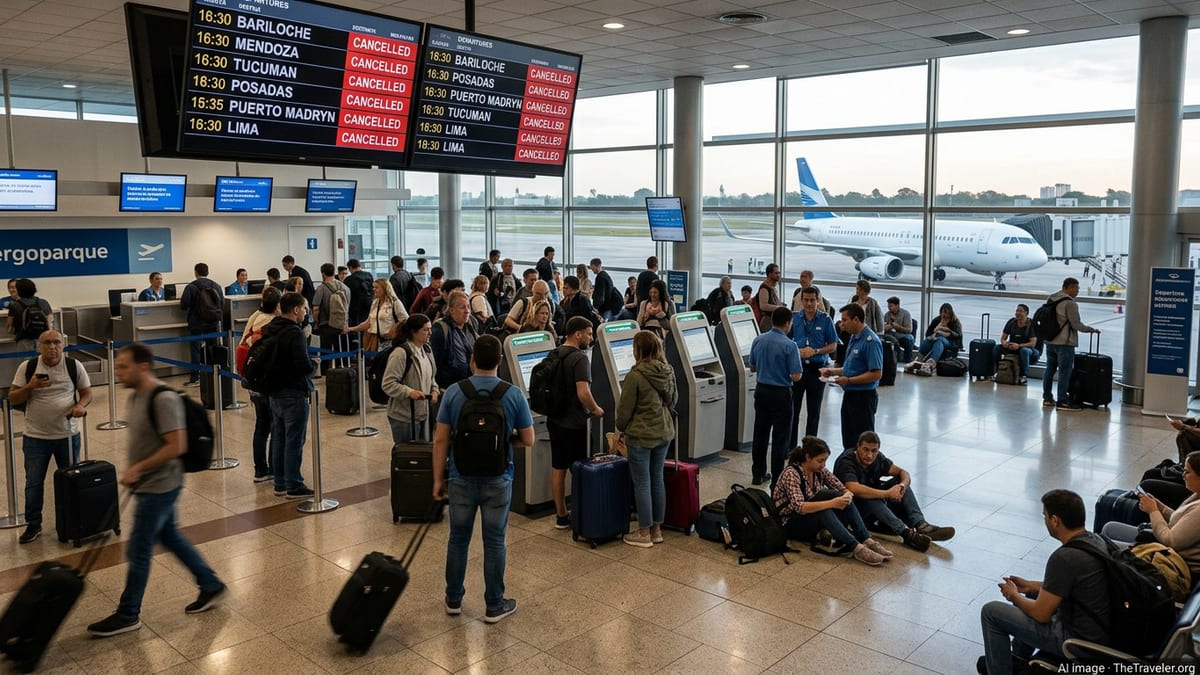
Multiple airlines affected across Argentina’s short haul network
Operational snapshots compiled from airport information services for 24 June show that flights operated by Flybondi, Paranair, JetSMART, Aerolíneas Argentinas, GOL and LATAM were among those impacted by irregular operations. While the overall traffic program at Aeroparque Jorge Newbery exceeded 150 scheduled movements for the day, at least 15 flights involving these carriers were reported as cancelled, with a further 25 recorded as delayed to varying degrees.
The pattern of disruption echoed previous weeks, when monitoring by specialist aviation outlets highlighted clusters of delays and cancellations centered on Buenos Aires’ city airport. Earlier data covering 17 June, for example, indicated dozens of delayed and cancelled departures from Aeroparque, involving many of the same airlines now affected on 24 June. That history has drawn renewed attention to the resilience of Argentina’s domestic and regional network during the busy Southern Hemisphere winter period.
On 24 June, the impact was not confined to Buenos Aires alone. Services linking Aeroparque with Salta, one of the country’s key northern gateways, were also affected, with schedule-tracking platforms showing irregular operations on routes normally served several times a day by Aerolíneas Argentinas, Flybondi and JetSMART. These corridors play a central role in connecting leisure travelers and business passengers from the capital to the northwest.
Publicly available information from airline and airport feeds suggests the day’s cancellations and delays were spread across both domestic and international sectors, including routes linking Buenos Aires with cities in Brazil, Chile and Paraguay. That pattern is consistent with earlier episodes of disruption in 2026, when operational difficulties at Aeroparque and other hubs rippled across regional networks.
Buenos Aires Jorge Newbery emerges again as disruption hotspot
Aeroparque Jorge Newbery, which primarily handles domestic and short haul regional flights, has repeatedly emerged as a focal point for irregular operations this year. Data services that aggregate real time information from airlines and the airport operator show that, on 24 June, a significant share of delayed flights were concentrated at this compact but heavily used facility on the banks of the River Plate.
Historic snapshots published by flight data providers indicate that Aeroparque typically handles more than 150 departures and a similar number of arrivals per day. Within that volume, even a few dozen delays and cancellations can quickly translate into visible congestion at check in areas and boarding gates, as well as longer queues at security and ground transport nodes.
Aviation analysts following Argentina’s market note that operations at Aeroparque are particularly sensitive to knock on effects. Turnaround times are tight, several low cost operators run high utilization schedules, and the airport’s urban location can be affected by weather constraints and airspace saturation. When one or two early flights fall significantly behind schedule or are cancelled, later rotations on the same aircraft can be disrupted for the remainder of the day.
Reports from local media in Buenos Aires on 24 June described scenes of frustrated passengers and extended waits for information, echoing similar coverage earlier in the year when nearly 30 flights were reported delayed at Aeroparque in a single morning. The latest wave of disruptions appears to have followed that familiar pattern, with travelers urged via public channels to verify flight status before heading to the airport.
Salta links disrupted as key northern gateway feels the strain
Salta’s Martín Miguel de Güemes International Airport plays an outsized role in Argentina’s domestic aviation map, serving as the main air access point to the country’s northwest. According to route databases, it is linked to Buenos Aires Aeroparque by multiple daily services from Aerolíneas Argentinas, Flybondi and JetSMART, supplemented by regional connections operated by carriers such as Paranair on routes to Paraguay.
On 24 June, route monitoring platforms and airport schedule data pointed to disruptions on several of these links, with a share of the 15 cancellations and 25 delays affecting flights either departing from or arriving at Salta. As a result, onward connections for passengers planning to travel to smaller regional destinations or across borders were also placed under pressure.
For Salta, irregular operations can have a disproportionate impact because many passengers rely on same day connections via Buenos Aires for international itineraries. When services from Aeroparque depart late or are withdrawn from the schedule, travelers in Salta often face longer waits for rebooking and, in some cases, the need to adjust ground transport and accommodation at short notice.
The June 24 disruptions also arrived during a period of heightened seasonal demand, as domestic tourism flows build toward the mid year winter holidays. Tourism operators in the northwest have previously highlighted that consistent air service reliability is critical for sustaining visitor numbers to destinations such as Salta, Cafayate and nearby national parks.
Low cost carriers and legacy airlines share reliability spotlight
The list of affected airlines on 24 June included a mix of low cost and full service operators. Flybondi and JetSMART, both positioned as ultra low cost carriers in Argentina, have expanded rapidly in the domestic market over recent years, using Aeroparque as a key base and competing directly with state controlled Aerolíneas Argentinas on trunk routes such as Buenos Aires to Salta.
Publicly available reliability statistics and consumer feedback have, at times, placed particular scrutiny on low cost operators in the country, especially regarding schedule changes and same day cancellations. However, recent disruption patterns compiled by aviation news outlets show that full service airlines are not immune, with LATAM affiliates, GOL and Aerolíneas Argentinas all experiencing days of elevated delay and cancellation levels when weather, technical issues or labor actions coincide.
In Paraguay and Brazil, official aviation statistics for early 2026 list Paranair, GOL and LATAM among the main regional operators carrying substantial passenger volumes on routes linked with Argentina. When irregular operations occur at a hub like Aeroparque, these cross border services can be affected, either through direct schedule changes or through missed connections to onward flights in Asunción, São Paulo or Santiago.
Analysts point out that Argentina’s mixed airline ecosystem, where a publicly owned flag carrier coexists with several private and foreign affiliated low cost carriers, adds complexity to disruption management. Reaccommodation options may vary significantly between airlines, and interline agreements among some low cost operators remain limited, reducing flexibility for passengers when flights are cancelled at short notice.
What travelers should monitor following the June 24 disruptions
For travelers planning upcoming trips through Buenos Aires Aeroparque or Salta, the events of 24 June serve as a reminder to monitor flight status frequently, particularly during the Southern Hemisphere winter season. Data from mid June already indicated a series of operationally challenging days at Aeroparque, and the latest episode suggests that further irregularities cannot be ruled out as airlines navigate high demand and tight schedules.
Industry observers recommend that passengers allow generous connection times when linking domestic flights at Aeroparque with international departures from Buenos Aires’ Ezeiza airport or other regional hubs. Given the recurring pattern of delays and cancellations documented in 2026, same day connections on separate tickets may be especially vulnerable if earlier segments run late.
Travelers flying with the airlines involved in the 24 June disruptions are being advised, through public information channels, to verify booking details via official apps and websites, and to keep contact details updated so that schedule changes can be communicated promptly. Many carriers operating in Argentina now offer rebooking tools and travel alerts that can ease some of the inconvenience when irregular operations occur.
As Argentina’s aviation sector continues to adjust to shifting demand and competitive pressures, June’s operational challenges at Aeroparque and Salta underscore the importance of robust contingency planning by airlines and airports alike. For passengers, careful itinerary planning and close attention to real time information remain key to navigating an increasingly busy domestic and regional air network.