


More news on this day
Australia’s Smartraveller platform has clarified that transiting through the United Arab Emirates or Qatar is now treated as travel to those countries, tightening the practical impact of existing high-level advisories and prompting fresh concern among Australians booked on popular Middle East connections to Europe and beyond.
Get the latest news straight to your inbox!
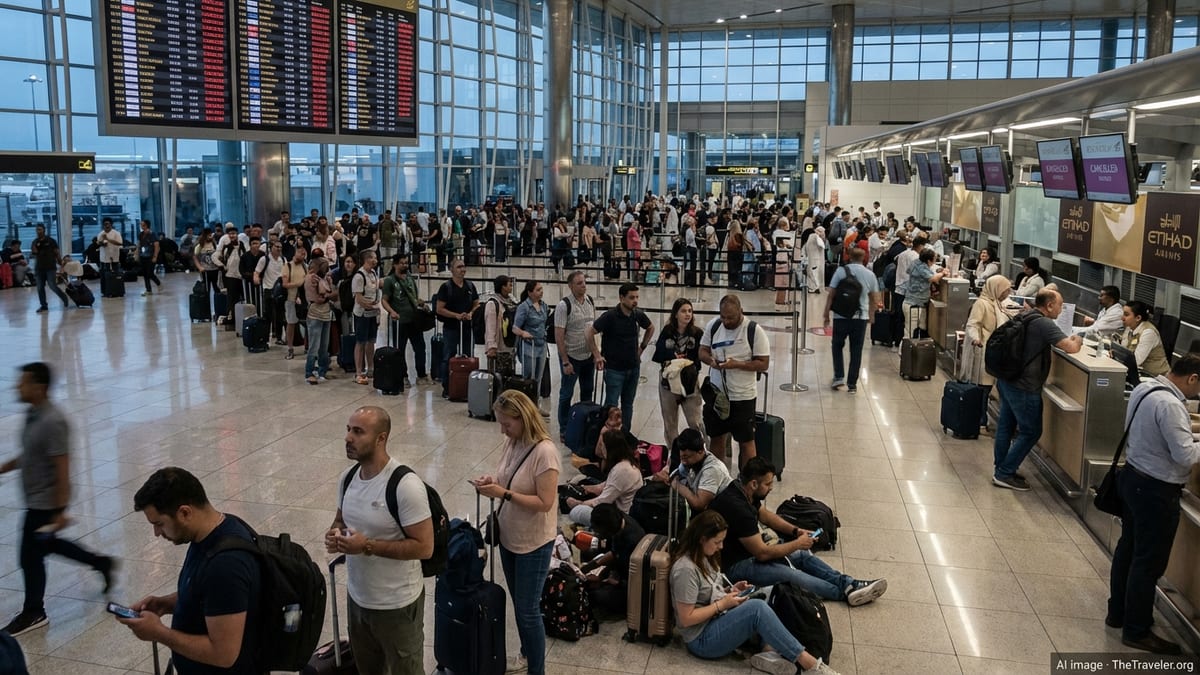
Sharper language puts airport hubs under the spotlight
Recent updates to Smartraveller advice for the United Arab Emirates and Qatar underline that “reconsider your need to travel” and “do not travel” warnings extend to passengers who only pass through major hubs such as Dubai, Abu Dhabi or Doha on their way to other destinations. Publicly available guidance highlights that transit stops are being folded into the overall country risk, moving what was once a grey area into much firmer territory for Australian travellers.
Travel industry commentary notes that the phrase “transit is travel” has become central to the way the advisory is now interpreted, particularly for routings between Australia and Europe that rely heavily on Gulf carriers. Reports indicate that this shift is being relayed to customers by airlines, travel agents and insurers who are seeking to clarify what the government advice means once travellers step off an aircraft, even briefly, in the region.
The language change follows months of elevated regional tensions and intermittent disruptions to airspace across parts of the Middle East. Although the overall risk ratings for the UAE and Qatar currently remain below the most extreme level, the reinforced wording around transits effectively treats even short airport stops as exposure to the same security environment as a full stay.
Insurance, refunds and itinerary headaches
The tougher interpretation of transit has immediate implications for travel insurance. Many Australian policies refer directly to Smartraveller’s risk levels when determining coverage, and publicly available product information shows that claims can be rejected if travellers head to or through locations listed at higher advisory levels. In practice, this means a passenger changing planes in Dubai or Doha could find themselves with limited or no protection for disruption linked to the underlying advisory.
Online discussions among frequent flyers and travel agents suggest a spike in refund and rerouting requests from Australians booked on itineraries using Middle Eastern hubs. Some travellers are appealing to airlines for fee-free changes, arguing that the clarified wording materially alters the risk profile of journeys purchased months in advance. Others report that commercial policies still treat flights as operating as normal, leaving customers to weigh cancellation penalties against perceived safety and insurance concerns.
Package holiday operators and cruise lines are also adjusting. Travel trade bulletins and tour company updates describe outreach to customers scheduled to transit the Gulf in the coming weeks, with options ranging from rebooking via Asian or European hubs to offering credit for future trips. However, where services continue to operate, several large brands indicate that standard terms and conditions remain in place for departures later in the year.
Middle East hubs remain busy as airlines adjust
Despite the sharpened advisory language, major Middle Eastern airports continue to process large volumes of international passengers. Aviation data and regional media coverage show that Dubai, Abu Dhabi and Doha remain key connectors between Australasia, Europe, Africa and the Americas, with airlines adjusting schedules rather than withdrawing entirely from long-haul markets.
Reports from carriers indicate that some routes through the Gulf have been consolidated or temporarily suspended in response to airspace constraints and fluctuating demand. At the same time, new long-range services and alternative connections are being promoted, including additional nonstop flights between Australia and European or Asian gateways that bypass traditional Gulf stopovers altogether.
Travel analysts note that the clarified Smartraveller wording could gradually reshape booking patterns, particularly among risk-averse travellers and those whose employers require strict adherence to government advisories. However, pricing and convenience continue to draw many passengers to Gulf carriers, especially on premium routes where alternative options involve longer travel times or higher fares.
What it means for Australians with existing bookings
For Australians already holding tickets via the UAE or Qatar, the updated messaging effectively adds another layer to pre-departure checks. Travellers are being encouraged by insurers and consumer advocates to review policy wording, confirm whether high-level advisories trigger exclusions, and consider whether to alter itineraries before balance payments fall due or change fees increase.
Publicly available guidance from consumer organisations stresses the importance of documenting any decisions taken in light of travel advisories, including records of communications with airlines and travel agents. Where carriers introduce waivers or schedule changes, this may create new options to reroute or defer without incurring substantial penalties, but such concessions often apply only within defined travel windows.
For those choosing to proceed with Middle East transits, travel planners recommend building in contingency time for missed connections or last-minute retimings, keeping close track of airline notifications, and registering contact details with relevant consular services. Even when flights operate as scheduled, the Smartraveller stance underlines that passengers should treat a short airport stop as meaningful exposure to the same risks that underpin the broader country warning.
Wider ripple effects for global routing choices
The clearer message that “transit is travel” is beginning to reverberate beyond Australia’s borders, as international travellers and foreign carriers follow developments in one of the world’s most aviation-dependent markets. Industry observers point out that Australian outbound tourism is heavily long-haul, meaning shifts in government messaging can quickly influence how airlines structure their networks and how tour operators design products.
Some travel agencies are already highlighting alternative corridors to Europe and North America, such as routings via Singapore, Tokyo, Seoul or North Asian gateways, particularly for clients who prefer to align strictly with advisory guidance. At the same time, niche markets are emerging for travellers who accept the risks but seek detailed briefings on how advisories intersect with airline policies and insurance cover.
While the underlying security situation remains fluid, the immediate impact of Smartraveller’s tougher language is to close off any assumption that airport transits sit outside the scope of official warnings. For many Australians planning trips in the coming months, the question is no longer just which airline offers the best fare or shortest route, but whether a brief stop in Dubai or Doha now counts as a journey into a designated high-risk zone.