


More news on this day
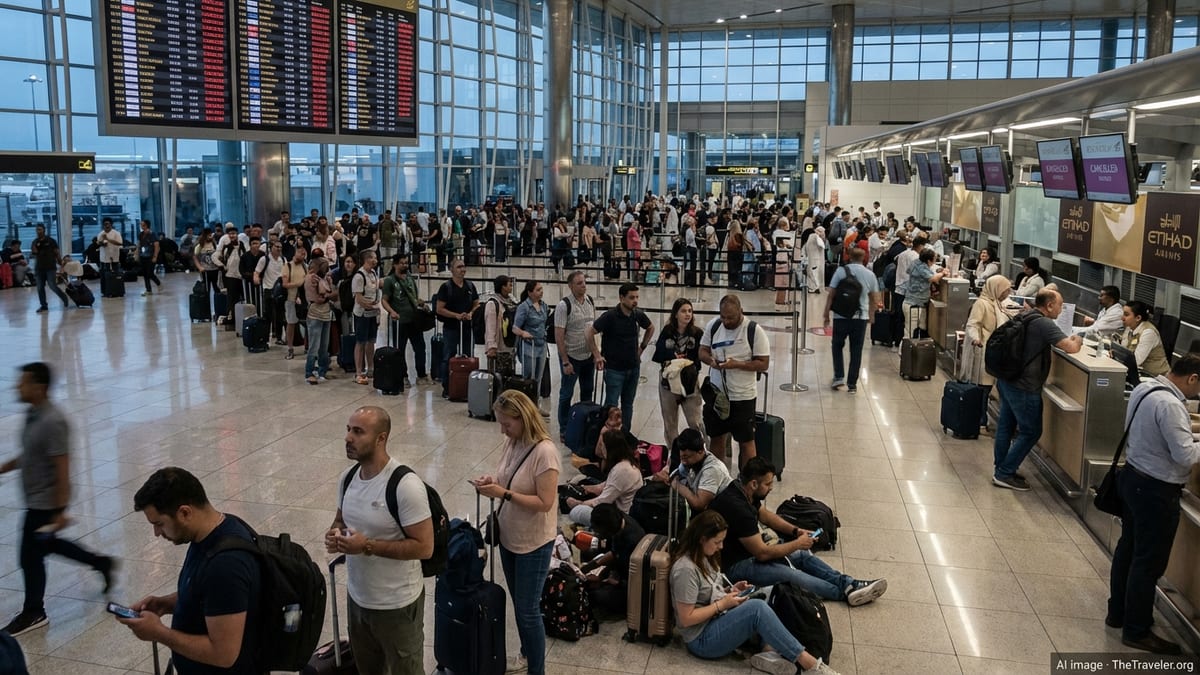
Smoke rising near Riyadh’s King Khalid International Airport triggered significant flight delays and some cancellations on Saturday, September 19, 2026, after residents received an overnight air raid alert that warned of a potential aerial threat over the Saudi capital.
Get the latest news straight to your inbox!
What happened and when
Published coverage indicates the alert reached residents’ phones during the early hours of Saturday, September 19, and was followed by reports of booms heard in parts of Riyadh. Later that morning, footage and photographs circulating through major news organizations showed a thick plume of black smoke near the airport area.
Multiple outlets described the smoke as coming from a fire at or near fuel storage infrastructure close to the airport, including an Aramco-branded tank in some reporting. While the visible smoke and flames became the most widely shared images of the incident, reporting has varied on the precise initiating cause, and not all coverage has treated the origin as fully established.
By later on September 19 and into Sunday, September 20, flight-tracking data cited by several publications suggested airport operations began moving again, though backlogs can persist for hours after a disruption as aircraft and crews rotate back into position.
How flight operations were affected at King Khalid International Airport
Flight-tracking coverage on September 19 showed Riyadh (RUH) in a high-disruption category, with a notable share of flights delayed and some services canceled. That kind of disruption typically appears first in departure boards, then spreads into arrivals as inbound aircraft are held, rerouted, or arrive late from other cities.
Even after the most acute period passes, delays can remain uneven across airlines and destinations. Travelers can see one flight operating close to schedule while another to a different hub is delayed for hours, depending on aircraft routing, crew duty limits, and whether an incoming aircraft is needed to operate the next leg.
As of Sunday, September 20, publicly available reporting pointed to improving conditions, but passengers were still advised in published guidance to rely on live flight status rather than assumptions based on earlier posts or screenshots.
Regional security backdrop and why it matters for travelers
The disruption unfolded amid heightened regional tension connected in published reporting to Yemen’s Houthi movement and renewed exchanges involving Saudi targets. Several international outlets reported claims of strikes, alongside broader coverage describing the alert as unusual for Riyadh compared with more routine alerts nearer conflict zones.
For travelers, the immediate practical consequence of a security-driven alert is not only what happens inside the terminal. Air traffic flows can be adjusted quickly, and airlines may temporarily pause departures, hold arrivals at origin airports, or divert aircraft already airborne to alternate airports if conditions are uncertain.
This can create ripple effects beyond Saudi Arabia, especially for long-haul flights where a delay at RUH can cascade into missed onward connections in Europe, Asia, and across the Gulf, as well as into later-day departures that rely on the same aircraft.
What passengers should do now: verifying status, rebooking, and documentation
Travelers with near-term itineraries through Riyadh should check their flight status directly with the operating airline and confirm the latest departure gate and boarding time, since these can change rapidly during recovery. Saudi government e-services also point passengers toward official flight schedule tools for King Khalid International Airport that display arrivals and departures and update continuously.
Passengers facing cancellations or long delays should review the rebooking options their airline makes available for disrupted travel, including same-day reaccommodation, later departures, or rerouting via other hubs. When disruptions are tied to safety or operational restrictions, airlines may vary on what compensation or amenities they can provide, so it helps to capture screenshots of official delay notifications and keep receipts for eligible expenses if the carrier later requests documentation.
For travelers who experienced airport-service problems connected to the disruption, Saudi Arabia’s civil aviation framework includes a channel to submit airport-related complaints through a national platform tied to the General Authority of Civil Aviation. That can be relevant if a passenger needs a formal record of an issue involving airport services rather than an airline’s ticketing decision.
What to watch over the next 24 to 72 hours
Even if flight activity normalizes, travelers should anticipate residual schedule changes through at least the next one to three days as aircraft rotations and crew rosters rebalance. Published coverage and flight-tracking analysis commonly show that airports can move from “major problems” to lower disruption levels while individual flights continue to run late.
Passengers connecting through RUH should also monitor whether their onward flight is protected on the same ticket, and whether the airline has automatically rebooked them. In fast-moving disruptions, automatic rebooking may occur before travelers reach an agent, but seats can disappear quickly on popular regional corridors.
Finally, travelers should keep an eye on official airport communications and airline alerts for operational updates, since the most important information for passengers is practical: whether a specific flight is operating, what time it departs, and what terminal and gate apply at the moment they head to the airport.