


More news on this day
South Korea has eased a travel ban on parts of Cambodia following reported improvements in security and a sustained crackdown on online scam syndicates that had previously targeted Korean nationals, reshaping risk calculations for tourists and business travelers.
Get the latest news straight to your inbox!
From Targeted Travel Ban To Partial Reopening
The shift marks a significant change from late 2025, when South Korea raised its travel alerts and introduced a rare, targeted ban on specific areas of Cambodia in response to a spike in job scam networks and abduction cases involving Korean citizens. Those restrictions focused on locations such as Bokor Mountain and other hubs linked to large-scale online fraud operations.
Publicly available information from South Korea’s overseas travel safety portal shows that the most recent regular review of global advisories resulted in a downgrading of risk levels for parts of Cambodia, including Phnom Penh and several major tourist areas, while retaining stronger warnings for pockets still regarded as high risk. The change follows a period in which Cambodia intensified law-enforcement operations against scam compounds and strengthened cooperation with foreign governments.
According to published coverage of the adjustment, the move effectively reopens previously restricted areas to ordinary leisure and business travel by South Korean citizens, provided they comply with standard safety guidance. However, officials have kept the framework in place to reimpose tighter controls on short notice if security conditions deteriorate.
South Korea’s graded alert system ranges from basic caution to a full prohibition on travel, and the Cambodia revision shifts some localities down that scale. The development is being closely watched by regional airlines, tour operators and Korean residents in Southeast Asia, for whom Cambodia is a popular short-haul destination.
Crackdown On Scam Syndicates Reshapes Risk Map
The easing of restrictions is closely tied to what authorities and international observers describe as a sustained campaign against online scam centers operating across Cambodia. These criminal networks, often based in converted casinos and compounds, had lured foreign workers with fraudulent job offers before subjecting them to forced labor, extortion and physical abuse.
Reports on the Cambodian crackdown over the past year highlight joint operations to raid facilities, rescue foreign nationals and pursue ringleaders, including figures accused of running large transnational fraud operations. Regional security briefings note that the number of newly reported abductions of Korean citizens in Cambodia has declined compared with the peak of the crisis, although sporadic incidents and unreported cases remain a concern.
Analysts point out that the risk landscape is uneven. Major urban centers and established tourist corridors have benefited most from stepped-up enforcement and closer monitoring, while some border-adjacent areas and lesser-known hubs remain more vulnerable to criminal activity. This patchwork of conditions is reflected in South Korea’s differentiated alerts, which now distinguish between cities such as Phnom Penh and areas closer to the Thai frontier.
Travel-security specialists caution that the dismantling of high-profile scam centers does not eliminate underlying drivers such as economic vulnerability, porous borders and demand from overseas fraud operations. Travelers are being urged through public advisories to avoid unverified job offers and high-paying recruitment pitches that involve relocation to remote parts of Cambodia or neighboring countries.
What The Change Means For Korean Travelers
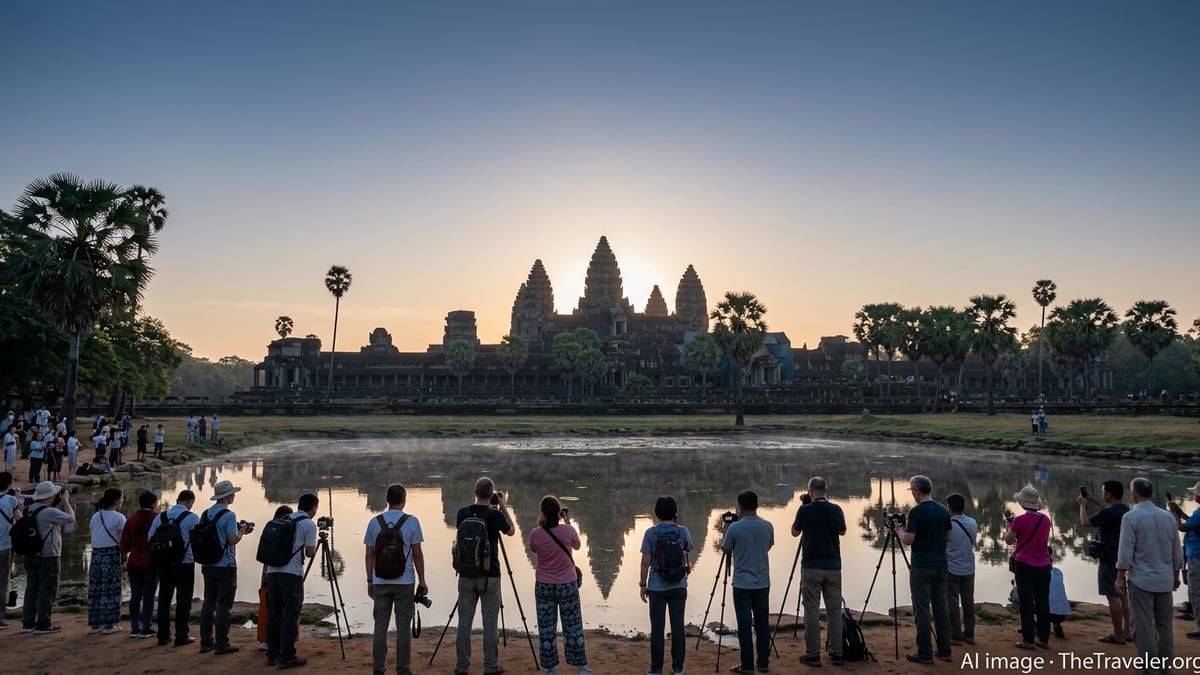
For South Korean travelers, the partial lifting of the ban translates into greater flexibility in planning trips to Cambodia, particularly for visits to Phnom Penh and established tourist destinations that now fall under lower alert levels. Tour companies focused on Angkor Wat, coastal resorts and city breaks are expected to promote itineraries more actively to the Korean market as confidence gradually returns.
However, the continued presence of heightened alerts in select regions means travel will not revert overnight to a pre-crisis environment. Advisories still emphasize the need to avoid specific districts associated with past scam activity, to refrain from entering restricted zones near the Cambodian–Thai border and to stay updated on any fresh notices issued by South Korean or partner-country governments.
Industry observers say the updated guidance is likely to encourage cautious rather than exuberant recovery. Travelers are advised through publicly available guidance to register their trips with consular services, monitor local news once in-country and choose reputable transport, accommodation and tour providers. Many insurers also continue to assess Cambodia as a destination with elevated risk factors, which can affect coverage terms or premiums.
Despite these caveats, airlines and travel agencies serving the Korea–Cambodia corridor are already signaling that they view the adjustment as a constructive step. Flight schedules and package offerings are expected to respond over the coming months if demand from Korean tourists, students and business travelers shows sustained improvement.
Regional Security Context Still Matters
The recalibration of South Korea’s Cambodia policy comes against a wider backdrop of security concerns in mainland Southeast Asia. Separate travel advisories by countries such as the United States and the United Kingdom continue to urge caution or restricted travel near sections of the Cambodian–Thai border, citing the legacy of recent clashes, the presence of landmines and periodic military tensions.
Land crossings between Thailand and Cambodia have been subject to intermittent closures since 2025, affecting overland backpacker routes that were once popular with Korean and other international travelers. While these measures are driven primarily by bilateral border issues, they indirectly shape how regional tourism flows may recover as flight connections resume and restrictions within Cambodia are eased.
Observers note that South Korea’s updated stance reflects a balancing act between responding to improved conditions and acknowledging that security dynamics in and around Cambodia remain fluid. Regional reports stress that sudden flare-ups, whether linked to organized crime or political tensions, can lead to rapid changes in travel guidance.
As a result, prospective visitors from South Korea are being encouraged, through official advisories and media coverage alike, to treat the partial lifting of the travel ban as an opportunity accompanied by continued responsibility. Regularly checking advisories, maintaining situational awareness on the ground and avoiding high-risk offers or locations remain central recommendations for anyone planning a trip to Cambodia in the current environment.