


More news on this day
Train service on the South Shore Line was suspended between Chicago and northwest Indiana after a freight train derailed and caused a power loss near East Chicago on Wednesday night, disrupting evening and morning commutes across the busy corridor.
Get the latest news straight to your inbox!
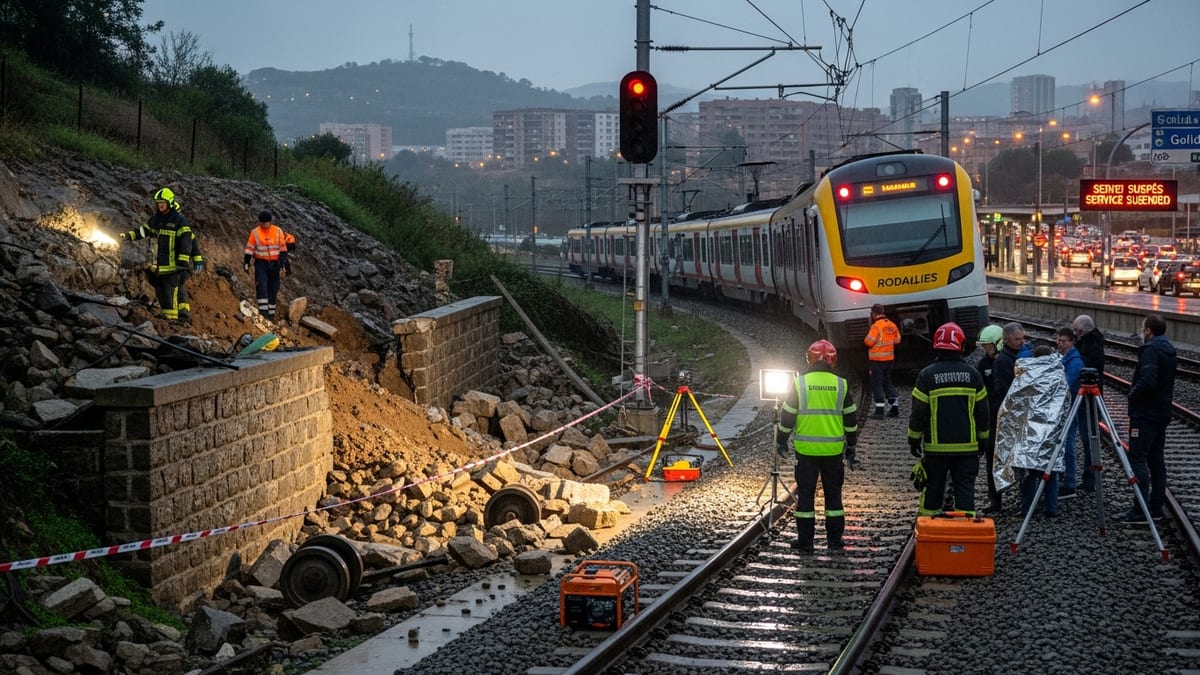
Derailment and power loss halt commuter rail corridor
According to published coverage, a freight train derailed near the East Chicago and Gary Metro area on Wednesday evening, triggering a loss of electrical power along sections of the South Shore Line. Initial reports place the incident at around 9:40 p.m. local time, affecting tracks used by both freight and commuter rail traffic.
Publicly available information shows that overhead power infrastructure was damaged in the incident, preventing South Shore Line’s electric multiple unit trains from operating through the affected stretch. Photos and video circulating in local media depict several derailed freight cars and repair crews assessing damage near the right of way.
Early reports indicate that no serious injuries were immediately linked to the derailment, but the combination of disabled freight equipment and downed power systems effectively closed the route for commuter operations. The precise cause of the derailment remains under review, and no preliminary findings on train speed, track condition, or equipment issues had been released by Thursday morning.
Rail safety investigators are expected to examine track geometry, signaling data and locomotive event recorders as part of the standard post-derailment process. That work typically must be completed, and damaged cars removed, before full passenger service can resume.
South Shore Line suspends trains and turns to buses
Service alerts from the South Shore Line described a broad suspension of train operations following the derailment, initially halting evening departures and then extending the shutdown into Thursday morning. Published bulletins indicated that all departures over the affected segment were canceled while crews worked to restore power and clear the freight consist from the right of way.
Local news reports note that the suspension reached across much of the railroad’s Lakeshore Corridor, which connects Chicago’s Millennium Station with key northwest Indiana communities including Hammond, East Chicago, Gary and Michigan City before continuing to South Bend. The stoppage left regular commuters seeking alternative transportation at the height of the weekday travel period.
In line with previous disruption strategies used during severe weather and construction, the operator moved to substitute bus service on parts of the line. Regional outlets reported that buses were ordered to carry passengers around the outage zone, linking intact portions of the South Shore Line and nearby stations where rail operations could still function safely.
Such substitutions can preserve a basic mobility link between Chicago and Indiana communities, but journey times are typically longer and capacity lower than on regular electric trains. Riders were advised through public channels to allow extra time, monitor service updates and consider delaying nonessential trips until full rail operations are restored.
Commuter impact from Chicago to South Bend
The South Shore Line is a critical commuter and regional rail link between downtown Chicago and South Bend, serving workers, students, airport travelers and leisure passengers. Monthly performance reports published by the operator show that tens of thousands of trips are taken on the line each month, with particularly heavy demand during weekday rush hours.
The derailment near East Chicago effectively cut this corridor at a strategic point where multiple routes funnel toward Chicago. Early-morning riders arriving at stations on Thursday encountered suspended departures or rerouted buses, with many facing missed connections to workplaces and appointments across the Chicago region.
Reports from regional outlets describe crowded platforms, longer wait times and increased reliance on car travel, ride-hailing and other rail services such as Metra’s Electric Line for those able to reach alternative stations. For passengers in northwest Indiana communities that depend primarily on the South Shore Line, options were more limited, and some trips were postponed altogether.
Business groups and local leaders have previously emphasized that dependable South Shore service supports employment access, tourism to Chicago and broader economic ties around Lake Michigan. A prolonged suspension can ripple through employers’ staffing plans, school attendance and regional traffic congestion as more vehicles are forced onto already busy highways.
Restoration timeline and ongoing investigations
As of Thursday morning, published service alerts did not yet provide a firm time for full restoration of South Shore Line operations through the East Chicago area. Railroads typically must complete a series of safety checks, including track repairs, signal testing and verification of the overhead electrical system, before resuming regular passenger timetables.
Local coverage indicates that freight and commuter agencies are coordinating on debris removal and infrastructure repairs. Power crews are working to replace or rehang damaged lines and inspect supporting structures to ensure they can safely carry the electrical load required for frequent commuter trains.
Rail incidents of this kind are commonly reviewed by a combination of company investigators and federal regulators, who may analyze track inspection histories, train handling data and prior maintenance records in the vicinity of the derailment. While such inquiries can take weeks or months to reach final conclusions, railroads often restore limited or single-track operations once the immediate area is cleared and certified as safe.
For the near term, riders are being advised through publicly available notices to check schedules frequently, sign up for service alerts and prepare for evolving patterns of bus substitutions, short turns and partial cancellations as the corridor reopens in stages.
Spotlight on reliability of a vital regional rail link
The incident near East Chicago arrives as the South Shore Line is in the midst of significant expansion and modernization, including the recently opened Monon Corridor and new stations in communities such as Hammond and Munster. These investments are intended to increase capacity, shorten trips and make commuter rail a more attractive alternative to driving.
At the same time, the line’s reliance on shared corridors with freight operators means that freight derailments and infrastructure failures can have outsize effects on passenger reliability. Past storms, collisions at grade crossings and equipment failures have all led to periods of suspended or reduced service along portions of the route.
Transportation advocates point to this latest disruption as a reminder of the importance of sustained investment in track maintenance, signal systems and power infrastructure across shared freight and passenger corridors. They also highlight the value of robust contingency plans, including prearranged bus contracts and clear passenger communications, to manage unplanned outages.
As crews continue work near East Chicago, attention across the Chicago and northwest Indiana region remains focused on how quickly regular South Shore Line trains can return and what long-term lessons might emerge from the derailment and ensuing shutdown.