


More news on this day
South Shore Line commuters are still feeling the effects of a freight train derailment near East Chicago on Wednesday night, with partial suspensions, altered timetables and crowding continuing into the end of the workweek as crews work to clear damaged equipment and restore full power to the busy commuter corridor.
Get the latest news straight to your inbox!
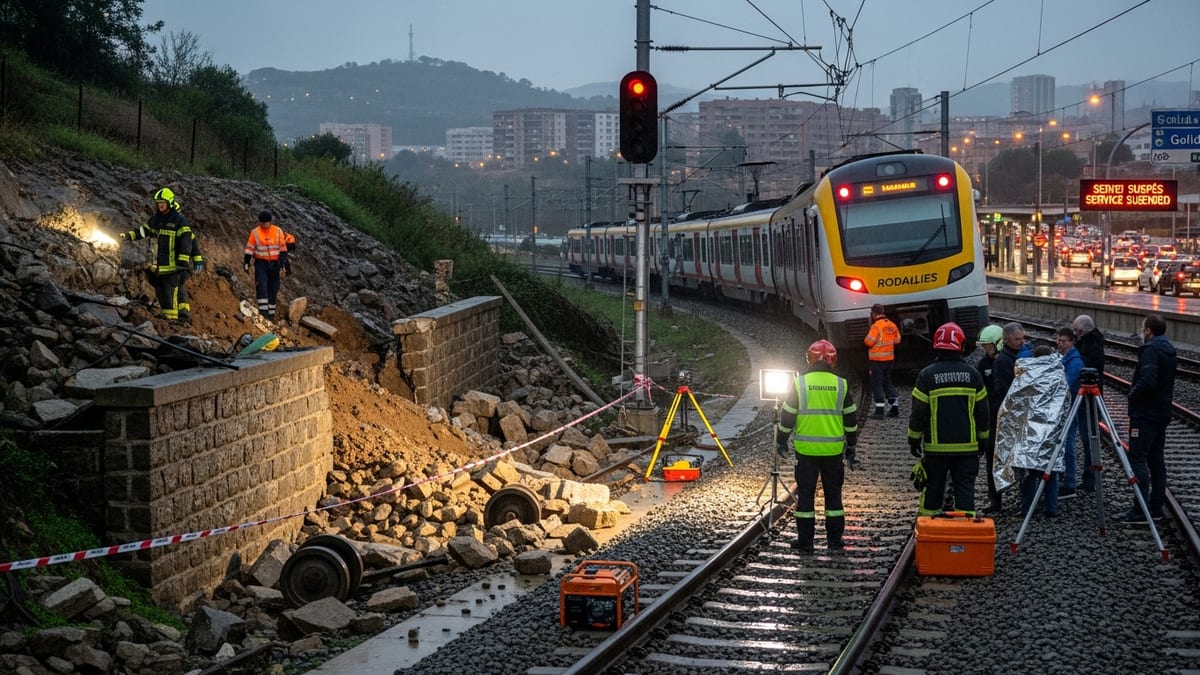
Freight derailment halts electric commuter corridor
Published coverage indicates that the derailment occurred around 9:30 p.m. Wednesday along the South Shore Line right of way near the Indiana Toll Road in East Chicago, when multiple freight cars left the tracks on a curved bridge segment over the Grand Calumet River. Photos and video from the scene show cars leaning at sharp angles and infrastructure damage in the immediate area.
Reports from local outlets describe the derailed freight consist as remaining largely upright but badly misaligned, blocking the electrified tracks used by South Shore Line commuter trains between Chicago and northwest Indiana. The impact brought down power lines that feed the line’s overhead catenary system, triggering a loss of power that rippled across the railroad’s evening schedule.
Publicly available information shows that no commuter trains were directly involved in the incident and no serious injuries were reported. Nevertheless, the location of the derailment on a narrow bridge and the associated electrical damage have complicated cleanup efforts and limited the ability to route passenger trains around the obstruction.
The South Shore Line, operated by the Northern Indiana Commuter Transportation District, provides an essential link between downtown Chicago and communities stretching to South Bend. On a typical weekday, thousands of riders rely on its electric multiple units for work and school trips, meaning even a single evening’s shutdown can have outsized regional effects.
Service suspensions and modified schedules extend into Friday
According to timetable updates shared through agency channels and summarized by regional news coverage, the derailment and power loss forced a complete suspension of South Shore Line service over the affected segment late Wednesday and into Thursday. Riders arriving at stations on Thursday morning encountered canceled trips, substitute bus options in some cases and heavy crowding on the limited trains able to operate.
By Thursday evening, reports indicated that crews had begun to stabilize the derailed cars and assess the damage to track and overhead wires, allowing the operator to plan a partial restoration. However, published alerts and broadcaster summaries noted that normal through-service remained impossible, with only some trains able to operate over portions of the route and others turned short or removed from the schedule entirely.
Coverage from Chicago-based outlets on Thursday night and Friday morning described an adjusted Friday schedule designed to provide at least a basic rush-hour service while keeping trains out of the most heavily damaged zone. Riders were advised to expect longer travel times, altered stopping patterns, and the possibility of standing-room-only conditions on peak departures as demand was funneled onto fewer operating trains.
Transit observers point out that the South Shore Line has limited redundancy in this corridor, which travels through dense industrial and wetlands areas with few alternative rail alignments. As a result, any disruption that blocks both tracks, particularly on a bridge with specialized electrical equipment, can take days to fully resolve and requires careful coordination between freight operators, the commuter agency and utility crews.
Cleanup, inspections and power restoration underway
Railroad and utility teams spent Thursday and Friday focused on removing the derailed freight cars, repairing damaged structures and restringing overhead wires. According to publicly available photos and television footage, heavy cranes and bucket trucks were brought in to access the bridge site, where several catenary support poles and spans appeared bent or severed.
Industry practice in such situations typically requires more than simply clearing the rails. Track geometry must be checked, signal and communication cables inspected and any affected bridge components evaluated before passenger trains can safely resume normal speeds. In this case, the combination of structural checks and high-voltage electrical work has extended the timeline for full service restoration.
Reports also indicate that freight traffic through the East Chicago area has been curtailed or rerouted while the damaged route segment remains out of use, adding urgency to the recovery effort. Once the freight consist is fully removed and repairs are made, test runs are expected to verify that overhead power is stable under load and that clearances are adequate for the South Shore Line’s electric equipment.
Published coverage notes that regional emergency responders and environmental officials have monitored the site, given the derailment’s proximity to waterways and industrial facilities. As of the latest updates, there have been no public reports of hazardous materials leaks associated with this incident, although routine inspections of railcars and the surrounding area are continuing as part of the cleanup.
Commuters adapt with highway traffic and alternative transit
With core portions of the South Shore Line constrained, thousands of regular passengers have turned to highways and other modes. Local reporting describes significant increases in traffic along the Indiana Toll Road and nearby expressways on Thursday and Friday morning, as former rail commuters opted to drive or carpool into Chicago and neighboring employment centers.
Some riders have shifted to neighboring Metra lines, park-and-ride lots closer to Chicago, or telework arrangements where possible. In social media posts and rider forums, commuters have shared informal updates about parking availability at alternative stations, estimated delays on major routes and the relative reliability of substitute buses compared with the usual electric trains.
Transit analysts note that sudden mode shifts of this scale can strain both roadways and parallel rail lines, particularly during summer construction season when lane closures are already common. For employers, the disruption underscores the importance of flexible scheduling and remote-work options when a single piece of transportation infrastructure experiences an extended outage.
In communities along the South Shore Line, particularly in northwest Indiana, the continued disruption has renewed discussion about the vulnerability of single-corridor commuter systems that share track or right of way with heavy freight traffic. Passenger advocates frequently highlight the need for robust contingency bus plans, additional crossovers, and, where feasible, dedicated passenger tracks to reduce the risk that a freight accident will sideline an entire commuter line.
Ongoing investigations and questions about infrastructure resilience
While early reporting has focused on the operational impact on South Shore Line riders, attention is beginning to turn to the cause of the freight derailment and what it might signal about infrastructure conditions along this key corridor. Rail safety investigations typically examine track condition, train speed, equipment performance and any recent maintenance activity, along with weather and operational factors present at the time of the incident.
Analysts observing this and other recent freight derailments around the country point to a broader pattern of aging infrastructure, intense traffic on certain freight routes and the challenges of maintaining mixed-use corridors that carry both heavy freight trains and frequent passenger service. The East Chicago incident has added a commuter-rail dimension to a conversation that has often centered on freight-only corridors in more rural settings.
Publicly available ridership and performance reports for the South Shore Line underscore how critical on-time operations are for the system’s long-term health, with delays and cancellations associated with past incidents showing measurable impacts on monthly statistics. Extended disruptions such as the current one risk eroding rider confidence if they become more frequent.
For now, regional coverage indicates that full restoration of service depends on the pace of cleanup and repair work at the derailment site, as well as the outcome of safety inspections. Until the commuter operator can again run its full timetable across the affected stretch, passengers are being encouraged through public channels to verify the latest schedule information before heading to stations and to build extra time into their journeys.