


More news on this day
South Shore Line commuter rail service between Chicago and northwest Indiana was suspended for the rest of Wednesday evening after a freight train derailment and associated power loss near East Chicago prompted a shutdown, according to early service updates.
Get the latest news straight to your inbox!
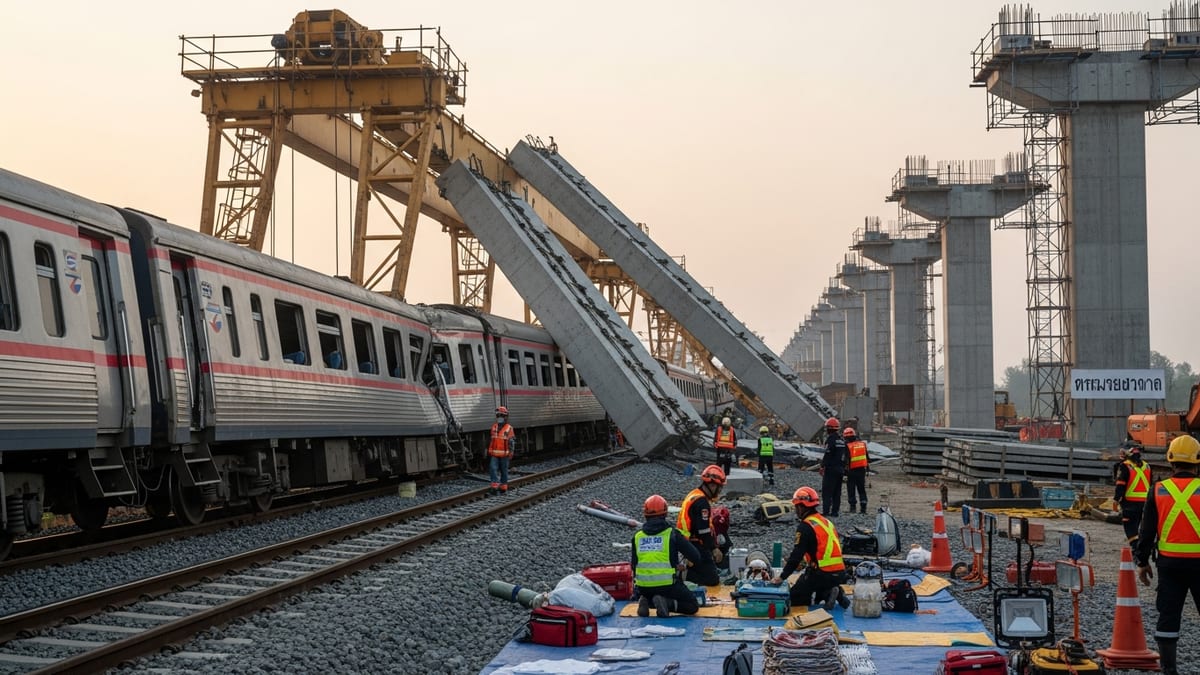
Derailment near East Chicago halts evening trains
Reports indicate that the disruption began around 9:40 p.m. local time on Wednesday, June 24, when a freight train derailed in the vicinity of East Chicago and Gary Metro. The incident coincided with a loss of electrical power on the South Shore Line, an electrified commuter route that relies on overhead wires, forcing the operator to suspend remaining trains for the night.
Service alerts posted publicly by the railroad described a complete halt to all remaining South Shore Line trains on Wednesday following the derailment. Passengers already en route were advised that trains would not continue beyond the affected area, and that no further departures would operate for the rest of the evening.
The derailment occurred after hours of severe storms across northeast Illinois and northwest Indiana that brought strong winds, heavy rain, and scattered damage. While investigations into the precise cause of the freight train’s derailment are still at an early stage, the timing raised immediate questions about whether the volatile weather played a role in the incident or the subsequent power failure.
Early information did not immediately indicate any injuries connected to the derailment. Details about the freight operator involved, the number of cars that left the tracks, and whether any hazardous materials were present had not yet been fully outlined in initial public reports.
Commuters urged to seek alternatives into Chicago
Service bulletins and social media posts from the railroad urged riders to find alternate transportation to and from Chicago for the remainder of Wednesday evening. With a full suspension in effect, regular commuters, late-shift workers, and leisure travelers who rely on the South Shore Line were left to pivot to driving, carpooling, rideshare options, or other regional transit providers.
The sudden shutdown placed particular strain on passengers at intermediate Indiana stations who had expected to return home by train. In communities where the South Shore Line functions as a critical link to jobs and events in downtown Chicago, a late-evening suspension can complicate travel plans, especially for those without access to a car.
Publicly available information suggests that passengers already onboard trains at the time of the incident experienced delays as crews worked to hold or reroute equipment away from the affected stretch of track. With no indication that temporary bus bridges could immediately be organized at that late hour, many travelers were left to arrange last-minute solutions.
The incident highlights how disruptions involving freight railroads can ripple quickly into the commuter network. The South Shore Line shares corridors and infrastructure with freight operators in northwest Indiana, and interruptions on freight tracks can directly hinder the movement of passenger trains.
Uncertain outlook for Thursday morning commute
While the initial shutdown order applied to Wednesday evening, updates noted the potential for impacts to extend into the Thursday morning rush on June 25. The duration of the disruption depends on how quickly crews can stabilize the derailed cars, repair any damage to track or power systems, and verify that the affected segment is safe for passenger service.
Passenger rail disruptions involving derailments often require a multi-step response, including debris removal, structural inspections and, in the case of electrified lines, careful testing of overhead power equipment. Until that work is complete, and regulators and railroad managers are satisfied that operations can resume safely, trains typically remain suspended or operate on truncated schedules.
According to published coverage of similar incidents in the Chicago region in recent years, repair and inspection timelines can range from several hours to multiple days, depending on the severity of the damage and whether specialized equipment is required. Even when limited service resumes, schedules can remain altered, with slower speeds, single-tracking, or temporary station bypasses used to work around damaged segments.
Commuters planning to use the South Shore Line on Thursday have been encouraged in public updates to closely monitor service notices and consider contingency plans in case of prolonged disruption. That includes leaving extra time for travel, exploring telework options where possible, or shifting to other modes until normal rail operations are restored.
Key corridor for Northwest Indiana brought to a standstill
The South Shore Line, operated by the Northern Indiana Commuter Transportation District, connects Millennium Station in downtown Chicago with communities across northwest Indiana and South Bend. The route is one of the few remaining interurban-style electric railroads in the United States and functions as a vital commuter artery for Lake, Porter, LaPorte, and St. Joseph counties.
Sections of the South Shore Line corridor are shared with the Chicago South Shore and South Bend Railroad, a freight carrier that hauls commodities across the same region. In these joint-use segments, infrastructure is designed to accommodate both passenger and freight trains, making coordination essential but also creating potential chokepoints when freight incidents occur.
In recent years, the South Shore Line has been in the midst of expansion and modernization projects, including new branches and station upgrades intended to improve service reliability and attract additional riders. The current derailment-related suspension is an abrupt contrast to that growth narrative, underlining the ongoing vulnerability of busy mixed-traffic rail corridors to isolated but disruptive events.
Northwest Indiana communities located along the line, from East Chicago to Michigan City and beyond, have invested heavily in transit-oriented development and park-and-ride infrastructure centered on South Shore stations. When service is interrupted, local traffic and parking demand can surge as former rail riders switch to driving, with regional economic impacts that extend beyond the immediate inconvenience for passengers.
Weather, freight traffic and resilience on Midwest rails
The derailment and power loss near East Chicago come during a period of heightened pressure on freight and passenger rail networks in the Midwest. Strong thunderstorm systems, like those that swept across the Chicago area on Wednesday, can contribute to downed trees, damaged poles, and debris, all of which pose risks to overhead power and track integrity.
Rail safety data and past case studies in the region show that freight derailments can stem from a variety of factors, including track conditions, equipment failures, and severe weather. Even when freight trains do not directly collide with commuter trains, incidents on shared corridors can disrupt passenger operations for hours or days.
Transportation planners and rail operators across the country have increasingly focused on resilience, looking at how to harden infrastructure against extreme weather while also improving communication with riders during service interruptions. Public reaction to recent rail disruptions in other metropolitan areas has often centered on the need for clearer, faster updates and more robust backup plans when trains cannot run.
For the South Shore Line, the latest suspension will likely feed into ongoing evaluations of how well the system can withstand and recover from external shocks such as freight derailments and storms. As the evening disruption gives way to a potentially challenging Thursday commute, riders and local communities will be watching closely for signs of how quickly this key cross-state corridor can return to regular service.