


More news on this day
Thousands of passengers across the United States faced mounting delays and abrupt cancellations as Southwest Airlines and American Airlines contributed to a fresh wave of travel disruption, with publicly available tracking data indicating more than 400 flights were grounded and knock-on delays rippled through major hubs on Saturday, June 13, 2026.
Get the latest news straight to your inbox!
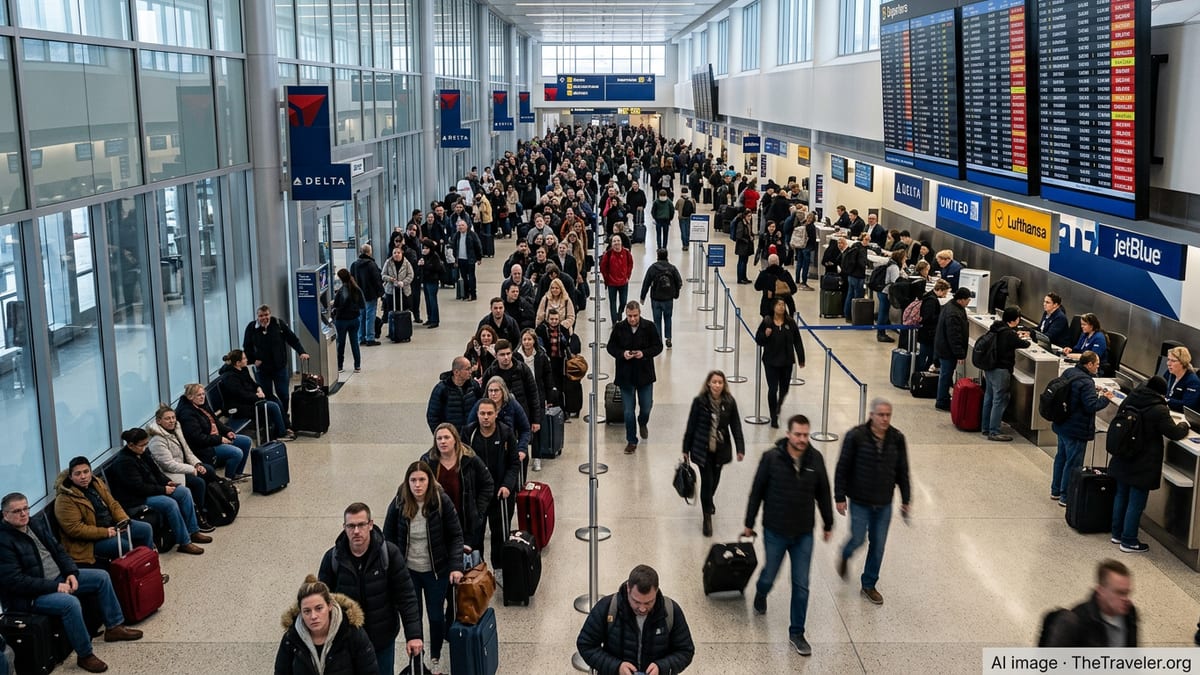
Nationwide Cancellations Hit Key Summer Travel Weekend
Flight-tracking dashboards and aviation news outlets on Saturday highlighted growing strain across the US aviation network, with data indicating roughly 402 cancellations nationwide and a significantly larger number of delays concentrated among major domestic carriers. Southwest and American featured prominently in the disruption, with multiple cancellations at key connecting airports compounding existing congestion from earlier in the week.
The latest wave arrived at the start of the busy summer travel period, when schedules are already tightly packed and aircraft utilization is high. When flights are pulled from the system at short notice, available seats on remaining services quickly vanish, leaving limited rebooking options and forcing many travelers to wait hours or even days for an alternative itinerary.
Tracking services and independent airline watchers reported that the cancellations were not confined to a single storm system or region. Instead, disruptions were spread across multiple airports, including important midcontinent hubs where Southwest and American both operate dense networks, making each cancellation more likely to cascade across subsequent flights and destinations.
Reports indicate that even where flights took off, extensive delays were common, with late-arriving aircraft and out-of-position crews slowing the recovery and contributing to crowding at departure gates, customer service desks, and baggage areas.
Southwest and American Under Fresh Scrutiny
Southwest and American have both faced heightened scrutiny in recent years over their ability to withstand operational shocks. Southwest’s 2022 scheduling crisis, when the carrier canceled thousands of flights over the December holiday period, placed a spotlight on its crew scheduling tools and network design. American, meanwhile, has periodically drawn attention for high cancellation and delay rates at select hubs, especially during weather and air-traffic-control slowdowns.
Recent federal Air Travel Consumer Reports show that cancellation rates across US carriers remain above some pre-pandemic benchmarks, even as airlines have restored capacity and added new routes. Although Southwest’s average cancellation rate has moderated from its worst periods, today’s disruptions at scale underscore how exposed the system remains when aircraft and staff are stretched close to their limits.
For American, Saturday’s figures add to a pattern of volatility noted by frequent flyers and aviation analysts, who point to congested hubs, tight banked schedules, and complex regional partnerships as factors that can magnify the impact of relatively small weather or technical issues. Online forums and consumer advocacy groups have documented multiple recent incidents in which passengers at large American hubs waited through repeated rolling delays before departures were ultimately canceled late in the day.
Publicly available information indicates that both carriers have invested in new technology and schedule adjustments since earlier high-profile meltdowns. However, the scale of the latest disruptions suggests that those changes have not fully insulated operations from the stresses of peak-season travel.
Airports Struggle With Cascading Disruptions
The cancellations weighed heavily on several key US airports, including large connecting hubs and fast-growing mid-sized facilities. Published coverage of similar recent events in Atlanta, Houston, and other major markets illustrates how even a few dozen cancellations at a primary hub can rapidly affect passengers far beyond the local area, as missed connections and aircraft rotations propagate delays throughout the network.
On Saturday, airport social media feeds and traveler reports described crowded concourses, long lines for customer service, and growing frustration as departure boards cycled through delay updates. With aircraft and crew availability constrained, some flights were removed from the schedule at relatively short notice, triggering a scramble for remaining seats on unaffected services.
In some cases, inbound cancellations proved just as disruptive as outbound cuts. When flights into a hub are scrubbed, aircraft that were due to continue to other destinations never arrive, and crews may time out under duty regulations. This can leave airports temporarily short of both planes and staff, even where local weather and infrastructure remain fully operational.
Aviation analysts note that today’s pattern mirrors other recent “rolling disruption” days, where an initial cluster of cancellations in the morning results in extended irregular operations that last well into the evening, as airlines try to reposition equipment and recover schedules.
Passengers Face Long Waits and Limited Options
For travelers caught in the middle of Saturday’s disruptions, the most immediate effect was uncertainty. Many passengers reported spending hours in terminals waiting for updates, as flights shifted from on-time to delayed, then ultimately to canceled. With summer load factors already high, same-day alternatives on Southwest and American were scarce on many routes, pushing some customers to book last-minute tickets on competing carriers or even abandon trips altogether.
Travel forums and consumer platforms show a familiar pattern on days like this: families stranded midway through vacations, business travelers missing critical meetings, and students or military personnel struggling to return to school or bases. Some travelers attempt to salvage itineraries by stringing together multi-stop routings through secondary airports, but these solutions can involve overnight stays and additional expense.
Publicly available guidance from consumer advocates continues to emphasize the importance of knowing airline policies on rebooking, meal vouchers, and hotel accommodations. In the United States, carriers are generally not required to compensate passengers for cancellations attributed to weather or air-traffic-control constraints, but may provide more support when disruptions are linked to crew or mechanical issues within the airline’s control.
Given the difficulty of distinguishing between these categories in real time, many passengers rely on airline apps and airport staff for clarity, although the volume of disruptions today made it challenging to obtain individualized assistance quickly.
Broader Concerns About System Resilience
Saturday’s wave of cancellations and delays comes amid broader concerns about the resilience of the US air travel system. Recent analyses of Department of Transportation data highlight that overall reliability has not fully recovered to its most stable periods of the previous decade, despite substantial hiring and infrastructure investment since the pandemic.
Industry observers point to converging pressures, including pilot and air traffic controller shortages, aging technology, tight aircraft utilization, and volatile weather patterns, all interacting in ways that make large-scale disruptions more likely. When schedules are built with limited slack, even modest interruptions can cascade quickly, as today’s 402 cancellations illustrate.
For Southwest and American, the latest chaos may reinforce calls from consumer advocates and lawmakers for clearer passenger protections and more transparent reporting on the root causes of disruptions. Analysts suggest that more conservative scheduling, additional reserve crews, and faster recovery playbooks could help reduce the risk of prolonged multi-day meltdowns, though such measures may raise costs or limit capacity growth.
With the peak summer travel season still ahead, travelers and industry watchers alike are likely to track closely how major carriers handle the aftermath of today’s disruptions and whether further schedule adjustments or operational changes emerge in the coming weeks.