


More news on this day
A projected surge in wildlife tourism spending to around 401 billion dollars over the next decade is colliding with worsening airport disruption and a rapid rebound in private jet use, creating an emerging travel divide in which affluent flyers are increasingly shielded from the chaos facing commercial passengers.
Get the latest news straight to your inbox!
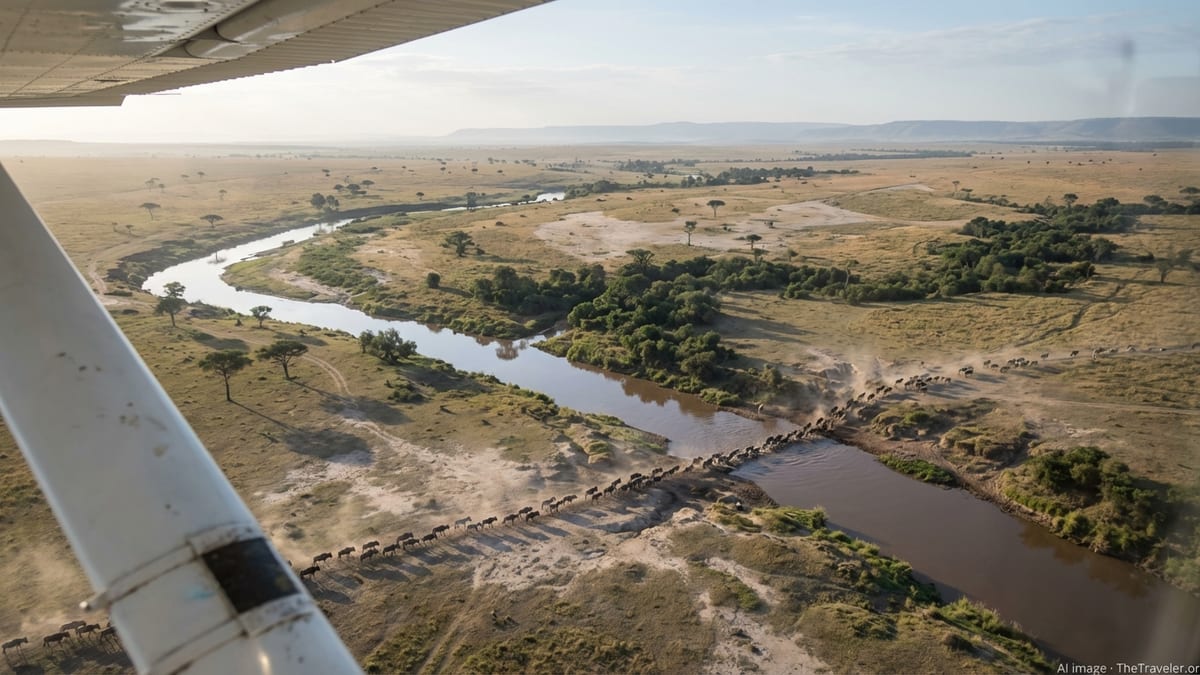
Wildlife Tourism Becomes a 401 Billion Dollar Powerhouse
Wildlife and nature-based travel is evolving from a niche interest into one of tourism’s most powerful segments. Recent market analysis indicates the dedicated wildlife tourism sector could exceed 400 billion dollars in annual value by the mid-2030s, with some forecasts pointing to approximately 401.9 billion dollars worldwide as rising incomes, social media visibility and post-pandemic demand for open-air nature experiences converge.
Broader assessments of nature-based tourism suggest an even larger economic footprint. International conservation groups and economic studies describe nature-focused trips as generating hundreds of billions of dollars a year in direct and indirect spending, including park fees, guides, ecolodges, transport and local services around protected areas. This spending, in turn, underpins millions of jobs in communities that host safaris, marine wildlife expeditions and rainforest lodges.
Publicly available briefings from conservation organizations stress that this revenue is increasingly cited as a justification to protect habitats and wildlife, from African savannahs to coral reefs and mountain reserves. Governments and park agencies are framing wildlife tourism as a way to connect conservation finance with development goals, particularly in lower-income regions where visitor dollars can diversify rural economies.
Analysts note that a significant share of this new growth is concentrated in long-haul, higher-spend segments. Affluent travelers booking multi-country safaris, private wildlife cruises or bespoke conservation itineraries drive disproportionately high per-trip spending, which ties the expansion of wildlife tourism closely to premium and private aviation services.
Airport Chaos Pushes High-End Travelers Toward Private Skies
At the same time that wildlife tourism spending has accelerated, disruption across commercial aviation has remained pronounced. Industry and passenger-rights reports reviewing recent peak travel seasons highlight summers in which roughly four in ten passengers worldwide experienced some form of delay or cancellation, with even higher disruption levels in the United States and Europe during certain months.
Weather volatility, air traffic control constraints, staffing challenges and high-profile IT outages have combined to create recurrent “meltdown” scenarios at major hubs. In one notable episode, a global software failure in 2024 triggered cascading cancellations and delays across carriers and airports, leaving large numbers of passengers stranded and reviving questions about aviation resilience.
These recurring shocks have reinforced a pattern in which the most time-sensitive and high-spend travelers increasingly turn to private aviation to avoid congested terminals and volatile schedules. Data compiled in sustainability-focused research and industry trackers show private jet activity not only recovered faster than commercial traffic after the pandemic but has continued to grow, with some sources recording double-digit percentage increases in global private flights compared with pre-2020 baselines.
For elite wildlife tourists, the result is a bifurcated system. While mass-market travelers planning once-in-a-lifetime trips to safari destinations or island reserves must navigate complex connections and potential disruptions, the wealthiest visitors are booking point-to-point private flights directly into regional airports or bush strips that sidestep the most congested hubs altogether.
Eco-Aviation Claims Rise Alongside Private Jet Emissions
The expansion of wildlife tourism and private flying has unfolded alongside intensifying debate over aviation’s climate footprint. Peer-reviewed research on private aviation emissions shows that business and leisure jets account for a growing share of overall aviation climate impact, despite serving a small fraction of travelers. Studies of recent years in the United States and Europe, for example, indicate that private flights represent several percent of combined commercial and private aviation emissions, with emissions growth outpacing that of scheduled airlines.
Industry groups and manufacturers have responded with an ambitious eco-aviation narrative. Public communications emphasize the promise of sustainable aviation fuel, or SAF, more efficient aircraft and carbon offsetting tied to conservation projects. Test flights using high blends or full replacement of fossil jet fuel with certified SAF have demonstrated substantial reductions in particulate emissions and contrail-forming ice crystals, suggesting potential climate benefits if such fuels were scaled up.
However, independent analyses note that SAF still represents a tiny fraction of global jet fuel use, and that much of the current marketing around private jets and sustainability outpaces actual uptake. Reports from policy institutes and environmental organizations describe a risk that “green” messaging around eco-aviation obscures the sector’s rising absolute emissions, particularly in premium segments such as luxury safaris and conservation-themed private tours.
This tension is especially visible in wildlife tourism, where airlines, tour operators and destination marketing bodies increasingly promote “low-impact” or “regenerative” itineraries even as the long-haul flights required to reach remote ecosystems remain the most carbon-intensive component of the trip.
Conservation Finance Gains, but Inequality Deepens
For conservationists and destination communities, the wildlife tourism boom offers both crucial funding and complex trade-offs. Recent policy papers on sustainable tourism describe nature-based travel as a major source of finance for protected areas, with revenues often reinvested into anti-poaching patrols, habitat restoration and local infrastructure. In regions where public conservation budgets are limited, high-value visitors are helping to keep parks open and rangers employed.
Yet the reliance on high-spend, fly-in clientele creates structural inequalities. Local residents, seasonal workers and budget travelers remain exposed to the full brunt of airline disruptions and price volatility. When major carriers cancel routes or reduce capacity, the shock can cut off access to markets and essential services for remote communities, even as private jets continue to arrive at nearby airstrips with minimal interruption.
Environmental advocates also warn that the concentration of wealthier visitors in fragile ecosystems amplifies pressures on wildlife if growth is not carefully managed. International monitoring of World Heritage and other flagship sites has flagged tourism, alongside invasive species and climate change, as a leading threat to some of the planet’s most important natural areas. Managing visitor numbers, aircraft noise, and the expansion of high-end lodges and airstrips becomes more challenging as demand increases.
Observers say this dynamic raises questions about who ultimately benefits from the 401 billion dollar wildlife tourism boom. While elite flyers may enjoy seamless eco-branded journeys insulated from crowded terminals and congested hub airports, many of the people and places that make these trips possible remain on the front line of both climate risk and transport instability.
Pressure Mounts for Stricter Climate and Travel Standards
Regulators are starting to respond to the collision of booming eco-tourism, aviation disruption and climate concerns. In the United States, the Federal Aviation Administration has finalized rules that will require new large jets and turboprops certified from the late 2020s to meet stricter fuel-efficiency and carbon standards, aligning with a national aviation climate action plan that targets net-zero sector emissions by 2050. Similar measures in Europe mandate a rising blend of sustainable aviation fuel in jet fuel supplied at major airports.
Despite these moves, climate researchers argue that technology and fuel switching alone are unlikely to keep aviation emissions in line with global warming limits if demand continues to rise, particularly in premium segments. Calls are growing for progressive levies on frequent flying and private jets, tighter regulation of eco-claims in aviation marketing, and greater transparency about the real climate impact of “once-in-a-lifetime” wildlife journeys.
For now, the trends are moving in parallel rather than in sync. Wildlife tourism is surging toward the 401 billion dollar mark, promising vital conservation income and unique nature experiences. Airport disruption continues to test the patience of mainstream travelers, incentivizing the growth of a largely unregulated private jet market. Eco-aviation technologies are making incremental progress but from a very low baseline.
How policymakers, industry and travelers reconcile these forces over the coming decade will determine whether the global eco-aviation boom genuinely supports conservation and fair access to nature, or primarily serves as a shield that allows a privileged minority to bypass the turbulence of an overburdened air travel system.