


More news on this day
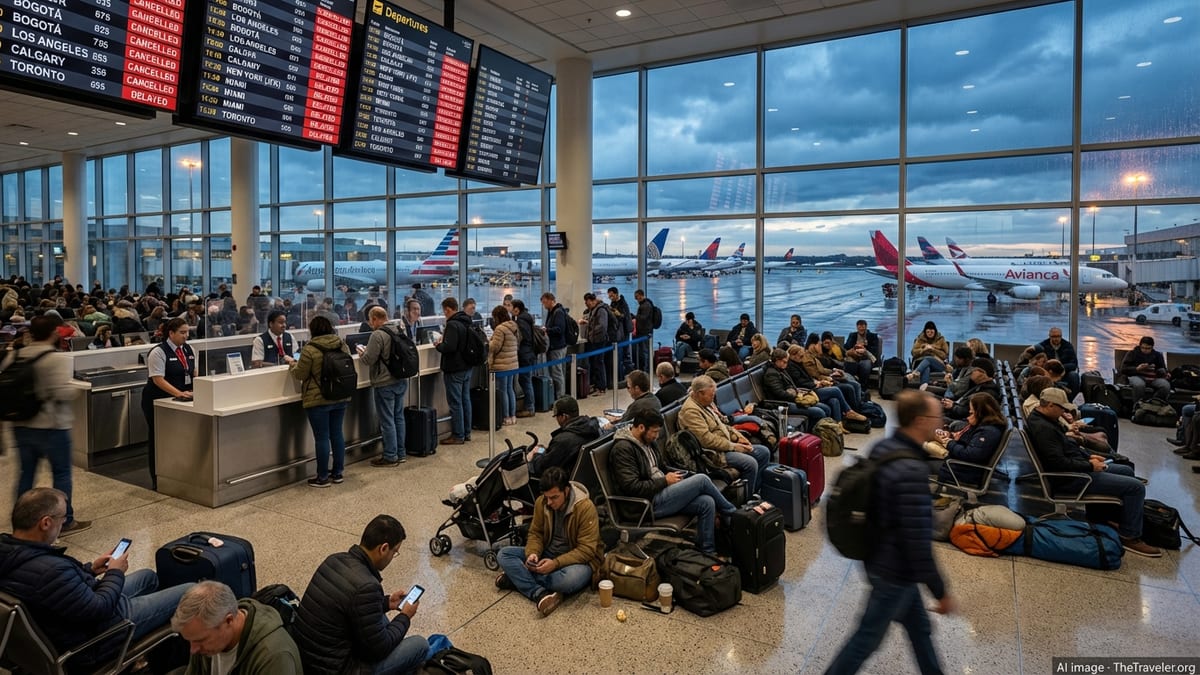
Operations at Chicago Midway International Airport were sharply disrupted as Southwest Airlines canceled 78 flights and delayed 128 more, upending travel plans on key routes across the United States, Mexico, and the Dominican Republic.
Get the latest news straight to your inbox!
Major Disruptions at a Key Southwest Hub
Chicago Midway International Airport functions as one of Southwest Airlines’ primary hubs, with the carrier operating hundreds of daily flights that connect Midwestern travelers to destinations across the country and into Latin America and the Caribbean. When cancellations and delays spike at Midway, disruptions tend to cascade across the broader network, affecting cities well beyond Chicago.
Publicly available flight tracking boards for Midway showed a cluster of Southwest cancellations and late departures concentrated over a several hour window, with 78 flights canceled outright and 128 listed as delayed. These operational problems affected both arrivals and departures, meaning many aircraft and crews were left out of position for later flights.
The pattern of disruption at Midway indicated that many of the affected flights were part of through-routes, where the same aircraft serves multiple cities in sequence. When an early segment is canceled or delayed, subsequent legs on that aircraft are often impacted, which helps explain why passengers flying far from Chicago also reported knock-on delays and cancellations.
Ripple Effects Across the United States
The cancellations from Midway were felt on some of Southwest’s best-known domestic routes, particularly those linking Chicago with coastal and mountain destinations. Flights involving Seattle, Raleigh, Norfolk, Bozeman, and Savannah were among those affected, according to real-time departure and arrival data reviewed during the disruption period.
Seattle and Raleigh represent important business and leisure markets for Southwest, and flights from Chicago to these cities often carry a mix of local passengers and travelers connecting from smaller Midwestern airports. When departures from Midway are canceled or held on the ground, those connecting itineraries can unravel, forcing passengers to reroute through other hubs or face overnight delays.
Bozeman and Savannah, while smaller markets, are high-value leisure destinations that rely heavily on seasonal demand. Travelers bound for Montana’s national parks or coastal Georgia’s beaches frequently depend on a limited number of daily flights. The loss of a single rotation from Midway can mean no same-day alternative, leaving travelers with few options other than lengthy rebooked itineraries or outright trip cancellations.
Norfolk, serving Virginia’s coastal region, also experienced impacts as Midway-linked flights dropped from the schedule or departed significantly behind time. Given that many Southwest services operate as point-to-point connections rather than traditional hub-and-spoke links, each lost flight represents a direct reduction in available capacity for that city pair on the affected day.
International Routes to Mexico and the Dominican Republic Affected
The disruption was not limited to domestic routes. Publicly available schedules and airline destination information show that Southwest uses Midway as a connecting gateway to several markets in Mexico and the Dominican Republic, including popular leisure destinations served via other U.S. gateways. When Midway flights fall out of sync, travelers heading south of the border can miss onward connections.
According to network maps and timetable data, Southwest’s international offerings include service to key Mexican resort areas and to Punta Cana in the Dominican Republic. Many Midwest passengers rely on a Midway departure to reach a second U.S. airport that provides the onward international sector. As cancellations rippled through the system, some of these “feeder” legs disappeared from the departure boards, severing same-day connectivity.
In practice, that meant travelers bound for resort destinations could find themselves stranded in Chicago or an intermediate U.S. city, even if the international segment itself remained scheduled. Without the initial Midway leg, itineraries involving Mexico or the Dominican Republic had to be rebooked through alternative routes or pushed to later dates, with limited spare capacity during peak travel periods.
Flight status guidance and airline policy documents indicate that, in such circumstances, affected customers are typically offered rebooking on the next available Southwest flight at no additional fare, or the option of a refund if travel no longer makes sense. However, when entire waves of flights are canceled, the “next available” departure may be hours or even days away, especially on less frequent international connections.
Passengers Face Missed Connections and Longer Journeys
The concentration of canceled and delayed flights at Midway translated into a difficult travel day for many Southwest customers. Reports shared on public forums and social media channels described missed weddings, vacations cut short, and business trips extended as passengers scrambled to find alternate itineraries when their Chicago flights disappeared from the board.
Frequent travelers note that disruptions at Midway can be particularly challenging because so many flights in and out of the airport are part of complex multi-city routings. A single aircraft might operate a sequence such as Seattle to Chicago, Chicago to Norfolk, and then on to another city. If the first or second leg is canceled, the remaining segments are often removed as well, multiplying the impact on passengers who may never have planned to pass through Chicago.
Some travelers sought to reposition through other Southwest cities, such as Dallas or Denver, in order to reach their final destinations. This kind of improvised rerouting can add several hours and additional connections to an itinerary, and may not always be possible when alternative flights are already full. For those with tightly timed cruises, group tours, or international hotel bookings, even a successful reroute may not fully salvage the original plans.
Published guidance on compensation and customer-service policies underscores that, in many cases, passengers affected by cancellations within an airline’s control may be entitled to refunds of unused tickets and assistance with rebooking. However, travelers often still shoulder the burden of arranging new hotel nights, ground transport, and rearranged plans at their own expense, especially when disruptions are attributed to weather or airspace constraints rather than airline operations.
Broader Questions Over Reliability and Network Strain
The latest wave of cancellations at Chicago Midway comes amid ongoing scrutiny of airline reliability across the U.S. system. Federal on-time performance data show that Southwest, like many major carriers, routinely operates a large schedule with a relatively lean buffer, which can magnify the effect of any single operational issue.
Industry analyses of Southwest’s network have highlighted Midway’s central role in feeding both domestic and near-international routes, from cities such as Seattle and Raleigh to resort destinations in Mexico and the Caribbean. The same efficient point-to-point structure that allows the airline to offer frequent nonstops also creates vulnerability when disruptions strike a key station such as Chicago.
Travel experts often recommend that passengers build additional time into itineraries passing through busy hubs, particularly during peak travel seasons or periods of unsettled weather. Early-morning departures are generally regarded as less prone to knock-on delays from earlier disruptions, and booking nonstop flights when available reduces the risk that a missed connection at a hub like Midway will derail the entire journey.
While the specific combination of 78 cancellations and 128 delays at Midway represents a snapshot in time, it underscores how closely linked the airline’s U.S. and international networks have become. When a single hub experiences a severe operational setback, the effects can rapidly spread from Chicago to coastal cities, mountain gateways, and beach resorts from Mexico to the Dominican Republic, leaving travelers across the hemisphere coping with the fallout.