


More news on this day
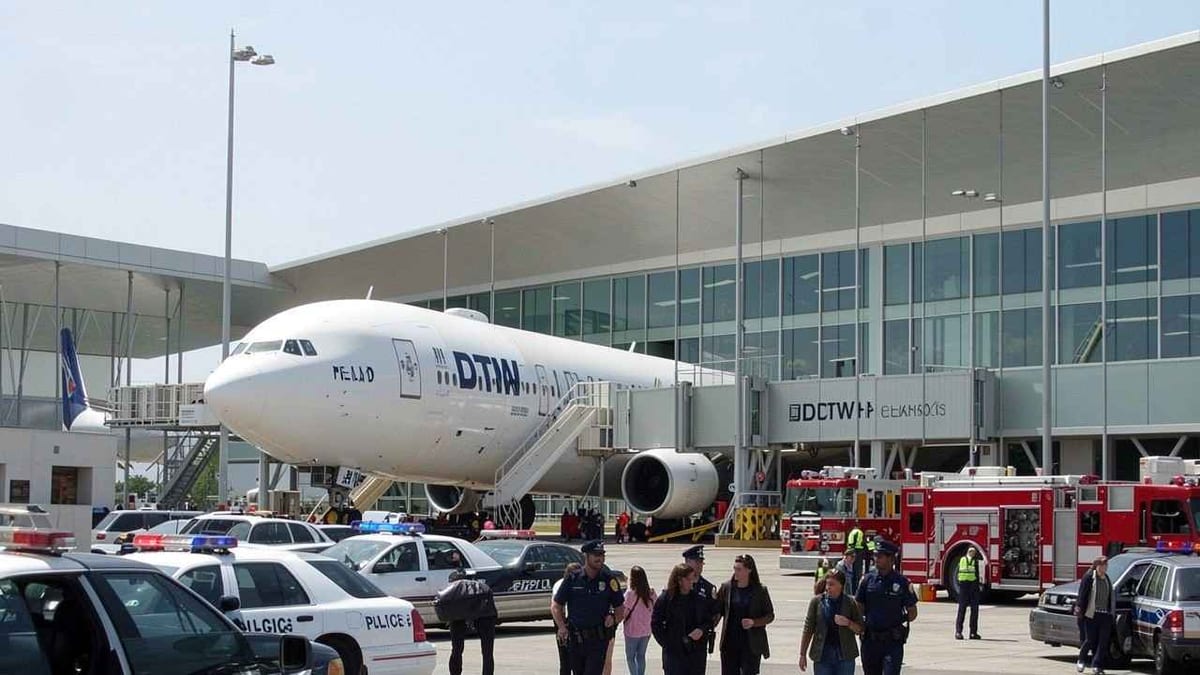
Southwest Airlines Flight 3340, scheduled to operate through Raleigh-Durham International Airport, was diverted from its planned route, disrupting travel plans for passengers and drawing attention to how diversions are handled at the busy North Carolina hub.
Get the latest news straight to your inbox!
What Is Known About the Southwest 3340 Diversion
Publicly available flight-tracking and aviation operations data indicate that Southwest Airlines Flight 3340 experienced a route disruption that resulted in a diversion away from its intended operation through Raleigh-Durham International Airport. While detailed, minute-by-minute accounts are limited, schedules and historical tracking records show that the flight did not follow its originally published plan on the day of the incident.
Information from aviation data platforms suggests that the aircraft changed course prior to reaching its scheduled airport, a typical indication of a diversion. Such changes can stem from a range of factors, including weather conditions at the destination or along the route, airspace or runway constraints, or operational issues involving the aircraft or airline.
Reports from travelers on social platforms and forums referencing the flight suggest delays and itinerary changes for those booked on Southwest 3340. Some passengers described extended ground time and rebookings after the diversion, though accounts vary depending on each traveler’s final destination and connecting flights.
Raleigh-Durham International Airport, which serves as a key station for several low cost and legacy carriers, frequently appears in diversion scenarios because of its location and runway capacity. In this case, however, the Southwest flight’s pattern indicates that the aircraft did not continue its planned operation through the airport as initially scheduled.
Possible Reasons Flights Divert Around Raleigh-Durham
While specific, confirmed causation for the Southwest 3340 diversion has not been detailed in official summaries, industry data provides context on why diversions occur in and around Raleigh-Durham. Records from federal air traffic coordination centers show that weather systems along the East Coast often trigger flow restrictions, holding patterns, and, in some cases, route changes and diversions for flights bound for or overflying North Carolina airports.
Thunderstorms, low visibility, and wind shear are among the most common meteorological reasons flights alter course. In addition, airspace congestion or temporary runway closures, sometimes due to unrelated incidents, can prompt airlines and air traffic managers to reroute flights to alternative airports that can accommodate the aircraft’s size and passenger load.
Operational considerations, including maintenance checks triggered by onboard alerts, are another factor. Airlines may decide to divert when technical indications suggest that continuing to the planned destination is not advisable. In such cases, crews typically coordinate with their operations centers and with air traffic control to identify a suitable airport with the necessary facilities.
Published analysis of airline performance and delay patterns shows that diversions, though relatively rare compared with total daily departures, tend to cluster around periods of severe weather and peak traffic. Raleigh-Durham’s role as both a destination and an alternate field in the region means that it regularly appears in diversion statistics, either as the airport a flight diverts to or the airport that a flight must divert away from because conditions there are constrained.
Impact on Passengers and Downstream Schedules
For travelers aboard Southwest Flight 3340, the diversion translated into longer travel times and, for some, missed connections. Accounts shared by passengers and observers describe extended waits, changes in onward itineraries, and the need to work with airline agents to secure new seats on later flights. The knock-on effects also likely affected travelers booked on subsequent segments involving the same aircraft.
In diversion scenarios, airline crews and operations teams must manage fuel planning, crew duty time, aircraft positioning, gate availability, and customer reaccommodation simultaneously. A single diverted flight can therefore ripple through the schedule, producing delays on later departures that were set to use the same aircraft or crew.
Travelers impacted by the Southwest 3340 disruption reported needing to adjust hotel reservations, ground transportation, and in some cases work or family commitments. Although the flight ultimately landed safely at its diversion point, the operational shift underscored how even a single route change can significantly alter a day’s plans for scores of passengers.
Published consumer guidance from transportation regulators notes that, in the United States, airlines retain broad discretion over diversions related to safety and operational needs. Compensation policies, meal vouchers, and hotel accommodations vary by carrier and can depend on whether the cause is categorized as within the airline’s control or driven primarily by weather or air traffic constraints.
How Diversions Are Managed at Raleigh-Durham
Raleigh-Durham International Airport plays a dual role during disruption events. At times it serves as the destination that flights must divert away from, and at other times it functions as a receiving airport for flights that cannot continue to their intended endpoints. Federal air traffic coordination advisories show that RDU is frequently included in regional plans during weather systems and traffic-management initiatives affecting the Mid Atlantic and Southeast.
When flights are diverted away from Raleigh-Durham, ground operations teams at the alternate airport coordinate passenger disembarkation, refueling, potential crew swaps, and decisions on whether the aircraft will continue to its original destination after conditions improve. At the same time, RDU’s own schedule can be affected as inbound aircraft fail to arrive on time, reducing available seats and potentially disrupting later departures.
Analyses of historical diversion data indicate that airports with multiple long runways and a mix of domestic and international traffic, such as Raleigh-Durham, often serve as strategic alternates because they can receive a variety of aircraft types. However, this flexibility also means that during complex weather or traffic events, operations teams must balance local departures and arrivals with unexpected diverted flights seeking parking positions and gate access.
For Southwest 3340, the diversion pattern reflects how a single flight’s change of course can intersect with RDU’s broader operational role in the region. Travelers following the situation through flight-tracking tools and aviation forums observed how the altered route affected not only those aboard the aircraft but also passengers waiting in Raleigh-Durham for later flights involving the same equipment.
What Travelers Can Learn From the Southwest 3340 Case
The diversion of Southwest Flight 3340 provides a practical example of how quickly airline operations can change and why travelers benefit from preparing for contingencies. Industry analysts often recommend that passengers build extra time into connections, especially when flying through regions prone to summer thunderstorms or winter weather, and to monitor flights through both airline channels and independent tracking services.
Travel advocates also advise travelers to familiarize themselves with airline policies on delays and diversions, including rebooking options and customer service channels. In many cases, rebooking through an airline’s mobile app or website can be faster than waiting in line at a service counter after a disruption, particularly when a diversion affects multiple flights simultaneously.
The experience linked to Southwest 3340 underscores the value of carrying essential items such as medications, chargers, and basic toiletries in a carry on bag in case a diversion or extended delay separates passengers from their checked luggage. Travelers who shared their experiences around the disrupted flight noted that those with necessary items on hand were better able to manage unexpected overnight stays and long waits at alternate airports.
As regulators and industry groups continue to monitor airline performance, diversions remain an area of focus for both safety and customer experience. While the primary goal in any route change is safe arrival, the events around flights like Southwest 3340 highlight the ongoing effort to balance safety-driven decisions with timely communication and support for the passengers whose journeys are disrupted.