


Spain offers a mature, eurozone-aligned financial infrastructure that combines high banking penetration with rapid adoption of digital payments. For individuals and families evaluating relocation, understanding how easy it is to access banking services, move money, pay for goods and manage finances is essential. This briefing evaluates Spain’s financial infrastructure along the dimensions that matter most to internationally mobile professionals.
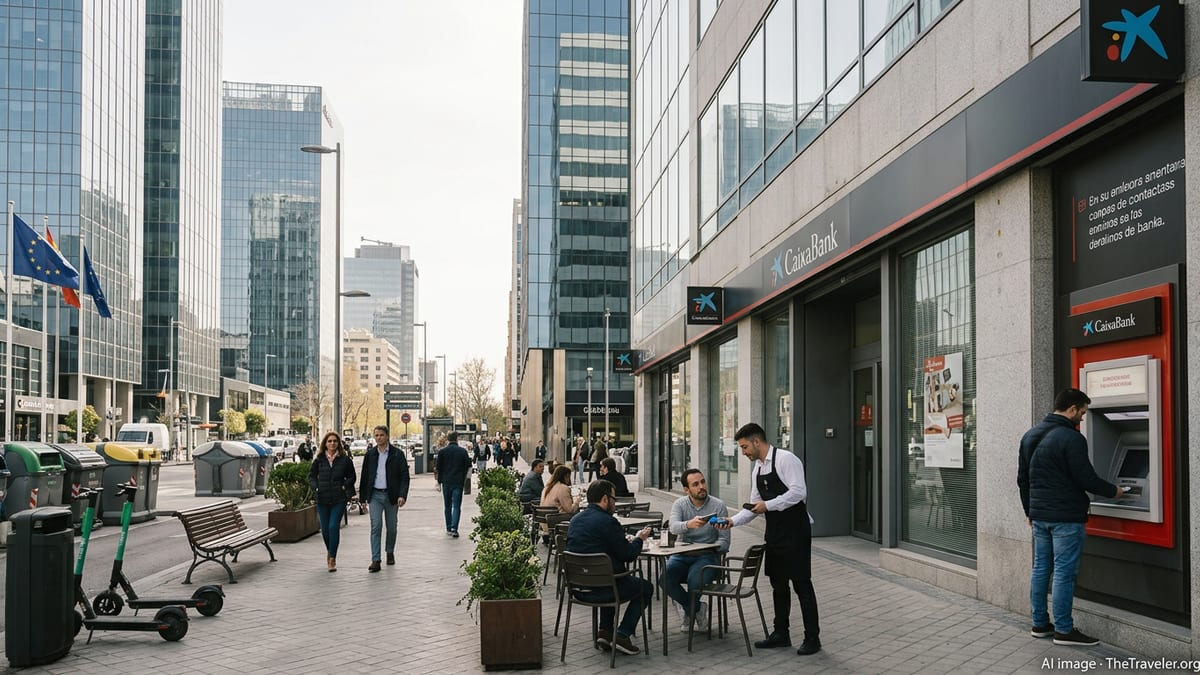
Overview of Spain’s Financial Infrastructure Profile
Spain is a member of the euro area, uses the euro as its currency and is fully integrated into the European Central Bank’s monetary and supervisory frameworks. The country has a dense network of commercial banks, savings banks and credit cooperatives, all connected to EU-wide payment and settlement systems. The banking sector underwent significant restructuring after the global financial crisis, but indicators from the Bank of Spain and the IMF suggest that capital and liquidity ratios are generally sound by European standards, which supports continuity of retail services for residents.
From an individual user’s perspective, the most distinctive feature of Spain’s financial infrastructure is the combination of strong traditional banking habits with very rapid digitisation of payments. Card usage is high and mobile-based instant payments have scaled quickly, especially through Bizum, the domestic account-to-account scheme that now dominates person-to-person transfers. This creates an environment where everyday financial operations are usually fast and reliable, though still anchored in conventional bank accounts rather than standalone fintech wallets.
Relocating professionals can generally expect to find modern online banking, widespread card acceptance, dense ATM coverage and advanced instant payment options in major urban areas and most secondary cities. Differences may emerge between large metropolitan regions and more rural provinces, especially regarding branch access and the pace of digital adoption among smaller merchants or older residents. However, at a national level Spain ranks among the more advanced EU countries in real-time payments and contactless usage.
Overall, Spain’s financial infrastructure score can be characterised as strong in payment modernisation and digital reach, solid in banking stability and access, and moderate in terms of financial literacy and sophistication of household financial planning. Potential newcomers should plan for a bank-centric system, where most tools and innovations are delivered through established institutions rather than fully independent challenger banks.
Banking Access, Account Penetration and Physical Networks
Financial inclusion in Spain is high by international standards. World Bank survey data for high income Europe indicate that more than 95 percent of adults in Spain hold an account with a formal financial institution, a level broadly in line with the euro area average. This means that for residents who meet standard compliance requirements, access to basic banking products is generally not constrained by infrastructure capacity, but rather by individual documentation or risk factors.
The physical banking network has been consolidating for more than a decade, with a gradual reduction in the number of bank branches and ATMs as digital channels expand. ECB statistics indicate that Spain historically had one of the densest branch networks in Europe; although the number of outlets and cash machines per 100,000 adults has declined, ATM and branch density still compares reasonably well with other large EU economies. For day-to-day access to cash or in-person services, most urban residents are within short distance of an ATM, and larger banks maintain extensive networks across regions.
Relocating professionals should, however, be aware of emerging geographical disparities. Some rural and low-density municipalities have seen branch closures and fewer on-site services, replaced by mobile branches or shared ATMs. This may influence location decisions for individuals who prioritise face-to-face banking or who manage cash-intensive activities. In contrast, large cities and coastal metropolitan areas usually offer a high concentration of branches from multiple banking groups, including several with English-language interfaces and dedicated international desks.
Deposit protection and prudential safeguards are aligned with EU standards. Eligible deposits up to 100,000 euros per depositor and per institution are covered by Spain’s deposit guarantee scheme, similar to other euro area members. For relocation planning, this provides a predictable level of protection for routine balances, while larger holdings may require diversification or specialised advice beyond the scope of infrastructure considerations.
Digital Payments, Cards and Instant Transfers
Spain is a card-centric market with accelerating adoption of mobile and account-to-account payments. According to recent European payments industry reports, payment cards account for the majority of consumer electronic transactions by volume, and the number of cards per capita in Spain is slightly above the euro area average. Contactless cards and NFC-enabled devices are widely used, and most point-of-sale terminals support tap payments, including small value transactions in supermarkets, public transport and hospitality outlets.
The most distinctive component of Spain’s financial infrastructure is Bizum, the domestic instant payment solution operated by a consortium of banks. Launched in 2016 and built on SEPA instant credit transfer rails, Bizum enables rapid person-to-person transfers and growing volumes of online and in-store payments. Public communications from Bizum and participating banks indicate that by early 2026 the service had reached around 30 million users in Spain and Andorra, equivalent to roughly 60 percent of Spain’s population, with adoption among younger adults reported above 90 percent. This penetration makes Spain one of the European leaders in everyday real-time payments.
Usage statistics published in early 2026 show that Bizum processed over 1.2 billion operations in 2025 with a transaction value in the tens of billions of euros, and volumes continue to grow at double digit rates year on year. The system is integrated directly into bank mobile applications rather than provided as a separate wallet, which means customers can initiate instant transfers from their main current accounts without maintaining an additional balance. For relocating professionals, this translates into a highly convenient way to pay rent to private landlords, settle shared expenses with colleagues or friends and make small merchant payments once an eligible bank account is established.
At the European level, Spain also benefits from regulatory initiatives promoting instant payments across the EU. The new EU law requiring banks to offer euro instant payments at the same price as standard credit transfers is expected to further normalise real-time account-to-account transactions. In parallel, cross-border interoperability projects linking Bizum with Italy’s Bancomat Pay and Portugal’s MB Way are expanding, and additional connections with wider European initiatives are under discussion. While these regional projects are still maturing, they indicate a financial infrastructure that is not only advanced domestically but increasingly connected across borders.
Cash Usage, ATMs and Merchant Acceptance
Spain’s cash usage has been declining gradually but remains relevant, especially among older demographics and in rural areas. Surveys conducted in 2025 suggest that bank cards remain the primary payment method for a majority of respondents, with cash second and Bizum or other instant tools in third place overall. Among younger adults, however, instant mobile payments are reported to have overtaken cash as the main means of payment, an indicator of the generational shift that newcomers can expect to encounter in urban centres.
The ATM network has contracted over time in line with digitalisation, but available statistics indicate that Spain still maintains several hundred ATMs per million inhabitants, which is comparable with many euro area peers. Major banks commonly offer fee-free withdrawals for their own customers, but charges may apply for using other banks’ machines, and conditions can vary. For relocation decision making, the practical implication is that cash access is seldom constrained by infrastructure, although transaction costs and habits may differ by institution and card type.
Merchant acceptance of electronic payments is high, particularly in large cities and in sectors that frequently serve international clients, such as retail chains and hospitality. ECB data show that Spain has a relatively high number of point-of-sale terminals per 1,000 inhabitants compared with the euro area average, supporting extensive card and contactless coverage. However, cash may still be preferred or required for very small purchases in some independent establishments, local markets or small towns, and minimum transaction thresholds for card payments are occasionally applied.
For internationally mobile professionals who are accustomed to near-universal card acceptance, Spain’s environment should feel broadly aligned with other advanced European economies. The main adjustment is the prominence of Bizum as a default payment option among residents, especially in peer-to-peer contexts, which may require newcomers to open a locally connected bank account to fully participate in cashless routines.
Online Banking, Fintech Ecosystem and Open Banking
Spanish banks are relatively advanced in online and mobile banking capabilities. Most major institutions provide full transactional functionality through mobile apps, including real-time balances, budget views, in-app card controls and integration with instant payments. International analysts note that a significant majority of retail customers interact with their bank primarily through digital channels, a trend accelerated by branch consolidation and the success of mobile payments.
The fintech ecosystem in Spain has expanded over the past decade, particularly in payments, SME lending and personal finance management. However, the market remains bank-centric: many consumer-facing fintech experiences are delivered in partnership with, or as white-label solutions for, large banking groups rather than standalone challenger banks with entirely independent infrastructure. For relocating professionals, this means that opening an account with a major Spanish or pan-European bank often unlocks access to a wide suite of modern tools without the need to maintain multiple provider relationships.
Open banking is supported by EU-wide PSD2 regulation, enabling licensed third parties to access account information or initiate payments with customer consent. Industry commentary in 2024 and 2025 highlights growing use of open banking interfaces in Spain for account aggregation, verification and pay-by-bank solutions, but overall market penetration of these services into everyday consumer behaviour is still emerging. The dominance of Bizum for instant transfers partly shapes this trajectory, since banks already provide a widely adopted alternative to card-based and wallet-based payments.
For expatriates managing accounts in multiple countries, the practical benefit of Spain’s open banking environment is the ability to link Spanish accounts with international budgeting, investing or remittance platforms that support European connections. Coverage is uneven and service quality varies by provider, but the underlying infrastructure and regulatory framework are in place to support cross-border financial management.
Credit Access, Consumer Finance and Risk Environment
Spain’s financial infrastructure includes a full range of retail credit products, including credit cards, personal loans, overdrafts and residential mortgages. The overall household debt-to-income ratio is lower than pre-crisis peaks and broadly comparable with other large euro area economies, suggesting a more cautious lending environment than in the mid-2000s. Banks apply standardised credit scoring that considers employment stability, income documentation and existing obligations, and they are subject to European and national macroprudential guidelines.
For newly arrived residents, practical access to credit can lag behind access to basic transactional services. While it is typically straightforward for eligible individuals to obtain a debit card linked to a current account, acquiring a credit card or unsecured loan often requires a demonstrated local income history, permanent employment contracts or a period of established banking relationship. This is not a limitation of infrastructure capacity but a reflection of banks’ risk management practices and the regulatory framework around responsible lending.
The credit information infrastructure is well developed, with credit bureaus and shared databases supporting risk assessment. At the same time, EU data protection rules restrict the arbitrary sharing of personal data, and there is no single, publicly accessible credit score analogous to some non-European systems. Newcomers from outside the EU should anticipate that foreign credit histories may not fully transfer into Spanish assessments, even though financial institutions can often consider international documentation on a case-by-case basis.
From an infrastructure scoring perspective, Spain offers a mature and comprehensive credit environment, but one that may be conservative for new entrants without local records. Individuals planning to rely heavily on consumer credit or complex leverage strategies should allow for lead time to build a track record within the system.
Cross-Border Payments, Remittances and Eurozone Integration
Spain’s membership in the euro area gives residents direct access to SEPA payment schemes, covering credit transfers and direct debits in euros across participating European countries under harmonised rules. Domestic and cross-border euro transfers within SEPA are usually processed quickly and at low cost, especially when initiated online. This integration is a core strength of Spain’s financial infrastructure, making it relatively straightforward for residents to receive salaries, pensions or other income from employers and institutions elsewhere in the eurozone.
The growing rollout of SEPA instant credit transfers, in which Spain is a leading adopter, further enhances cross-border functionality. As more European banks connect to instant rails, it is increasingly possible for Spanish account holders to send and receive euro transfers within seconds from partners in other SEPA countries, subject to counterparties’ participation and transaction limits. This is particularly relevant for internationally mobile professionals who maintain ties with employers, clients or family members in other parts of Europe.
For transfers outside the eurozone, Spain offers a variety of channels including bank wires, specialised remittance providers and digital multi-currency platforms. Costs and speeds are shaped more by global correspondent banking and foreign exchange arrangements than by domestic Spanish infrastructure. However, the combination of competitive fintech offerings and traditional banks gives residents multiple choices for sending and receiving funds internationally, including to and from Latin America and North Africa, regions with longstanding economic and family links to Spain.
Recent initiatives to connect Bizum with foreign mobile payment schemes within Europe, and to align with broader European payment alliances, suggest a trajectory toward more seamless cross-border account-to-account transfers initiated through familiar local interfaces. These developments are still in early stages, but they reinforce the assessment that Spain’s financial infrastructure is not only integrated into the eurozone core but is positioned as a test bed for next-generation European payment connectivity.
The Takeaway
Spain’s financial infrastructure is characterised by high banking inclusion, solid regulatory alignment with EU norms and rapid modernisation of retail payments. The country combines a dense, if consolidating, physical network of branches and ATMs with advanced digital channels that support contactless card usage and market-leading adoption of instant account-to-account payments through Bizum. For relocating professionals, this typically translates into a smooth transition to local financial routines once a bank account has been opened.
Strengths include the ubiquity of mobile banking, wide merchant acceptance of electronic payments, integration with SEPA and SEPA instant systems, and an increasingly connected European instant payment landscape. Potential friction points relate less to infrastructure than to standard banking practices, such as documentation requirements for account opening, conservative attitudes toward extending credit to newcomers and some remaining dependence on cash in specific regions or demographics.
Relative to many global destinations, Spain scores well on reliability, digital sophistication and cross-border connectivity of its financial system. Individuals and families planning relocation can assume access to a modern, euro-aligned financial environment, while allowing for some lead time to build local credit histories and adapt to the strong role of bank-integrated payment tools. For most internationally mobile professionals, Spain’s financial infrastructure is unlikely to be a barrier to relocation and may be a positive factor in favour of the country.
FAQ
Q1. How easy is it to open a bank account in Spain for new residents?
Opening an account is generally straightforward once residency status and identification requirements are met, but procedures and documentation can vary between banks.
Q2. Is cash still widely used in Spain?
Cash remains common, especially among older adults and in smaller towns, but cards and mobile instant payments are dominant in most urban and professional settings.
Q3. How widespread is contactless and mobile payment acceptance?
Contactless card and mobile payments are widely accepted at supermarkets, chains and many independent merchants, particularly in cities and larger towns.
Q4. Do I need Bizum to function financially in Spain?
Bizum is not mandatory but is highly convenient for splitting bills, paying friends and dealing with some small merchants, making it useful once a local bank account is opened.
Q5. Are there many ATMs and bank branches?
Yes, although numbers have declined, Spain still has a relatively dense network of ATMs and branches compared with many European peers, especially in urban areas.
Q6. How reliable are online and mobile banking services?
Major banks offer mature online and mobile platforms, and digital access is generally reliable, with most routine transactions handled through apps or web banking.
Q7. Is it easy to make cross-border payments from Spain?
Euro transfers within the SEPA area are usually fast and low cost, and instant options are expanding; transfers outside the eurozone depend on chosen providers and corridors.
Q8. Can newcomers obtain credit cards and loans quickly?
Basic debit cards are easy to obtain, but unsecured credit often requires proof of stable local income and some relationship history with the bank.
Q9. How advanced is Spain in real-time payments compared with other EU countries?
Spain is considered one of the leading adopters of instant payments in Europe, with high usage of Bizum for everyday transactions.
Q10. Does Spain’s financial infrastructure support remote and digital work lifestyles?
Yes, high digital banking uptake, reliable payment systems and strong SEPA integration make it well suited to remote workers who rely on online financial management.