


More news on this day
Spain is enduring an intense early-summer heatwave with temperatures climbing toward 45C in parts of the country, while Interior Ministry emergency services highlight a heightened risk of wildfires that is beginning to affect travel, rural tourism and outdoor plans across the Iberian peninsula.
Get the latest news straight to your inbox!
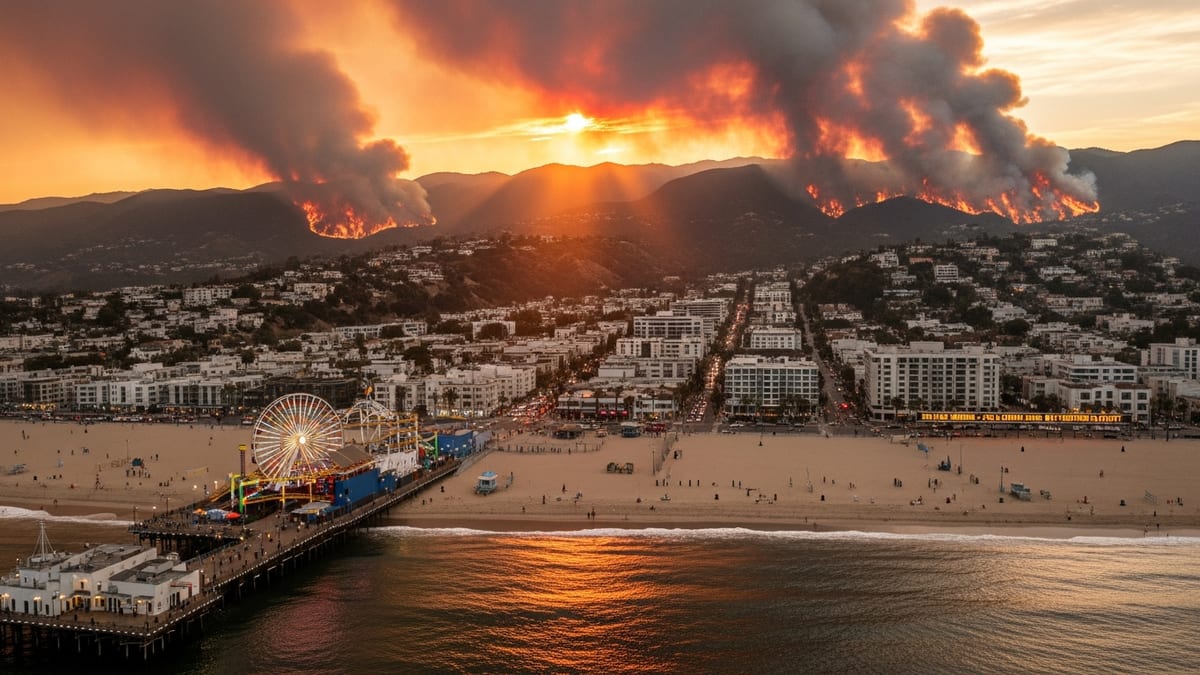
Record June Heat Grips Much of Spain
Publicly available meteorological data show that Spain’s first major heatwave of summer 2026 has pushed temperatures into the mid-40s Celsius in some inland areas, particularly in Andalusia and the Guadalquivir valley. National and regional bulletins describe the episode as unusual for June in both intensity and geographic reach, with exceptional values reported as far north as the Basque Country.
State forecasts indicate that interior locations such as Jaen province have approached or exceeded 45C at peak, while cities including Seville, Cordoba and Granada remain under prolonged periods of very high daytime temperatures and warm nights. In the north, recent readings above 40C in places where such values have historically been rare are being treated as a clear sign of the changing baseline for summer conditions.
According to published coverage from European outlets, the current heatwave forms part of a broader dome of hot air stretching across southwestern Europe, funnelling Saharan air over the Iberian peninsula. Experts cited in those reports note that hotter, drier air masses are becoming more frequent, lengthening Spain’s effective fire season and putting additional pressure on health and emergency services.
While some coastal zones are experiencing slightly lower values due to sea breezes, tourist hubs along the Mediterranean and Atlantic coasts are still seeing temperatures in the mid-30s, with humidity driving significantly higher perceived heat for visitors unaccustomed to such conditions.
Interior Ministry Services Highlight Rising Wildfire Threat
Spain’s Ministerio del Interior, through its civil protection and emergency coordination services, has issued renewed warnings about a generalized risk of wildfires as the heatwave coincides with very low humidity and locally strong winds. Public guidance, similar in tone to previous national alerts, urges residents and visitors to avoid any activities that could spark fires, particularly in forested and rural recreation areas.
Regional civil protection agencies in Catalonia, Andalusia and other autonomous communities have echoed these messages, maintaining or upgrading their own fire danger levels. In Catalonia, for example, local authorities recently extended an alert protocol that restricts some agricultural burning and outdoor machinery use during the hottest hours, citing persistent high temperatures and parched vegetation.
Recent media reports from Spanish and international news outlets also describe scattered wildfires breaking out in several provinces following the peak of the heatwave, with dry scrubland and pine forests igniting quickly. Most of these incidents have so far been contained to relatively limited areas, but they underline the sensitivity of the landscape after a dry spring in parts of the country.
Analyses by climate and disaster risk specialists point out that, as temperatures climb, the threshold for extreme fire behaviour can be crossed more easily, particularly when heat coincides with strong winds and low fuel moisture. For travellers planning hiking, camping or road trips through rural Spain, that combination means conditions can change rapidly from safe to hazardous over the course of a single afternoon.
Impact on Tourism, Transport and Summer Travel Plans
The heatwave and associated wildfire risk are beginning to reshape visitor behaviour in some of Spain’s most popular destinations. Travel industry reports indicate that tour operators are adjusting excursion schedules, moving outdoor activities to early morning or late evening and advising clients to avoid exposed areas during midday hours when temperatures peak.
In urban centres such as Madrid, Barcelona and Valencia, municipal advisories recommend limiting strenuous outdoor activities, especially for older adults, children and people with pre-existing health conditions. City tourism offices are promoting shaded walking routes, air-conditioned museum visits and extended evening opening hours as ways to help visitors adapt while still enjoying their stays.
Transport services are also monitoring the situation. Past heatwaves have occasionally disrupted rail schedules and road infrastructure, and operators are once again inspecting tracks and highways for heat-related stress. Drivers heading through interior regions are being encouraged, through public information campaigns, to carry extra water, check cooling systems and plan rest stops, particularly on long north–south transits across Spain.
Rural tourism is among the sectors most exposed to the dual stress of extreme temperatures and fire risk. Owners of country guesthouses and campsites in high-risk zones are sharing evacuation instructions with guests, identifying safe assembly points and, in some cases, temporarily suspending activities such as open-fire barbecues or guided routes through dense woodland.
Health Concerns Grow as Heatwave Persists
Spain’s health monitoring systems have registered a notable increase in heat-related incidents during this episode, according to publicly available information from national and regional health institutes. Hospital emergency departments in several cities are reporting higher numbers of patients with dehydration, heat exhaustion and heatstroke symptoms.
The national heat-health plan, updated annually, classifies large parts of the country under high or very high risk thresholds when temperatures remain above seasonal norms for several consecutive days. Current risk maps show much of inland Andalusia, Extremadura, Castilla-La Mancha and parts of the Ebro valley under elevated levels, with nocturnal temperatures failing to provide the usual relief.
Health authorities are using traditional and social media to reinforce guidance on staying hydrated, avoiding alcohol during peak heat, seeking out cooled environments and checking regularly on vulnerable neighbours. Special attention is being paid to older residents in urban apartments without air conditioning, as well as outdoor workers in agriculture, construction and delivery services.
For international travellers, embassies and consular services are relaying similar messages, advising visitors to monitor local heat advisories, adjust sightseeing plans and be prepared for sudden changes in alert status if wildfire conditions deteriorate near their destinations.
Climate Context and What Travelers Should Expect Next
Climatological assessments from European and United Nations agencies describe the current heatwave as part of a wider pattern of more frequent and intense hot spells in the Mediterranean region. Recent technical reports highlight that Spain is warming faster than the global average, with summer heatwaves arriving earlier in the season and lasting longer.
Analysts emphasize that even if temperatures moderate slightly after the current peak, accumulated heat and dry vegetation will likely keep wildfire danger elevated into July. For travellers, this means that disruptive conditions, such as smoke, local road closures or restrictions on access to natural parks, may persist beyond the days when temperatures are at their highest.
Travel planners recommend that visitors headed to Spain in the coming weeks build flexibility into itineraries, including refundable bookings where possible and alternative indoor activities in case outdoor excursions become unsafe or uncomfortable. Monitoring local meteorological services and civil protection channels before and during a trip is increasingly seen as an essential part of responsible travel in a warming climate.
As Spain navigates this latest bout of extreme heat, the country’s experience illustrates how rising temperatures are reshaping not only daily life for residents but also the rhythms of European summer tourism. From altered sightseeing patterns to heightened fire vigilance, the new reality of 45C days is forcing both locals and visitors to rethink how they move, work and holiday across the Iberian landscape.