


More news on this day
Spain’s liberalised high speed rail network has become a symbol of affordable, low carbon mobility in Europe, but a run of recent data suggests that the era of relentless fare cuts is giving way to a more complex, uneven pricing landscape.
Get the latest news straight to your inbox!
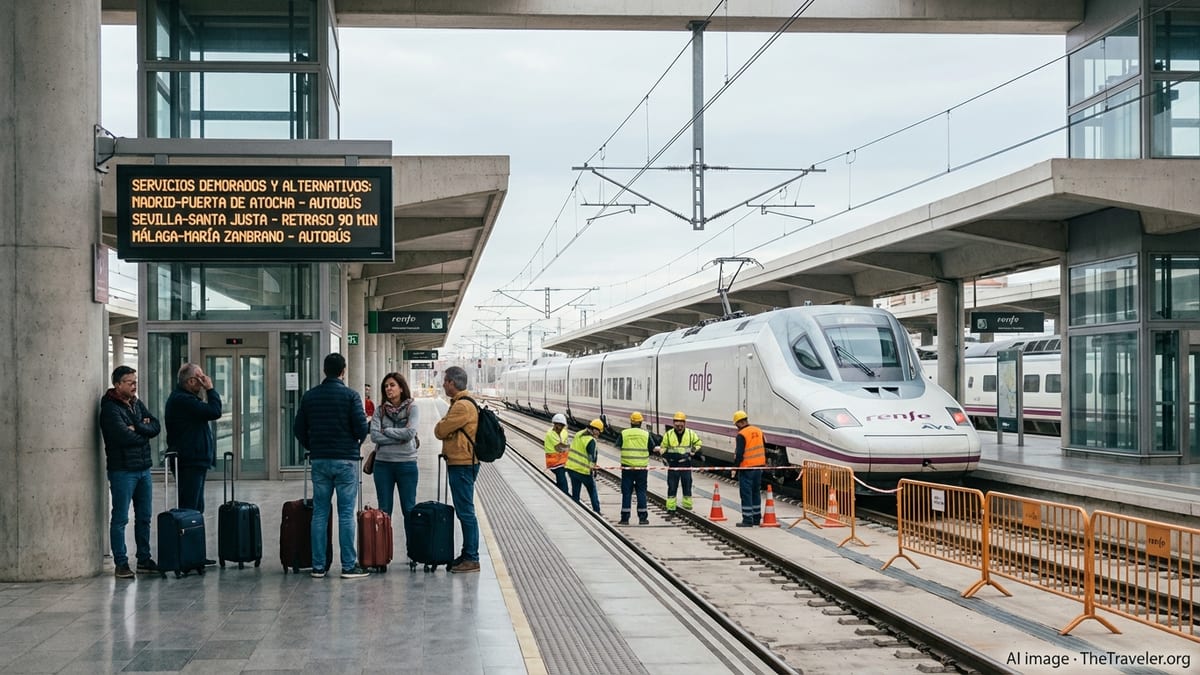
From fare freefall to a more nuanced market
Spain opened its core high speed corridors to open access competitors in stages from 2020, creating an unusual three-operator market where Renfe’s AVE and Avlo brands share tracks with low cost Ouigo and full service rival Iryo. Publicly available figures from Spain’s competition regulator indicate that the liberalisation has driven a substantial cut in average ticket prices compared with the former monopoly era.
A 2025 balance report from the National Commission on Markets and Competition calculated that, across routes with at least two operators, high speed fares were on average about one third lower in 2024 than in 2019 in nominal terms, and even more once inflation is taken into account. Earlier assessments and trade press coverage highlighted reductions of up to 40 percent on the intensely contested Madrid to Barcelona and Madrid to Valencia corridors during the first full years of competition.
Those declines coincided with an unprecedented traffic boom. The regulator reported that total commercial rail passengers reached roughly 49 million in 2024, with high speed services carrying the majority and volumes around 40 percent higher than before liberalisation. Infrastructure manager reports also show stronger revenues from track access charges, as more trains and higher seat loads helped to offset lower average fares.
Yet, while passengers have benefited from cheaper tickets and more frequent services, financial data compiled by Spanish media and academic studies show that the three operators have collectively accumulated heavy losses since the market opened, reflecting the high fixed costs of rolling stock, energy and access fees in a sharply discounted environment.
Pockets of price increases amid continued discounts
Recent route level figures point to a subtle shift in this pattern. Coverage of ticket data compiled for the Madrid to Barcelona corridor during 2024 shows that average high speed fares on that flagship line were around 5 percent higher than a year earlier, even as prices continued to fall sharply on certain southern and Levante routes, where reductions of more than 20 percent were reported.
Analysts attribute these divergent movements to three overlapping forces. First, demand has been particularly strong on the country’s busiest business and leisure axis between Madrid and Barcelona, allowing operators to test slightly firmer pricing on peak departures while keeping promotional offers in the market. Second, newer destinations served by multiple brands are still in an introductory phase, sustaining deeper discounts as companies chase market share. Third, inflation in energy, maintenance and wage costs has increased pressure to lift yields where customer appetite appears resilient.
Academic work on Spanish high speed competition supports this mixed picture. Recent transport economics papers examining fares on liberalised corridors conclude that the entry of additional operators substantially lowered average prices in the initial years, but also note periods where the launch of new low cost brands or changes in product mix coincided with temporary upticks in mean ticket levels, particularly when incumbent operators rebalanced their offers.
For travellers, the result is a more volatile pricing environment. Advance purchase bargains remain common on many dates, especially outside peak holiday and business travel periods, but some last minute tickets on prime time trains are now edging higher than in early phases of the price war, suggesting that the market is feeling its way toward a more sustainable equilibrium.
Tourism demand and state subsidies complicate signals
Tourism flows are adding another layer to Spain’s high speed rail pricing story. Figures from the Ministry of Industry and Tourism show that visitor spending reached record levels in 2024, exceeding previous forecasts as international arrivals from key markets such as the United Kingdom, France and Germany grew strongly. Many of those visitors rely on high speed rail to connect Madrid and Barcelona with coastal regions and inland cities, bolstering demand on corridors where multiple train brands now compete.
High season peaks have therefore become a crucial test of pricing power. On routes that link major city pairs with resort regions, load factors can surge in summer and during long weekends, making it more feasible for operators to trim promotional availability. At the same time, quieter shoulder periods continue to see aggressive discounting, particularly by low cost brands seeking to keep trains full and maintain slots.
Government support measures have further blurred the underlying price trends. Youth travel schemes such as the Verano Joven programme, which offered percentage discounts on eligible rail tickets, temporarily reduced effective fares for specific age groups while leaving headline prices intact. Policy evaluations of these schemes report increases in occupancy and shifts from car and air to rail, but they also underline that part of the apparent fare moderation is due to public subsidies rather than pure market pricing.
These overlapping influences mean that headline averages can mask important differences between what various traveller segments actually pay. Leisure visitors booking months ahead, domestic families using seasonal discounts and business travellers buying at short notice now experience very different price dynamics on the same trains.
Infrastructure costs and capacity use shaping future fares
Behind the visible ticket prices, infrastructure charging and capacity utilisation are emerging as critical variables. A 2024 communication from the competition regulator on track access fees for the general interest rail network emphasised that high speed lines in Spain carry far fewer trains per kilometre than in countries such as France, indicating significant unused capacity on much of the network.
For the infrastructure manager, higher train densities would help spread fixed costs and potentially ease pressure on per-train charges. For operators, additional frequencies and better slot timings could support more sophisticated pricing, with finer segmentation between peak and off-peak services. Industry reports note that a second phase of liberalisation is widening access on additional routes, which could gradually push utilisation upwards.
At the same time, regulators have called for closer scrutiny of how access charges are calculated, including the balance between direct costs and contributions to overheads. Academic assessments of Spain’s high speed liberalisation stress that the long term sustainability of low fares depends on aligning infrastructure pricing, service patterns and competitive dynamics so that both the network owner and operators can cover costs.
If access fees were to rise faster than demand, or if new investments were loaded heavily onto current users, operators might seek to defend margins through selective fare increases, particularly in markets where rail has already captured share from air and road. That possibility is one reason why competition authorities continue to monitor both capacity allocation and charging structures.
A maturing market for passengers to navigate
Viewed in aggregate, Spain’s high speed rail system still offers some of the most competitive long distance rail pricing in Western Europe, especially on corridors where three brands compete. Regulators and policy studies consistently describe the liberalisation as a net gain for consumers and for the environment, citing lower average ticket prices, higher frequencies and a measurable shift of journeys from planes and cars to trains.
The recent signs of a pricing “blip” do not amount to a reversal of that trend, but they do suggest that the fiercest stage of the price war may be easing as the market matures. With operators under pressure to stem losses, investors focused on debt metrics and infrastructure charges in the spotlight, the scope for further across the board reductions appears limited.
Instead, Spain’s high speed fares are likely to evolve in a more granular way, with continued deep discounts on some routes and departure times, steady or slightly rising prices on others, and growing use of tools such as dynamic pricing and targeted promotions. For travellers planning journeys in the coming seasons, the message is that competition continues to deliver value, but that the days when almost every ticket was cheaper than the year before may be coming to an end.