


More news on this day
A Delta Air Lines service operating as Flight DAL2494 diverted to Montgomery Regional Airport, temporarily interrupting its planned routing and drawing attention to how airlines handle unscheduled changes in the busy midsummer travel period.
Get the latest news straight to your inbox!
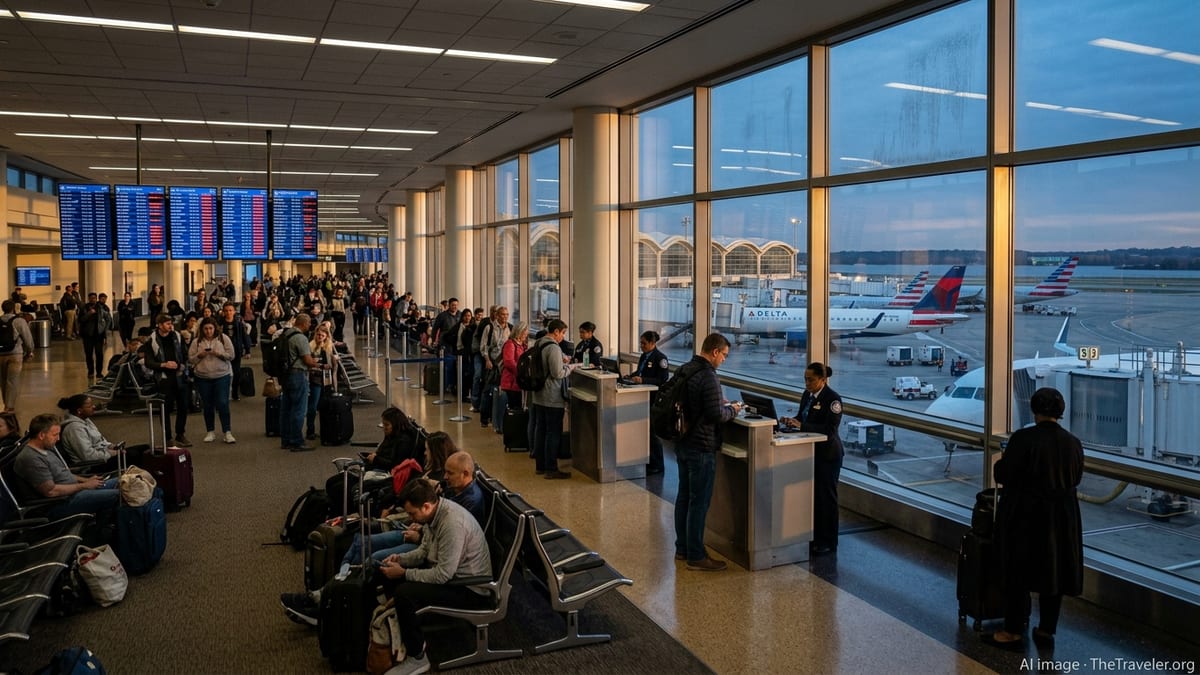
Unexpected Diversion Brings Extra Traffic to Montgomery
Publicly available flight-tracking information indicates that Delta Air Lines Flight DAL2494 altered course and arrived at Montgomery Regional Airport instead of its originally intended destination. The aircraft landed safely in Montgomery, where passengers disembarked and awaited further instructions regarding their onward travel.
The diversion added an unscheduled arrival to Montgomery Regional Airport, a facility that typically sees a modest schedule of Delta-branded regional services connecting through hubs such as Atlanta. Although diversions are not uncommon during the height of the summer season, each event can create a brief ripple across local operations and passenger itineraries.
Details on the exact cause of the diversion were not immediately specified in publicly accessible sources. However, midsummer flying across the southeastern United States is frequently affected by convective weather patterns, air traffic control programs, and operational constraints that can prompt quick route adjustments.
Despite the interruption, available information suggests that the overall impact on airport operations in Montgomery remained limited, with the diverted flight processed alongside scheduled arrivals and departures.
What Is Known About Flight DAL2494
Flight identifiers show DAL2494 as a Delta-branded service typically operated by a regional partner, linking smaller markets with larger hubs or leisure destinations. The use of a four-digit flight number is consistent with Delta Connection and similar regional operations, which often rely on smaller jets serving short-haul routes.
On the day of the incident, tracking data shows the aircraft progressing normally before altering course toward Montgomery Regional Airport. After landing, the flight’s status transitioned from en route to arrived, signaling a completed sector even though it did not reach the originally scheduled endpoint.
Information distributed through flight-status platforms indicated that passengers were re-accommodated onto later services or received revised travel plans. Such adjustments can include rebooking on subsequent Delta-operated flights, connections through alternate hubs, or in some cases ground transport when distances between airports are relatively short.
The aircraft assigned to DAL2494 later rejoined the regular operating schedule, illustrating how carriers work to reposition equipment quickly after an off-plan stop.
Why Airlines Divert Flights in the Summer Peak
While each diversion has its own set of circumstances, industry data and operational practices point to a familiar set of drivers. Summer thunderstorms across the Southeast tend to develop rapidly in the afternoon and evening hours, leading to reroutes, holding patterns, and, in some cases, diversions when fuel or safety margins require a landing at an alternate field.
Air traffic control flow programs can also play a role by temporarily restricting arrivals into busy hubs. When extended delays develop, it can be operationally preferable for a flight to land at a nearby airport with available capacity rather than circle indefinitely or risk breaching fuel reserves.
Operational factors inside the airline may contribute as well. Crew duty-time limits, maintenance alerts, and congestion at the scheduled destination can all combine to make a diversion the most pragmatic choice. Carriers outline such contingencies in their contracts of carriage, which specify that routings may be changed when necessary for safety or operational reasons.
Montgomery Regional Airport’s location places it within range of several Delta-served cities, making it a practical alternate in certain weather or traffic scenarios. When used as a diversion point, the airport’s relatively compact layout can help move passengers efficiently between aircraft and terminal facilities.
Passenger Experience and Rebooking Options
For travelers on a diverted flight, the immediate priority is often understanding when and how they will reach their original destination. Publicly available guidance from Delta describes a range of options in irregular operations, including automatic rebooking onto the next available flight in the same cabin when space permits.
In a diversion scenario, passengers may be asked to remain on board during a brief technical stop or, as appeared to be the case with DAL2494, to disembark and await updates in the terminal. The specific handling can depend on local staffing, the length of the delay, and whether the aircraft is able to continue onward once conditions improve.
Delta’s customer-facing tools, including its mobile app and flight-status pages, typically display revised departure times and gate information, allowing passengers to monitor developments in near real time. During peak travel periods, these digital updates are often the fastest way for travelers to confirm connections and make any necessary adjustments to ground transport or accommodations.
Although a diversion can be disruptive, most itineraries are resolved within the same day, particularly when the alternate airport is within the same region as the original destination and there is a steady flow of connecting services.
Montgomery’s Role in the Regional Air Network
Montgomery Regional Airport serves as a small but strategic node in the southeastern U.S. air network, with scheduled service from major carriers and their regional affiliates. For airlines like Delta, such airports can provide flexibility during irregular operations by offering an additional place to land, refuel, or reset schedules when larger hubs are saturated.
While a single diversion such as DAL2494’s arrival does not significantly alter the airport’s traffic profile, it underscores how regional facilities contribute to the resilience of the broader system. The ability to absorb an unplanned flight, handle passengers, and support turnaround operations can help prevent broader knock-on delays across an airline’s network.
For Montgomery and similar airports, handling diversions also offers a momentary boost in visibility among travelers who may not have previously been aware of the city as an aviation gateway. Some passengers, after an unexpected stop, later choose the same airport for future trips if they find the experience manageable and less congested than larger hubs.
As midsummer travel continues at a strong pace, Flight DAL2494’s diversion to Montgomery highlights the complex, real-time decisions that keep the U.S. air system functioning, even when flights do not arrive exactly where or when originally planned.