


More news on this day
India’s aviation regulator has issued a show-cause notice to SpiceJet after weeks of large-scale cancellations, a sharply reduced fleet and a collapse in market share, turning the struggling low-cost carrier into a key test of how well authorities protect air travelers in one of the world’s fastest-growing aviation markets.
Get the latest news straight to your inbox!
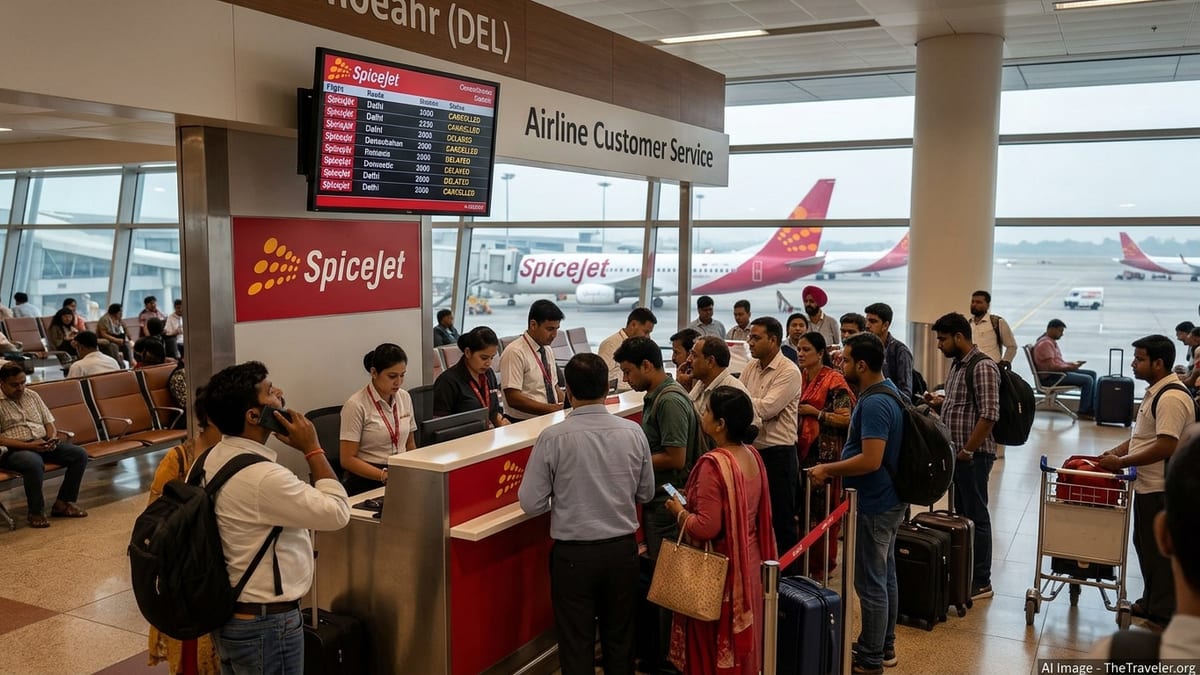
DGCA’s notice focuses on cancellations, grounded aircraft and passenger distress
The Directorate General of Civil Aviation (DGCA) sent its show-cause notice to SpiceJet on 17 November 2026, citing eight areas of concern that range from persistent flight cancellations and delays to grounded aircraft and overdue payments to airports and service providers. The notice gives the airline seven days from its issue date to explain why regulatory action should not be taken under India’s Aircraft Rules and related regulations if it intends to continue operating scheduled services.
According to summaries of the document carried by several Indian news outlets that have had access to the notice, the DGCA highlights a pattern of non-adherence to published schedules on both domestic and international routes. Reports indicate that on some days in mid November the carrier operated fewer than a dozen departures nationwide, with one day seeing as few as seven flights despite a much larger schedule filed for the winter season. The regulator points to the gap between filed schedules and actual operations as a source of significant passenger inconvenience.
The DGCA has also linked its intervention to complaints about SpiceJet’s on-time performance and cancellation rate. Official traffic statistics for September 2026 show that the airline’s domestic market share dropped to around 0.6 percent while its share of cancellations was far above the industry average. Separate analysis of the same data suggests the carrier recorded cancellation rates of around 20 percent in late summer, compared with roughly 1 percent systemwide. That deterioration has continued into the current winter season, prompting the regulator to intensify daily monitoring of actual flights and passenger handling.
From major budget airline to a network of roughly 20 daily flights
The regulator’s latest action caps a steep decline for an airline that, as recently as 2019, carried about 15 percent of India’s domestic passengers and was the country’s second-largest low-cost carrier. DGCA traffic reports for early 2026 still showed SpiceJet with close to 4 percent of the home market, but by September its share had fallen below 1 percent. Other domestic airlines, led by IndiGo and the Air India group, have absorbed most of the displaced traffic on trunk routes such as Delhi–Mumbai and Delhi–Bengaluru.
Behind the shrinking market share is an equally sharp reduction in the number of flights and aircraft in regular service. Industry reports in late November, based on DGCA slot and movement data as well as airport schedules, indicate that SpiceJet is now operating a little over 20 flights a day within India, down from more than 70 daily domestic departures at the start of the summer 2026 timetable. Separate press coverage citing DGCA sources has described the active fleet as being down to around six aircraft in consistent operation, even though several dozen aircraft remain on the airline’s books or in the official fleet register.
The gap between the listed fleet and actual flying capacity reflects a mix of aircraft in maintenance, frames grounded amid payment disputes with lessors or service providers and wet-leased jets that have reportedly been withdrawn after non-payment of dues. Publicly available financial statements show that SpiceJet has reported losses and rising liabilities in recent years, while court records and stock exchange disclosures document a series of settlements and payment plans with airports, MRO providers and leasing companies. The current wave of cancellations and ad hoc timetable changes is occurring against that backdrop of constrained liquidity and unresolved creditor claims.
Capital-raising plan and international rights hinge on regulatory outcomes
One of the few concrete steps the airline has announced to address its financial pressures came on 18 November 2026, when SpiceJet informed the Bombay Stock Exchange that its board had approved a proposal to raise up to 5,500 crore rupees in fresh capital. According to the outcome of that board meeting filed with the exchange, the company plans to access funds through one or more instruments, potentially including equity and other securities, subject to shareholder approval and regulatory clearances. The board also backed an increase in authorised share capital from 2,000 crore to 7,500 crore rupees.
For now, that capital plan remains an approved intention rather than completed financing. No binding breakdown of investors, timing or structure has been published, and any eventual transaction will need to navigate market conditions and required approvals. Until funds are actually raised and deployed, the airline’s ability to pay down arrears, restore grounded aircraft to service and normalise its schedules is uncertain. Potential travelers should therefore treat the fundraising announcement as a medium-term restructuring step rather than an immediate fix for current disruptions.
At the same time, the DGCA review has implications for SpiceJet’s international network because Indian policy links overseas traffic rights to domestic deployment. Under the National Civil Aviation Policy 2016, an airline must operate at least 20 aircraft or deploy at least 20 percent of its total capacity, whichever is higher, on domestic sectors in order to qualify for scheduled international services. Although SpiceJet continues to hold international slots and has some overseas routes in its published timetable, the regulator is now examining whether the small number of aircraft actively flying within India still satisfies those minimum deployment thresholds in practice.
No public order has yet been issued restricting SpiceJet’s scheduled international operations, and tickets remain on sale for several cross-border routes through the winter season. However, the show-cause notice explicitly questions compliance with deployment and route dispersal requirements, and foreign aviation authorities have reportedly flagged concerns to the DGCA about repeated last-minute cancellations on some India-bound services. Any future decision to curtail international rights would likely follow the current response period, and would be announced through formal regulatory channels.
Passenger protections exist, but enforcement is largely complaint-driven
For travelers, the most immediate impact of SpiceJet’s difficulties has been the unpredictability of its timetable. Consumer forums and social media posts from the past two months describe passengers receiving overnight messages about next-morning cancellations, or learning at the airport that previously confirmed flights are no longer operating. Because the carrier’s remaining schedule is thinly spread, same-day reaccommodation on another SpiceJet service is often impossible, leaving customers to look for seats on competing airlines at higher last-minute fares.
India’s Civil Aviation Requirements on passenger rights set out what airlines must offer when flights are cancelled or heavily delayed for reasons within the carrier’s control, including operational or crew-related issues. Depending on the timing of the notice and the cause of disruption, entitlements can include a full refund, rebooking at no additional cost on the airline’s next available service or, in some cases, meals and hotel accommodation. Those rules apply to all scheduled Indian carriers, including SpiceJet, and remain in force regardless of an airline’s financial condition.
In practice, however, enforcement is largely driven by passenger complaints. Travelers generally need to first seek redress directly from the airline, then escalate to the Ministry of Civil Aviation’s AirSewa portal or to consumer courts if they believe the airline has not complied with the rules. The DGCA can investigate patterns of non-compliance, direct airlines to honor compensation obligations and levy penalties, but it does not routinely intervene in one-off booking disputes. This complaint-based model means that remedies may take time, and some affected passengers may not pursue claims, especially for lower-cost tickets or where disruptions occurred months earlier.
In response to the current disruption, at least one major airport operator has issued public advisories warning that SpiceJet services may be affected by operational challenges and urging passengers to check flight status before heading to the airport. That kind of coordination helps reduce the risk of travelers arriving for flights that are no longer operating, but it does not eliminate the inconvenience of rebooking or the potential for missed connections involving other airlines.
What travelers should check now if they plan to fly SpiceJet
With the DGCA’s seven-day deadline running from 17 November 2026, the next formal milestone is the regulator’s assessment of SpiceJet’s written response and operational plan. Possible outcomes range from closer monitoring and specific conditions on the airline’s operations, through financial penalties and limits on new bookings on certain routes, to tighter restrictions on international flying. A more severe step, such as temporary curtailment of the airline’s operating permit, would typically come only after further process, but the notice itself signals that regulators are prepared to use a wider set of tools if conditions do not improve.
In the meantime, tickets for many SpiceJet flights in November and December 2026 and into early 2027 remain on sale through online travel agencies and the airline’s own channels. For price-sensitive travelers, these fares can be lower than those offered by competitors on some routes, reflecting both the airline’s low-cost positioning and the market’s perception of higher disruption risk. Anyone considering such tickets should balance potential savings against the possibility of last-minute schedule changes, particularly if they are connecting to fixed events, cruises, international flights on other carriers or non-refundable ground arrangements.
Passenger advocates suggest several practical steps for those who already hold SpiceJet tickets or are weighing new bookings. First, verify whether the flight you are booking is currently operating by checking recent history and same-day performance close to departure, using airline status tools or independent flight-tracking apps. Second, build generous buffers if a SpiceJet leg connects to another airline, especially on outbound international journeys. Third, keep all documentation of any schedule changes, cancellation notices and expenses incurred, so that claims under India’s passenger rights rules can be supported with evidence if needed.
Finally, travelers who have flexibility in dates or routing may wish to compare options on airlines that currently operate a larger share of India’s domestic traffic and maintain more robust daily schedules on key trunk and regional routes. That approach can reduce exposure to cascading disruption if one carrier’s network comes under regulatory scrutiny or operational strain. As the DGCA weighs SpiceJet’s response and any corrective measures, conditions on the ground may change quickly, so checking flight status and official announcements close to the time of travel will remain essential.