


More news on this day
Two very different crises are colliding for air travelers in 2026: the sudden failure of Spirit Airlines in early May and continuing flight disruptions tied to the Iran war, from jet fuel shortages to closed airspace across parts of the Middle East. Both events are raising urgent questions about what, if anything, travel insurance will actually cover.
Get the latest news straight to your inbox!
Spirit’s Shutdown Leaves Millions Scrambling
Spirit Airlines halted operations and began an orderly wind-down on May 2 after years of financial strain, leaving its final flight to land in Dallas Fort Worth just after midnight. Publicly available information shows that the carrier cited sharply rising fuel costs linked to the Iran conflict, on top of debt and failed merger attempts, as key factors in its collapse. The shutdown instantly stranded passengers and turned future tickets into unsecured claims in a bankruptcy process.
Reports indicate that U.S. competitors introduced limited “rescue fares” to help stranded Spirit customers rebook, but these replacement tickets often cost more than the original ultra-low Spirit fares. Many travelers are still waiting to see whether refunds will come from the bankruptcy estate, from credit card chargebacks, or from any insurance they purchased.
Consumer advocates note that standard U.S. transportation rules require airlines to refund customers when the airline cancels a flight and the customer chooses not to travel. However, once an airline ceases operations entirely and enters bankruptcy, recovering money can become a slow and uncertain process. That is where travel protection sold by insurers or bundled with credit cards is being put to the test.
According to coverage summaries reviewed by financial media, only some comprehensive travel insurance policies list “airline financial default” or “carrier insolvency” as a covered reason for trip cancellation or interruption, and often only if strict conditions are met. The timing of when the policy was purchased relative to Spirit’s well-publicized financial distress, and whether Spirit appeared on an insurer’s list of excluded or “unstable” carriers, can determine whether any claim will be paid.
Iran War Keeps Airspace and Flight Schedules in Flux
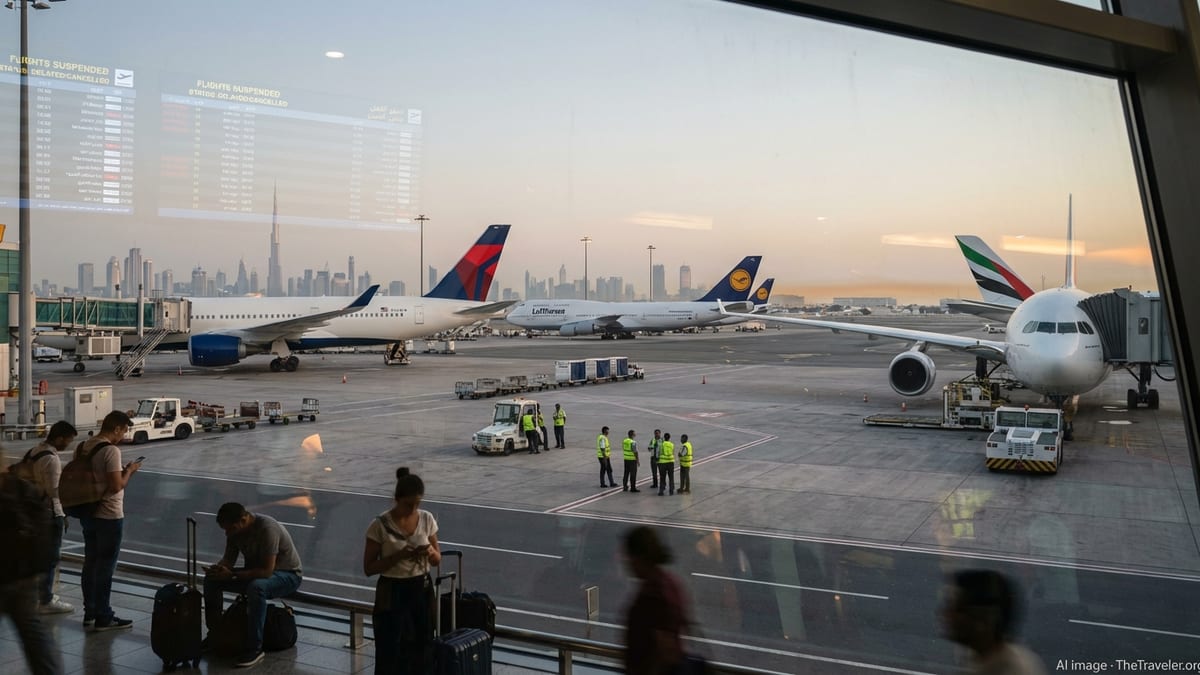
At the same time, the Iran war that erupted on February 28 has kept global airlines rerouting around closed or restricted airspace in Iran, Israel, the Gulf and parts of Iraq. Conflict-zone bulletins from European and regional aviation authorities warn of elevated shootdown and missile risks across large swaths of the Middle East, and carriers have diverted or suspended flights accordingly.
Analysts tracking the crisis report that commercial traffic over Iran and the Persian Gulf dropped sharply once hostilities began, while a separate shipping crisis in the Strait of Hormuz tightened global jet fuel supplies. Aviation consultancies and risk firms have documented longer routings between Europe and Asia, shifting hubs, higher operating costs and knock-on delays as airlines avoid conflict zones.
Detours of one to three hours have become common on some routes around the Gulf and Red Sea. Travel advisories from governments and industry bodies continue to flag a high risk environment that could change with little notice, meaning passengers face the possibility of last-minute cancellations, diverted flights and forced overnight stays if airspace closures widen again.
For individual travelers, this means disruptions that may feel similar to a severe weather event, but that are rooted in military action and geopolitical escalation. That distinction matters because it sits at the heart of how most travel insurance policies are written.
War Exclusions Leave Large Insurance Gaps
Policy documents collected by consumer groups and travel publications show that standard travel insurance almost always excludes losses directly caused by war, invasion, hostilities or military action, whether war is formally declared or not. Typical wording states that the insurer will not pay claims arising from war or civil unrest, placing many Iran conflict related cancellations or diversions outside the scope of cover.
Some insurers draw a line between war and terrorism, offering limited benefits when a specific terrorist incident occurs at or near a destination shortly before travel. Even then, the triggering event usually must meet a government definition and fall within a narrow timeframe, such as 30 to 60 days before departure. Broader, ongoing hostilities like the current Iran war are usually treated as an excluded peril.
Another key concept is the “known event” threshold. Insurance commentators note that once the Iran conflict escalated into open war at the end of February and airspace closures became widely reported, most insurers began treating related disruptions as known and therefore uninsurable for new policies. That means buying travel insurance in March or April for itineraries that rely on Middle East routes is unlikely to protect against war-related cancellations.
Travel insurance is also generally considered “secondary” coverage, which only pays after travelers have exhausted refunds or compensation from airlines, hotels and tour operators. In practice, this can mean that even if a policy does not exclude war outright, a claim may still be denied if the insurer determines that the airline remains responsible for rebooking or refunding the ticket under local regulations.
When Travel Insurance Might Still Help
Despite the sweeping war exclusions, insurance specialists point out that travelers should not assume their policy is useless. Published guidance from major insurers and brokers suggests that while trip cancellation due to war is usually excluded, other portions of a policy can still apply if the traveler remains covered and the loss is unrelated to the hostilities.
For example, baggage loss, baggage delay and non war related medical emergencies abroad often remain covered as long as the government has not issued a blanket “do not travel” warning that voids the policy. A traveler whose luggage is delayed on a rerouted flight around the Gulf may still be able to claim for replacement essentials, even if the rerouting itself resulted from the conflict.
Some higher tier policies or add ons marketed as “travel disruption” or “schedule change” benefits may offer limited compensation for extra accommodation or meals during protracted delays, regardless of cause. However, close reading of the fine print is critical, as many such benefits still reference the war exclusion or cap reimbursements tightly.
In the case of Spirit’s failure, consumers who purchased comprehensive policies before the shutdown became a widely reported risk may find that “carrier insolvency” is indeed a covered reason for cancelling a trip. In those instances, insurers may reimburse nonrefundable expenses such as prepaid hotels and tours that will not be used because the traveler can no longer reach the destination on the original flights.
Practical Steps for Travelers Caught in the Middle
Travel advisors and consumer organizations are urging affected passengers to take methodical steps before assuming they are either fully covered or completely unprotected. The first recommendation is to keep detailed documentation of flight bookings, cancellation notices, receipts for replacement tickets, and any out of pocket costs for hotels, meals and ground transport.
For Spirit ticket holders, publicly available guidance suggests starting with the airline’s official communications and any instructions from the bankruptcy process, then pursuing chargebacks or disputes with the credit card issuer used to buy the ticket. Only after those avenues are explored should travelers turn to a travel insurance claim, as insurers often require proof that other remedies have been attempted.
For itineraries affected by the Iran war, industry briefings emphasize waiting for the airline to cancel whenever possible, rather than proactively cancelling out of concern. When the carrier cancels or significantly changes the schedule, refund and rebooking rights are generally clearer, and insurers are more likely to treat the disruption as outside the traveler’s control.
Experts also encourage travelers to review the exact policy wording for exclusions related to war, civil unrest, government travel advisories and known events. In some cases, cancelling a future trip now, while conditions are unstable but before additional official warnings are issued, can preserve more options than waiting until after a stricter advisory triggers full exclusions.
Looking ahead, consumer advocates say the events of 2026 highlight the importance of understanding that no travel insurance product is a guarantee against every risk. The combination of a low cost carrier failure and a major regional war has revealed just how large the gaps can be between what travelers expect and what their policies are actually written to cover.