


More news on this day
St. Thomas and the wider U.S. Virgin Islands are emerging as standout winners in the Caribbean’s post-pandemic tourism boom, as more Americans opt for passport-free escapes that feel international while remaining legally domestic travel.
Get the latest news straight to your inbox!
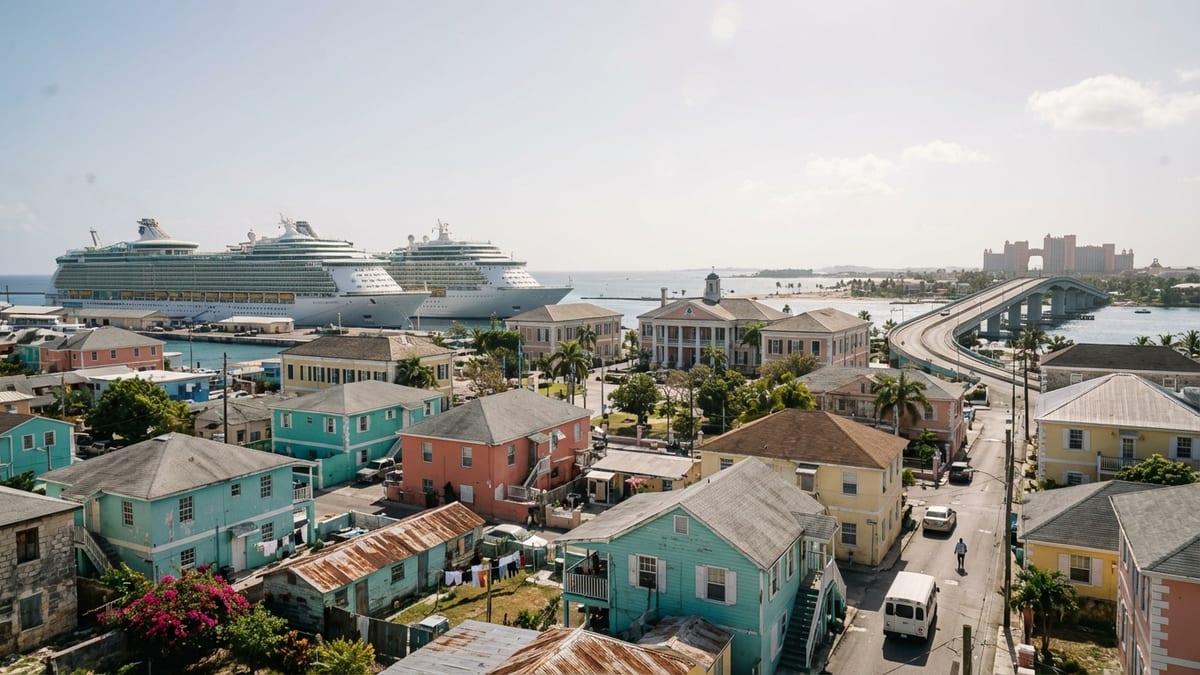
Passport-Free Status Puts St. Thomas in the Spotlight
St. Thomas is drawing record numbers of U.S. vacationers, helped by a legal status that allows citizens to visit without a passport when arriving from the mainland United States or Puerto Rico. Official travel information for the territory notes that U.S. citizens may enter the U.S. Virgin Islands with government-issued photo identification, a policy that removes one of the biggest friction points for spur-of-the-moment Caribbean trips.
Publicly available guidance from U.S. government resources reinforces that U.S. citizens do not need a passport to travel to U.S. territories such as the U.S. Virgin Islands and Puerto Rico, positioning these destinations differently from many neighboring Caribbean nations that require full international documentation. Travel advisors report that travelers without passports, or those facing long processing waits, increasingly view St. Thomas as a convenient alternative to traditional beach destinations abroad.
The passport-free framework aligns with broader U.S. outbound trends. Data from the National Travel and Tourism Office show that the Caribbean accounted for a substantial share of international departures by U.S. citizens in 2024, with leisure vacations the dominant purpose of travel. Within that regional surge, destinations that minimize entry formalities are gaining an advantage as travelers seek simplicity while still chasing turquoise waters and white-sand beaches.
Record Arrivals Underscore a U.S.-Driven Tourism Surge
Tourism data point to a decisive upswing in visitor volumes across the U.S. Virgin Islands, with St. Thomas acting as a primary gateway. A recent tourism and accommodation report for the territory indicates that total visitor spending reached about 1.8 billion dollars in 2024, up more than 9 percent from the previous year, as air and cruise arrivals climbed to some of the highest levels on record.
Separate coverage highlighting U.S. Virgin Islands performance notes that in 2024 the territory welcomed hundreds of thousands of air arrivals and well over a million cruise passengers, supported by a steady rebound in global cruising and strong demand from major U.S. homeports. Travel trade analysis for the wider Caribbean shows the region hosting more than 34 million international overnight visitors in 2024, surpassing both 2023 and pre-pandemic 2019 levels, with the United States remaining the primary source market.
Industry monitoring by regional tourism bodies and consulting firms finds that the U.S. Virgin Islands is among a group of Caribbean destinations posting some of the strongest year-on-year growth, particularly in the first quarters of recent years. Reports point to double-digit percentage gains in arrivals compared with 2023 for destinations such as the USVI, Curaçao, Aruba and others, underscoring how improved connectivity and a solid U.S. economy are feeding Caribbean demand.
Airline Capacity Expands as Carriers Chase Demand
Airlines have responded to the surge in interest by steadily increasing capacity into St. Thomas’s Cyril E. King Airport. Industry coverage describes a notable build-up of flights from major U.S. carriers including American, Delta, United, Spirit, JetBlue, Sun Country and Frontier over the last two years, with additional weekly frequencies from key hubs on the U.S. East Coast and in the Midwest.
Route announcements in 2024 and 2025 have added further momentum. American Airlines, for example, has promoted new or enhanced nonstop service from hubs such as Charlotte, while low-cost and leisure-focused airlines have layered in seasonal and year-round routes that make weekend trips more practical for travelers across the eastern half of the United States. Schedules data for Cyril E. King Airport show a diversified carrier mix and strong traffic volumes on routes from cities including Atlanta, Miami, Newark and others.
Regional travel publications report that new flights and higher seat counts are a key factor behind rising hotel occupancy and tax collections in the U.S. Virgin Islands. Increased airlift has also made it easier for visitors to connect on to neighboring islands such as St. John and St. Croix, as well as to explore day-trip options by ferry, further broadening the appeal of the territory for longer stays and repeat visits.
St. Thomas, St. John and St. Croix Ride the Same Wave
While St. Thomas often serves as the entry point, the broader constellation of passport-free U.S. islands is sharing in the boom. Travel features published in 2026 highlight St. Thomas, St. John and St. Croix as destinations experiencing a “major moment,” with record or near-record visitors and a growing mix of accommodations from boutique inns to large resorts and home rentals.
St. John, largely covered by Virgin Islands National Park, benefits from frequent ferry links out of St. Thomas that operate as domestic routes. St. Croix, reachable via inter-island flights and select mainland nonstop services, markets itself as a slightly quieter alternative with historic towns and expanding culinary offerings. All three islands emphasize that U.S. visitors can arrive without a passport while still enjoying experiences that feel distinct from the continental United States.
Industry analyses suggest that this cluster effect, where several closely linked islands promote a shared passport-free message, encourages multi-island itineraries and repeat visits. Combined with the broader Caribbean’s recovery, it positions the U.S. Virgin Islands as a high-visibility example of how easing formalities can amplify an already strong product of beaches, culture and marine activities.
Competitive Edge Among Caribbean Beach Escapes
Destination marketers across the Caribbean are closely watching how passport-free territories perform relative to traditional island nations. Travel-industry reports indicate that the U.S. Virgin Islands, Puerto Rico and similar U.S.-linked destinations are capturing travelers who either do not hold passports or are reluctant to navigate international entry requirements, especially for short breaks.
At the same time, analysts note that the competitive advantage extends beyond documentation rules. Hotel performance indicators for the Caribbean show rising occupancy and higher average daily rates, suggesting travelers are willing to pay for perceived ease, safety and familiarity when choosing where to spend their vacation dollars. In this landscape, St. Thomas and its sister islands can offer U.S. currency, U.S. legal protections and domestic-style air travel while still delivering archetypal Caribbean scenery.
With U.S. outbound travel continuing to grow and the Caribbean firmly reestablished as a preferred region for sun-and-sea vacations, the passport-free islands of St. Thomas, St. John and St. Croix appear set to remain central players. As long as airlines keep adding seats and travelers keep seeking easy, warm-weather escapes, current trends suggest that these U.S. territories will continue to see elevated visitation from mainland travelers seeking a Caribbean experience without the paperwork.
Sources: U.S. Virgin Islands Department of Tourism; USVI Tourism & Accommodation 2024 Report; U.S. National Travel and Tourism Office outbound travel data; Caribbean tourism growth 2024 coverage; Caribbean Journal reporting on USVI visitor trends