


More news on this day
The United States Department of State has issued a renewed worldwide caution for American citizens abroad, citing heightened security risks linked to escalating tensions across the Middle East and the potential for rapidly changing conditions that could disrupt international travel.
Get the latest news straight to your inbox!
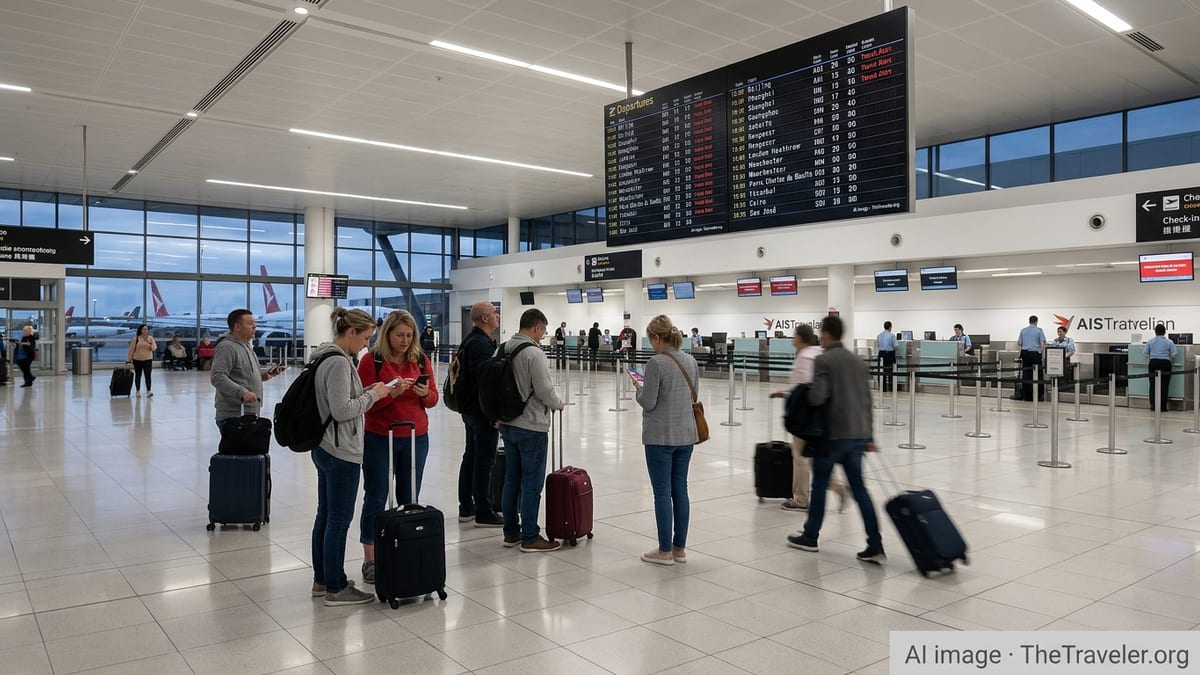
Fresh Global Warning Tied to Volatile Middle East Landscape
The latest worldwide caution, updated in late March 2026 and reiterated in recent public communications, advises Americans overseas to exercise increased vigilance, with particular attention to developments in the Middle East. Publicly available information indicates that U.S. officials are tracking a volatile regional environment shaped by ongoing conflict involving Israel and armed groups in Gaza, Iranian-linked actors, and instability in neighboring states.
According to published coverage of the new alert, the State Department highlights a risk of terrorist attacks, civil unrest, and sudden security incidents that could target locations frequented by foreigners, including tourist sites, transportation hubs, and public venues. The advisory urges travelers to remain alert to their surroundings and to closely monitor local news and security updates, especially in countries already under elevated travel warning levels.
Middle East tensions have remained high since the outbreak of the Israel Hamas war in October 2023, with subsequent flare ups involving Lebanon, Syria, Iraq, and Yemen. Reporting from regional and international outlets points to persistent rocket fire, drone activity, and maritime incidents in and around the Red Sea and Gulf of Aden, all of which have contributed to a more fragile security picture for civilian travelers.
In this context, the worldwide caution serves as an umbrella notice on top of country specific travel advisories, many of which already rank key Middle Eastern destinations at Level 3, Reconsider Travel, or Level 4, Do Not Travel, due to armed conflict, terrorism, and the potential for rapid escalation.
Heightened Risk of Terrorist Attacks and Unrest
Public guidance associated with the renewed alert emphasizes that terrorist organizations, violent extremists, and individuals inspired by regional conflicts may seek to target U.S. citizens or locations perceived as associated with the United States. Past worldwide cautions, described in Congressional and academic analyses, note that such threats can materialize far from active war zones, including in cities where large demonstrations or symbolic sites attract international attention.
Recent State Department country advisories for areas such as Israel, the West Bank, Gaza, Lebanon, Iraq, Syria, and Yemen describe a similar pattern of risk. These notices cite a potential for attacks using small arms, improvised explosives, vehicles, or other readily available weapons, often with limited or no warning. They also reference a history of strikes on hotels, markets, houses of worship, and transportation nodes, places that commonly draw foreign visitors.
Security analysts and open source reporting underscore that global travel risk is not confined to terrorism alone. Demonstrations linked to the Middle East conflict have taken place in major cities around the world, and while many remain peaceful, some have involved property damage and clashes with security forces. The worldwide caution notes that such gatherings can change character quickly, prompting advice that travelers avoid large protests and maintain physical distance from political rallies whenever possible.
For many destinations, these threat assessments are layered on top of existing concerns about crime, kidnapping, or localized insurgencies. As a result, the new global alert is being interpreted by many travel risk specialists as a reminder that country level advisories and local developments must be read together rather than in isolation.
Potential Flight Disruptions and Airspace Closures
Alongside the security threat, the updated warning points to a risk of operational disruption across the global aviation network. Travel related channels summarizing the alert note that periodic airspace closures in and around the Middle East could affect routes far beyond the immediate region, as airlines divert flights or suspend services altogether for safety reasons.
Since the start of hostilities between Israel and Hamas in 2023, carriers have periodically rerouted flights away from Israeli airspace, parts of Lebanon and Syria, and conflict affected segments of the Red Sea and Gulf of Aden. Maritime disruption in these waters, including Houthi attacks on commercial vessels reported by military and intelligence briefings, has at times pushed cargo and cruise itineraries farther from traditional corridors, with knock on effects for port calls and schedules.
Public statements from aviation regulators and airlines indicate that decisions about overflight and route planning can change on short notice, often following new missile launches, drone activity, or military strikes. The worldwide caution, as summarized in publicly accessible notices, therefore urges travelers to account for possible last minute changes, including cancellations, extended layovers, or unplanned overnight stays when traveling through or near the region.
For long haul travelers from North America or Europe, these shifts may also alter the viability of favored connection hubs. Cities in the Gulf and eastern Mediterranean that once served as convenient waypoints for flights to Asia or Africa are in some cases subject to stricter risk assessments, requiring travelers to check airline and airport status more frequently than in calmer periods.
Country Advisories Across the Region Remain Elevated
The worldwide caution arrives against a backdrop of already stringent country specific warnings spanning much of the Middle East. The State Department’s public advisory list shows Level 4, Do Not Travel, notices in place for Iran, Iraq, Lebanon, Syria, Yemen, and Gaza, while Bahrain, Israel, the West Bank, Jordan, Kuwait, Oman, Qatar, Saudi Arabia, and the United Arab Emirates are placed at Level 3, Reconsider Travel.
Individual advisories for Israel, the West Bank, and Gaza, updated as recently as February 2026, reference frequent rocket and missile alerts, cross border fire, and restrictions on the movement of U.S. government personnel. Similar language appears in advisories for Egypt’s Sinai region and for parts of the Red Sea coast, where jihadi insurgent groups and banditry have posed long standing risks to both residents and tourists.
Regional reporting indicates that in several countries, embassy operations have been reduced or reorganized in response to security conditions, affecting the ability of consular staff to provide routine services. While emergency assistance is generally prioritized, travel security specialists caution that in the event of a sudden escalation, options for evacuation may be limited, particularly from areas already under Level 4 warnings.
For destinations further afield, from Europe to Asia and Africa, the renewed caution is not accompanied by automatic changes in advisory levels. However, analysts note that the Middle East conflict has global political and social reverberations that can influence protest movements, cyber activity, and isolated acts of violence in third countries, justifying a broader, worldwide lens.
What Travelers Are Advised to Do Now
Travel risk experts and international education organizations that track State Department alerts recommend that Americans considering overseas trips treat the worldwide caution as a prompt for more detailed preparation rather than as an automatic reason to cancel every journey. The key message in most public guidance is to gather as much destination specific information as possible and to have contingency plans if the situation deteriorates.
Widely circulated advice urges U.S. citizens to review the travel advisory and security alerts for each country on their itinerary, register their trip with the Smart Traveler Enrollment Program so that they can receive email or text updates, and share plans and contact details with family or trusted contacts at home. Travelers are also encouraged to identify potential shelter locations in major cities, such as large hotels, and to keep copies of key documents in both physical and digital form.
Public safety tips associated with the new worldwide caution also highlight situational awareness: avoiding demonstrations and large crowds, limiting time spent near government buildings and other symbolic sites, and maintaining discretion about nationality in sensitive environments. Many organizations that send staff or students abroad stress the importance of monitoring multiple information channels instead of relying on a single app or platform.
For leisure travelers and business passengers alike, the renewed global warning underscores that international trips during periods of Middle East tension require more flexibility and greater tolerance for sudden changes. While many journeys will still proceed without incident, the State Department’s worldwide caution signals that the margin for error has narrowed and that prudent preparation is now an essential part of any itinerary.