


More news on this day
The United States has raised its Kenya travel advisory to Level 3 and identified multiple counties and Nairobi neighborhoods where Americans are urged not to travel, citing combined risks linked to terrorism, kidnapping, crime, unrest, health concerns and poor road safety.
Get the latest news straight to your inbox!
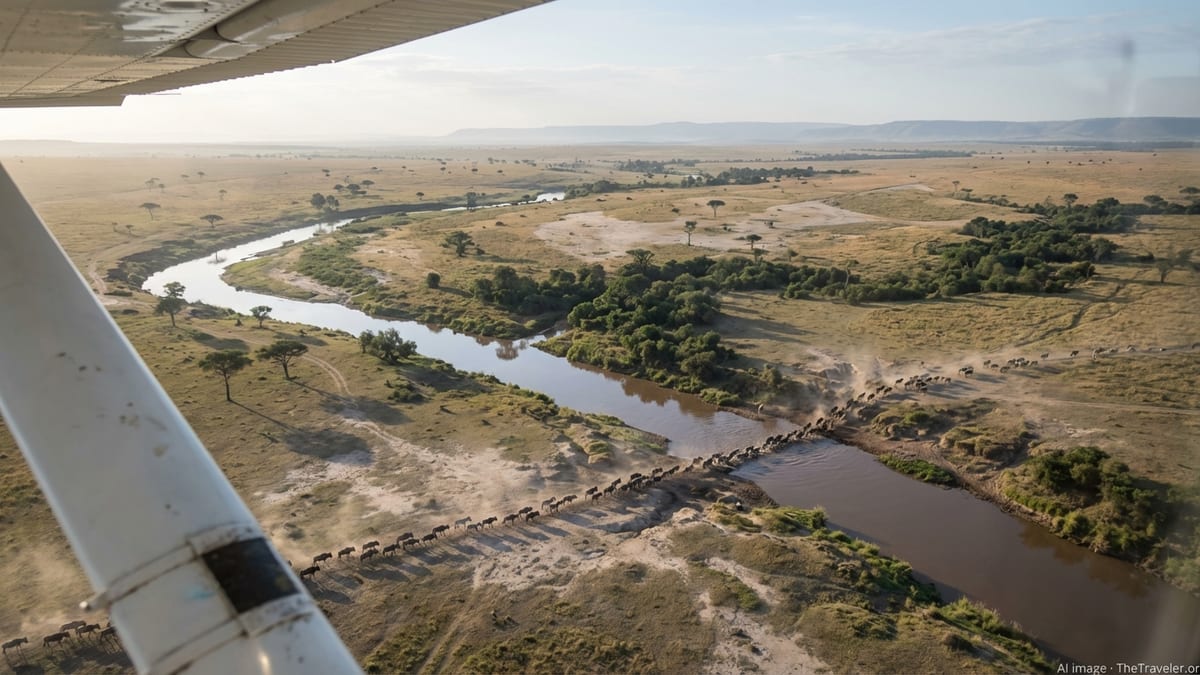
Advisory Raised to Level 3 for Kenya
According to publicly available information on the U.S. State Department’s travel advisory website, the Kenya advisory was updated on October 19, 2026, moving the country to Level 3, which is described as “Reconsider travel.” The update follows several months in which Kenya had been listed at Level 2, a category where travelers are advised to exercise increased caution.
The overall Level 3 classification reflects a combination of risks, including crime, kidnapping, terrorism, unrest, health issues linked in part to the regional Ebola situation, and traffic safety. The wording of the advisory emphasizes that incidents can occur without warning and that violent crime and security incidents have affected both urban and rural areas.
Published summaries of the update note that this change also aligns with heightened regional concern over Ebola cases in neighboring countries, as well as sporadic security incidents in parts of northern and coastal Kenya. The advisory encourages U.S. travelers to have contingency plans that do not depend on U.S. government assistance and to closely monitor local conditions before and during any trip.
Despite the higher alert level, the advisory does not prohibit all travel to Kenya. Instead, it distinguishes between the national Level 3 rating and specific locations that are explicitly categorized as “Do Not Travel” zones because of elevated security risks.
Areas Marked “Do Not Travel” in Kenya
Within the broader Kenya advisory, a number of locations are now highlighted as areas that Americans should avoid entirely. Publicly accessible advisory text specifies that U.S. travelers are advised not to travel to the Nairobi neighborhoods of Eastleigh and Kibera because of the risk of crime and kidnapping. The notice points to violent incidents such as armed carjacking, muggings and home invasions, as well as congested roads and limited local policing capacity.
Several counties along the border with Somalia are also listed as “Do Not Travel” areas. The advisory names Garissa, Wajir and Mandera counties, where the primary concerns are kidnapping and terrorism. These counties have previously been cited in international travel advice as locations where militants based across the border in Somalia have mounted attacks and kidnappings targeting security forces, local communities and, in some cases, travelers.
The advisory further designates parts of Kenya’s northern coast and certain inland areas as locations where U.S. citizens should not travel. Lamu County and Tana River County, except for Tsavo National Park, are cited due to kidnapping and terrorism risks. In Kilifi County, the “Do Not Travel” designation applies to areas north of Malindi and parts of the coastal strip north of the town, where sporadic attacks and armed incidents have been reported in the past.
In addition, advisory records and archived guidance indicate that sections of West Pokot and Turkana counties, along with areas of Marsabit and Turkana within roughly 50 kilometers of the Ethiopian border, are treated as high-risk because of banditry and cross-border incursions. While the exact phrasing and categorization can vary between versions of the advisory, these regions have consistently been marked out as unsuitable for U.S. leisure travel.
Implications for Safaris, Coast Trips and Road Travel
For many travelers, the practical question is how the new advisory affects plans for beach stays in Mombasa or Malindi, wildlife safaris in parks such as Maasai Mara, Amboseli and Tsavo, and stopovers in Nairobi. The State Department text does not place a nationwide “Do Not Travel” label on all tourism activities, and it does not list the major safari reserves in southern and central Kenya among the prohibition areas.
Publicly available travel commentary and news coverage indicate that popular safari destinations in the Maasai Mara region, Amboseli National Park, Tsavo East and Tsavo West, as well as Laikipia conservancies and inland destinations such as Nakuru, continue to be visited by international travelers. However, the Level 3 designation means American visitors are urged to carefully review route choices, avoid overnight overland transits through high-risk counties, and coordinate with reputable tour operators that monitor security updates.
Trips to Kenya’s coast require closer attention to the detailed wording of the advisory. While the main resorts around Mombasa and the area immediately south of the city are not explicitly listed in the “Do Not Travel” sections, coastal zones in Lamu, Tana River and the northern part of Kilifi County are. Travelers planning stays on Lamu Island, Manda Island or in small beach communities north of Malindi should review current security advice and be prepared to adjust itineraries if conditions change.
The advisory also reiterates that road safety is a significant concern. Reports note that many highways and rural roads lack lighting and have uneven surfaces, increasing accident risk at night. The State Department guidance specifically advises against driving between cities after dark because of both road conditions and the potential for banditry in certain regions. For visitors, that typically means planning domestic flights where practical, allowing extra daytime travel time by road, and avoiding informal transport options.
Health, Ebola Concerns and New Insurance Rules
The text raising Kenya to Level 3 singles out health as one of several key risk indicators. Published reports on the advisory link this in part to Ebola cases in the region, particularly in neighboring countries where outbreaks have been recorded and classified as a public health emergency of international concern. While Kenya has not been identified as an outbreak center, regional mobility and cross-border travel are cited as factors behind the cautious stance.
In parallel, updated guidance from other governments and international travel resources highlights new Kenyan requirements for inbound visitors. Information released by Ireland’s Department of Foreign Affairs and repeated in travel advisories in early October 2026 notes that from October 5, most foreign visitors entering Kenya for stays of less than 12 months must obtain “Inbound Travel Health Insurance” through a Kenyan government platform, even if they already hold private travel insurance from their home country.
This mandatory coverage is intended to ensure that visitors have access to designated health services during their stay and that costs related to treatment or evacuation can be met. The requirement includes minors and is linked to immigration processes at ports of entry, meaning travelers may be asked to show proof of the Kenya-approved policy alongside standard documents such as passports and visas or electronic travel authorizations.
For U.S. travelers, the combination of a Level 3 health risk indicator and Kenya’s new insurance rules makes pre-departure planning especially important. Prospective visitors are encouraged in public guidance to review both the State Department advisory and health information from agencies such as the Centers for Disease Control and Prevention, then confirm that their insurance arrangements satisfy Kenyan entry rules as well as their own risk tolerance.
How Travelers Are Adjusting Plans
Recent discussion on travel forums and in regional news outlets suggests that the Level 3 advisory is prompting some Americans to reconsider routing while still keeping Kenya in longer-term plans. Some travelers report shifting upcoming trips to neighboring destinations or postponing visits that would have included northern border regions and the more remote stretches of the north coast.
Others, particularly those focused on safaris in the Maasai Mara or in southern parks far from the Somalia border, describe choosing to proceed with itineraries while taking additional precautions, such as booking with established operators, avoiding unscheduled time in Nairobi’s higher-risk neighborhoods and minimizing night-time travel. For many, the key change has been greater scrutiny of internal flight options, road routes and hotel locations relative to the specified “Do Not Travel” counties.
Travel industry analysts quoted in open-source commentary note that while advisories do not automatically halt tourism, they can lead to increased questions for tour companies and a shift in demand toward destinations perceived as more stable. In the case of Kenya, the Level 3 move may encourage more travelers to combine the country’s safari experiences with time in neighboring countries that currently carry lower advisory levels, or to reschedule multi-country East Africa trips to avoid high-risk segments while regional health and security concerns unfold.
For now, the updated advisory underscores that Americans considering travel to Kenya should pay careful attention not only to the country’s overall Level 3 status, but also to the specific counties and neighborhoods where the United States explicitly advises its citizens not to go at all.