


More news on this day
The United States has renewed its highest-level travel warning for Iraq, urging American citizens not to visit the country “for any reason” as security risks from terrorism, armed conflict, kidnapping and crime intensify across multiple regions.
Get the latest news straight to your inbox!
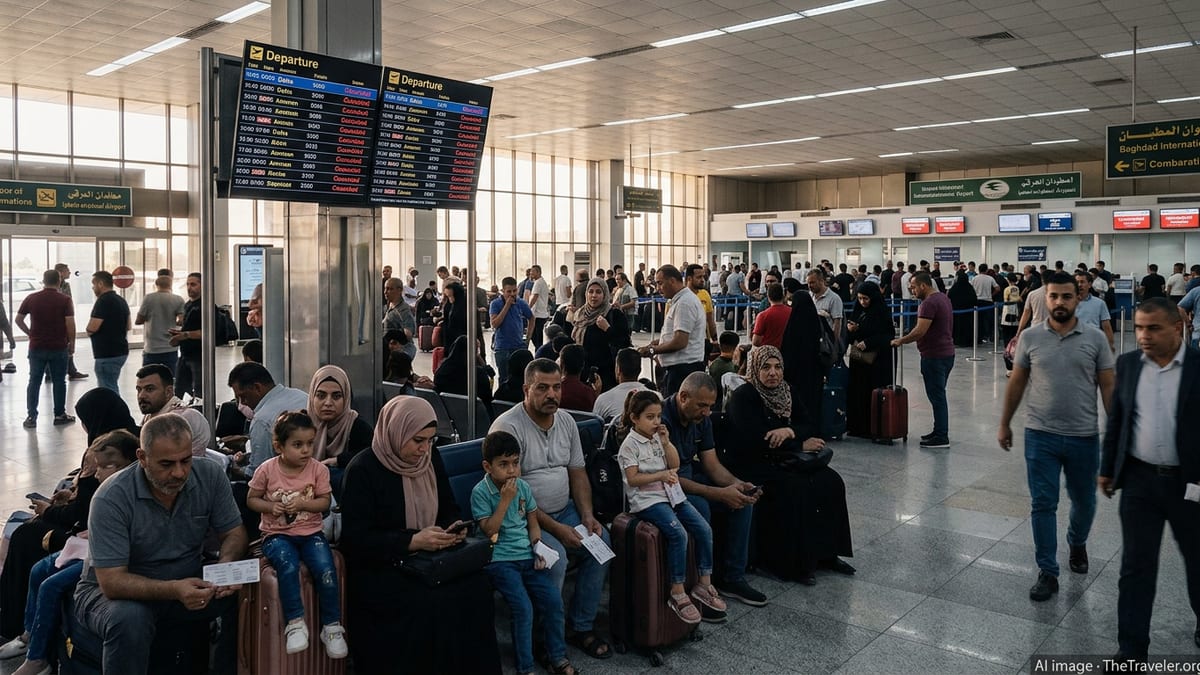
Level 4 advisory renewed amid heightened regional tensions
The latest notice, updated on October 23, 2026, keeps Iraq at Level 4 on the U.S. Department of State’s four-tier advisory scale, the most severe designation that instructs citizens not to travel. Publicly available guidance on the department’s website states that U.S. citizens are at risk in Iraq due to crime, terrorism, civil unrest, kidnapping and armed conflict, as well as the limited ability of the U.S. government to provide emergency services inside the country.
Reports from outlets monitoring the advisory note that the renewal comes as regional tensions remain high, including recurrent threats against U.S. interests in the Middle East. Recent security alerts for the wider region have highlighted the potential for attacks on diplomatic facilities, transportation hubs and other sites associated with the United States and its partners.
The advisory reiterates that U.S. government personnel in Iraq must live and work under strict security protocols. These measures reflect what official travel information describes as serious and ongoing threats, including the possibility of indirect fire, improvised explosive devices and attacks targeting locations frequented by foreigners.
Security risks cited: terrorism, militias and kidnapping
According to publicly accessible State Department information, a range of armed actors contribute to the risk landscape in Iraq. Terrorist groups such as cells associated with the so-called Islamic State, as well as Iran-aligned militias and other non-state armed groups, are described as capable of conducting bombings, rocket and drone attacks, kidnappings and shootings against both government and civilian targets.
Recent media coverage summarizing the advisory notes that kidnapping and hostage-taking remain particular concerns for foreign nationals, including U.S. citizens. Armed groups and criminal networks have been reported to use abductions for ransom, political leverage or intimidation, especially in areas with weaker state control.
The advisory also references the potential for sudden outbreaks of armed conflict, localized clashes and civil unrest. Travel information reviewed by regional outlets points out that demonstrations, militia activity or confrontations between security forces and armed groups can escalate quickly, sometimes with little or no warning, and may lead to road closures, curfews and disruptions to transport and communications.
Limited consular support and evacuation challenges
In addition to physical security threats, the U.S. warning emphasizes the constraints on consular assistance inside Iraq. Public travel guidance notes that the U.S. government’s capacity to provide emergency services is limited, particularly outside major urban centers and secure zones. This includes challenges in reaching citizens quickly during crises or arranging medical evacuations in the midst of conflict.
Information cited in recent coverage explains that the Iraqi authorities themselves face difficulty guaranteeing the safety of foreign nationals if violence escalates. In any sudden deterioration, access to airports, main highways or border crossings may be restricted or shut down, complicating attempts to leave the country on short notice.
Earlier alerts in 2026 ordered non-emergency U.S. government employees to depart Iraq due to security concerns, underlining how official operations have been scaled back in response to the threat environment. Current advice indicates that any American already in Iraq should carefully review personal security plans, remain aware of their surroundings and be prepared for the possibility that commercial travel options could be disrupted with little advance notice.
Impact on business, humanitarian and specialist travel
While Iraq remains off-limits for most leisure travelers from the United States under the Level 4 advisory, the warning has significant implications for business, humanitarian and specialist visitors who might otherwise consider travel. Companies, non-governmental organizations and media organizations that maintain operations in Iraq typically conduct their own security assessments, but the State Department advisory serves as a strong signal of elevated risk.
Travel security firms that track government advisories have highlighted that a Level 4 notice can affect corporate insurance coverage, duty-of-care policies and approvals for staff movements. Some insurers either restrict coverage or require additional security measures and formal waivers when employees travel to countries designated “Do Not Travel.”
Humanitarian agencies and contractors working on reconstruction, energy or infrastructure projects may also face tighter internal restrictions, particularly for U.S. passport holders. Publicly available commentary from risk analysts indicates that organizations are reviewing evacuation plans, tightening movement protocols and, in some cases, relocating non-essential staff away from higher-risk parts of the country.
Regional context and advice for travelers already abroad
The renewed Iraq warning coincides with broader security alerts for the Middle East that urge U.S. citizens to exercise increased caution throughout the region. Travel advisories for several neighboring states currently sit at Level 3, advising citizens to reconsider travel, while Iraq, Iran, Syria, Lebanon, Yemen and Gaza are grouped among locations designated as Level 4 due to severe security threats.
Other governments, including close U.S. partners, maintain similar “do not travel” guidance for Iraq. For example, official travel advice from Australia’s Smartraveller service continues to classify all of Iraq, including the Kurdistan Region, as off-limits because of the threat of terrorism, armed conflict, kidnapping and violent crime, underscoring a broad international consensus about the risks.
For Americans already overseas who might be contemplating onward travel to Iraq, publicly available guidance recommends closely monitoring official advisories, registering in traveler enrollment programs where available, and maintaining regular contact with family or trusted contacts outside the region. Travelers who are currently in Iraq are encouraged by multiple public advisories and security alerts to keep documents and essential supplies ready in case conditions deteriorate and safe departure options emerge only briefly.