


More news on this day
The United States has issued updated travel advisories for 13 countries across the Middle East, warning Americans of elevated risks from missile and drone strikes, regional conflict, terrorism and potential disruptions to commercial air travel.
Get the latest news straight to your inbox!
Which 13 Middle Eastern Countries Are Affected
Publicly available information compiled from the US Department of State travel advisory pages and recent media coverage shows that the latest cautionary updates span a broad swath of the Middle East. The 13 countries named in multiple reports are Saudi Arabia, Bahrain, Iran, Iraq, Jordan, Lebanon, Kuwait, Oman, the United Arab Emirates, Qatar, Syria, Yemen and Israel.
According to published summaries of the advisories, the countries are not treated uniformly. Yemen and Syria are described at the highest warning levels because of active conflict, terrorism and the absence of routine consular services in many areas. Iraq and parts of Israel, particularly areas near ongoing hostilities, also appear under more restrictive guidance than before.
Advisories for Saudi Arabia, Bahrain, Kuwait, Oman, Qatar and the United Arab Emirates highlight concerns over potential spillover from attacks by Yemen’s Houthi movement and wider tensions involving Iran. Lebanon and Jordan remain on the list amid political fragility, security incidents along borders and pressure from regional fighting.
State Department data indicates that all 13 countries show advisory pages refreshed in late October 2026, reflecting what analysts describe as a more cautious posture toward nonessential travel across much of the region.
Drivers Behind the New Warnings
Recent security incidents appear to have accelerated the latest round of updates. News reports from international outlets describe a series of missile and drone attacks attributed to Yemen’s Iran-aligned Houthi movement that have targeted airports and other critical infrastructure in Saudi Arabia and nearby states.
Coverage of a deadly strike on a Saudi airport this month, along with earlier attacks on facilities in the kingdom’s Eastern Province, has underscored the vulnerability of civilian aviation and transport hubs. In several advisories, US officials emphasize the risk of sudden airspace closures, flight cancellations or diversions affecting travelers across the Gulf and beyond.
Broader tensions involving Iran also feature prominently in recent analyses. Reports indicate that Iranian-backed groups operating in Iraq, Syria and parts of Lebanon have increased their rhetoric against US interests, while security alerts from US missions in the region refer to the possibility of retaliatory action in response to ongoing conflict.
The advisory language also points to persistent terrorism threats unrelated to the current flare-up, including extremist activity in parts of Iraq and Syria, sporadic rocket fire near border areas and the risk of kidnappings in certain high-risk zones.
What the Advisory Levels Mean for Travelers
The State Department’s four-tier advisory system ranges from Level 1, advising normal precautions, to Level 4, advising US citizens not to travel. Current Middle East advisories are spread across Levels 2, 3 and 4, depending on country and, in some cases, specific regions within countries.
Yemen and Syria appear under Level 4 guidance, reflecting active conflict and the limited ability of any foreign government to assist travelers. Parts of Iraq and some areas linked to ongoing fighting around Israel are also covered by strict warnings that travel should be avoided.
Saudi Arabia, Lebanon, Iraq as a whole and several neighboring states are listed at Levels 3 or 2, asking travelers to reconsider or exercise increased caution. The advisory texts distinguish between relatively secure urban centers and higher-risk border regions, especially near Yemen, Iraq, Syria and parts of the occupied Palestinian territories.
Published State Department material explains that these levels are designed as risk indicators rather than blanket bans. However, a Level 3 or Level 4 designation can affect airline operations, travel insurance coverage and company travel policies, and may influence whether tour operators or cruise lines continue to offer itineraries that include the affected destinations.
Practical Implications for Americans Planning Trips
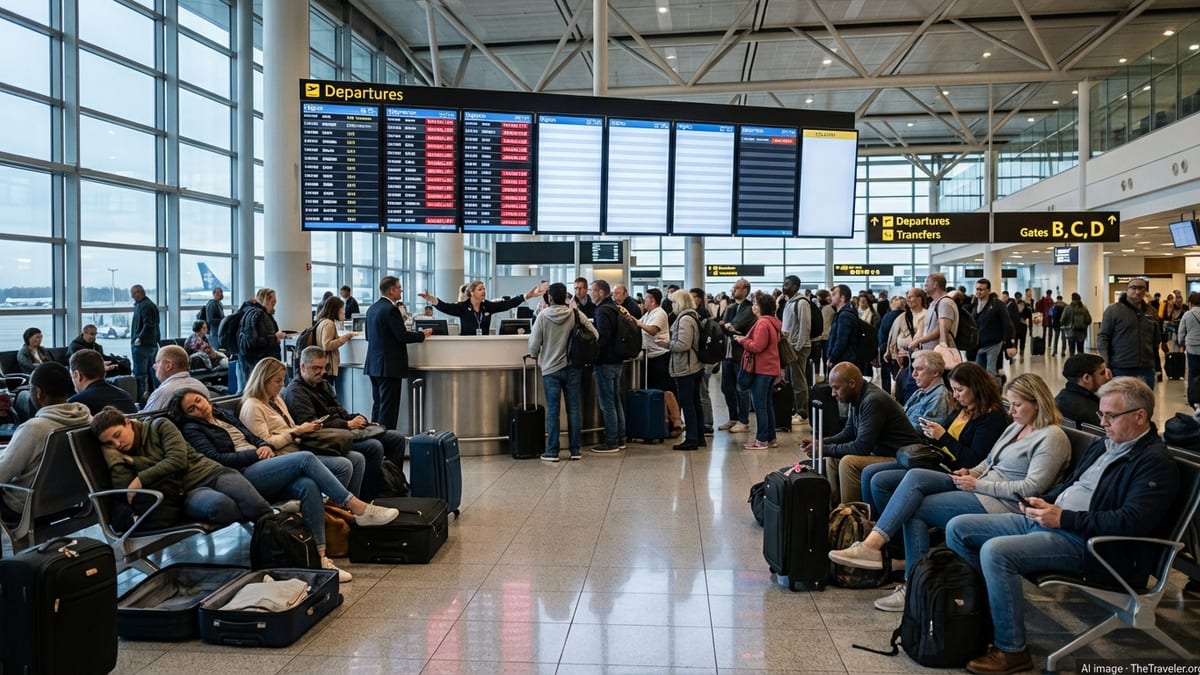
For travelers with existing bookings, the most immediate concern is the possibility of itinerary disruption. Security alerts issued in recent days for the Gulf region and neighboring states advise that airport operations could be temporarily suspended, and that airlines may reroute or cancel flights with limited notice when tensions rise.
Travel industry guidance encourages passengers heading to or transiting through hubs such as Riyadh, Jeddah, Dammam, Doha, Dubai and Abu Dhabi to monitor their airline’s operational updates closely and to allow extra time for security checks and screening. Some carriers have already adjusted schedules in response to air-defense activity and temporary airspace restrictions linked to missile and drone threats.
Insurance providers and corporate travel managers are also reviewing the consequences of the higher advisory levels. In some policies, a formal change in a country’s US travel advisory level can trigger exclusions or require special waivers. Travelers are being encouraged in industry briefings to confirm whether emergency evacuation, trip interruption and medical cover remain valid for itineraries that include the newly updated countries.
Meanwhile, publicly available guidance from consular and risk-management organizations stresses the importance of contingency planning for anyone who decides to proceed with essential travel to the region. Recommendations typically include carrying backup funds and documents, maintaining flexible departure options and preparing for temporary shelter-in-place periods if transport infrastructure is disrupted.
Steps Recommended for Those Already in the Region
For US citizens currently residing or traveling in the affected countries, the new advisories place particular emphasis on staying informed and maintaining a high level of situational awareness. Government and private security briefings alike urge travelers to follow local news, monitor official alert channels and be prepared for rapidly changing conditions.
Open-source guidance highlights the value of enrolling in traveler notification programs that provide security updates by email or text message. These services distribute information on nearby incidents, changes to local curfews or movement restrictions, and adjustments in embassy or consulate operations.
Travel risk consultants and regional analysts note that travelers in border areas or in proximity to military installations, oil infrastructure and major airports may face a higher likelihood of disruptions. As a result, many organizations are advising staff to avoid crowded public places when possible, review their personal security routines and confirm rendezvous points with colleagues or family members in case of communications outages.
Across the 13 countries covered by the latest warnings, publicly available information underscores that conditions can vary significantly from one city or region to another. Travelers are being urged to read the detailed, country-specific advisory language, which often breaks down risks by province or governorate, rather than relying solely on a single headline warning at the national level.