


More news on this day
The United States has issued coordinated travel warnings across 13 Middle Eastern countries, as publicly available advisories highlight escalating Houthi attacks, growing Iran-linked threats and the risk of sudden airspace closures that could disrupt civilian travel across the region.
Get the latest news straight to your inbox!
Scope of the New Advisories Across the Middle East
Publicly available information from recent advisories and regional reporting indicates that the latest U.S. warnings cover a broad swath of the Middle East, including key Gulf hubs and countries already subject to heightened alerts earlier this year. Coverage described in regional media and security briefings points to countries such as Bahrain, Iran, Iraq, Israel, Jordan, Kuwait, Lebanon, Oman, Qatar, Saudi Arabia and the United Arab Emirates, with some reports referencing a total of 13 states subject to updated guidance.
The new warnings build on an existing pattern of heightened U.S. concern over travel to the region since the outbreak of the Iran conflict and subsequent attacks linked to Yemen’s Houthi movement. Earlier in the year, Americans were urged in separate alerts to leave or reconsider travel to a wider list of Middle Eastern countries as hostilities expanded, and the current move refines that posture into a coordinated set of advisories focused on a core group of 13.
These country specific notices are layered on top of a standing Worldwide Caution bulletin, which remains in effect and specifically highlights elevated risks for Americans in the Middle East. That global alert advises travelers to exercise increased caution, monitor local conditions and be prepared for rapid changes in security or transportation options.
Security Drivers: Houthi Attacks, Iran Tensions and Regional Conflict
The travel warnings are closely linked to an intensified campaign of drone and missile strikes by Yemen’s Houthi movement against targets in Saudi Arabia and the surrounding region. Public reports detail a series of recent attacks on Saudi airports, including strikes that forced the closure of Riyadh’s King Khalid International Airport and deadly incidents at King Fahd International Airport in the Eastern Province, where Saudi authorities reported fatalities and injuries after incoming fire.
Advisories for Saudi Arabia, updated in late October, now explicitly cite the risk of drone and missile targeting of American interests by Iran and Iran supported groups, armed conflict, terrorism and risks to civil aviation in the Persian Gulf and Arabian Sea region. Notices for other countries in the Gulf echo similar concerns about potential spillover from hostilities and the possibility that U.S. facilities, commercial centers or transportation hubs could be targeted.
Alongside Houthi activity, the broader confrontation involving Iran has widened the threat picture for travelers. According to open reporting on congressional correspondence and diplomatic briefings, U.S. assessments point to what are described as advanced plotting efforts by Iran and Iran aligned groups to target American citizens in the Middle East and beyond. This context is reflected in repeated reminders against nonessential travel to high risk locations such as Lebanon and Iran, where long standing warnings have been reinforced in recent days.
Impact on Flights, Airspace and Regional Connectivity
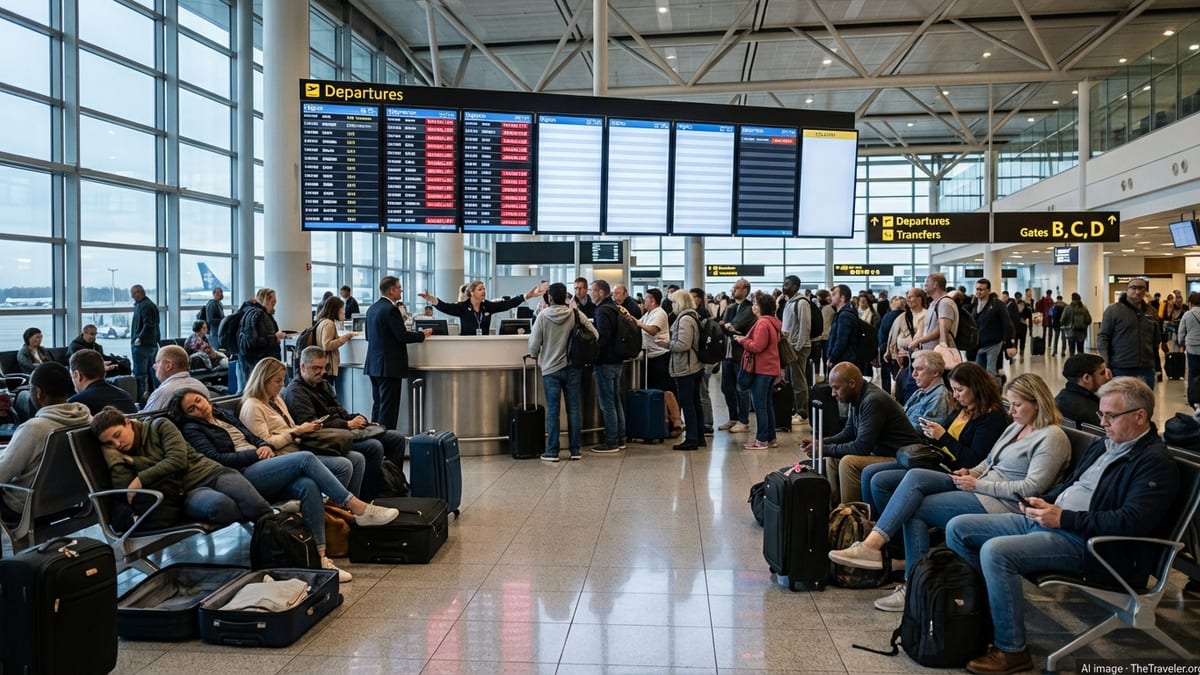
One of the most immediate consequences for travelers is the growing disruption to air travel in and around the Middle East. Security alerts shared by U.S. embassies and summarized by regional outlets state that Americans should be prepared for flight cancellations, diversions and short notice airspace closures affecting key corridors over the Gulf, the Red Sea and the Arabian Peninsula.
Reports from aviation and risk analysis groups describe major airlines suspending or rerouting services across parts of the Middle East and the United Arab Emirates in response to updated government guidance issued on October 24. These changes follow earlier Federal Aviation Administration notices to U.S. operators warning of risks to civil aviation over the Persian Gulf and adjoining waters, including the Red Sea and Gulf of Oman, where commercial vessels and infrastructure have been targeted since late 2023.
Travel industry digests tracking the crisis note that carriers have adjusted schedules or removed inventory for select city pairs that cross higher risk airspace, and some have extended change fee waivers for passengers ticketed to or via affected hubs. While specific airline policies differ, public summaries emphasize that further disruptions are possible if regional hostilities escalate or if additional states announce temporary airspace closures.
What the Updated Warnings Mean for US Travelers
The coordinated advisories do not impose a blanket ban on travel, but they significantly raise the bar for risk management for anyone considering trips to the affected 13 countries. Current State Department language for several destinations, including Saudi Arabia, sits at Level 3, which urges travelers to reconsider travel due to security threats. Other locations in the region, such as Lebanon and Iran, have long carried Level 4 guidance advising U.S. citizens not to travel.
Universities, corporations and travel risk managers in the United States are responding by revisiting their own travel approval thresholds. Guidance from institutional risk offices, made public on university websites, stresses that travelers to the Middle East should monitor advisories closely, maintain flexible itineraries and consider the availability of medical and evacuation coverage that explicitly addresses conflict and political instability.
For individual travelers already in the region, publicly available consular messaging encourages maintaining updated contact details with local U.S. embassies and consulates and ensuring that travel documents, emergency funds and contingency plans are in place. Travelers are also being advised in open sources to regularly check airline notifications and airport operations, as some international airports have shifted to irregular schedules or implemented enhanced screening in response to recent attacks.
Planning Ahead: Practical Steps and Ongoing Uncertainty
Prospective visitors to the 13 affected Middle Eastern countries are being urged by travel risk specialists and industry bulletins to conduct thorough pretrip assessments, using a combination of official advisories and up to date local reporting. In practice, this means checking both the overall advisory level for each country and the detailed security information that often differentiates between regions within a single state, especially in larger countries where threats may be concentrated near borders or specific cities.
Because conditions are described as fluid, travelers are also encouraged to budget for last minute changes, including the cost of rebooking flights through alternate hubs should primary gateways be temporarily closed. Some carriers and insurance providers have introduced updated war and conflict clauses, and consumers are being advised in public guidance to review the fine print to confirm whether drone and missile attacks or government ordered airspace closures are covered events.
Analysts following the situation caution that the latest U.S. travel warnings for 13 Middle Eastern countries may remain in place for an extended period, given the combination of ongoing Houthi activity, unresolved tensions involving Iran and extensive U.S. military deployments in the region. For now, the advisories underscore that anyone planning travel to or through the Middle East should treat security and operational risk as central factors, on par with cost and convenience, when deciding whether and how to proceed.