


More news on this day
The United States has renewed and expanded its travel warnings for 13 countries across the Middle East, updating advisories to reflect heightened risks from missile and drone attacks linked to Yemen’s Houthi movement, broader tensions with Iran and ongoing regional conflict.
Get the latest news straight to your inbox!
Which Middle East Countries Are Affected
Publicly available State Department information and aggregated media coverage indicate that the latest round of advisories covers Saudi Arabia, Bahrain, Iran, Iraq, Jordan, Lebanon, Kuwait, Oman, Qatar, the United Arab Emirates, Syria, Yemen and Israel. All 13 appear with advisories updated in late October 2026, reflecting a more cautious posture toward travel throughout much of the region.
The advisory levels vary by country, from Level 3 “Reconsider Travel” in several Gulf and Levant states to Level 4 “Do Not Travel” in higher‑risk destinations such as Iraq, Syria and Yemen. Each listing sets out country‑specific concerns, including terrorism, armed conflict, civil unrest, kidnapping and limits on the ability of U.S. missions to provide emergency assistance outside major cities.
The coordinated timing of the updates is being interpreted in published analysis as an effort to present a region‑wide picture of risk as violence and threats have intensified beyond any single conflict zone. Rather than introducing entirely new countries to the warning list, the move refines and reinforces advisories that have been in place in some form since earlier stages of the Iran‑related crisis in 2026.
Security Drivers: Houthi Strikes and Iran Tensions
Recent advisories and security alerts cited in media reports emphasize the impact of missile and drone attacks launched by Yemen’s Iran‑aligned Houthi movement, particularly against airports and infrastructure in Saudi Arabia. A series of strikes on civilian aviation facilities, including an attack on Riyadh’s international airport earlier in October that killed an American citizen, has sharpened official concern about the safety of air travel and movements near potential targets.
Coverage from regional and U.S. outlets notes that the risk is no longer viewed as confined to Saudi territory. Travel alerts shared by U.S. embassies across the Gulf and wider Middle East warn that similar tactics could be used against facilities in neighboring states, with little warning and potentially far from front‑line areas.
Underlying these immediate threats is a broader deterioration in relations between Washington and Tehran. Open‑source reporting points to stepped‑up efforts by Iran and allied groups to target U.S. interests across the region, prompting Washington to reassess the exposure of its citizens and diplomatic staff in multiple countries simultaneously.
Changes to Advisory Levels and Embassy Posture
On the State Department’s public advisory pages, several Middle Eastern destinations now carry recent update dates of October 23, 2026, reflecting revisions in response to the evolving security picture. For example, the Saudi Arabia advisory, now at Level 3, highlights the danger from drone and missile attacks, armed conflict and terrorism, and explicitly warns of possible disruptions to civil aviation and local transport.
Separate coverage of Iraq’s travel advisory notes that it remains at Level 4, with fresh language about increased risks from armed groups aligned with Iran, as well as continuing threats from the remnants of the so‑called Islamic State. The text underscores persistent dangers from crime, kidnapping and limited capacity for emergency consular support outside the capital and a small number of other locations.
In parallel with the written advisories, reports from outlets such as the Associated Press describe reductions in staffing at several U.S. embassies in the region and an ordered departure for some personnel and family members from Saudi Arabia. While these changes apply directly to government employees, they are also reflected in the public travel guidance, signaling to private travelers that U.S. resources on the ground may be more constrained than usual.
Practical Implications for Travelers
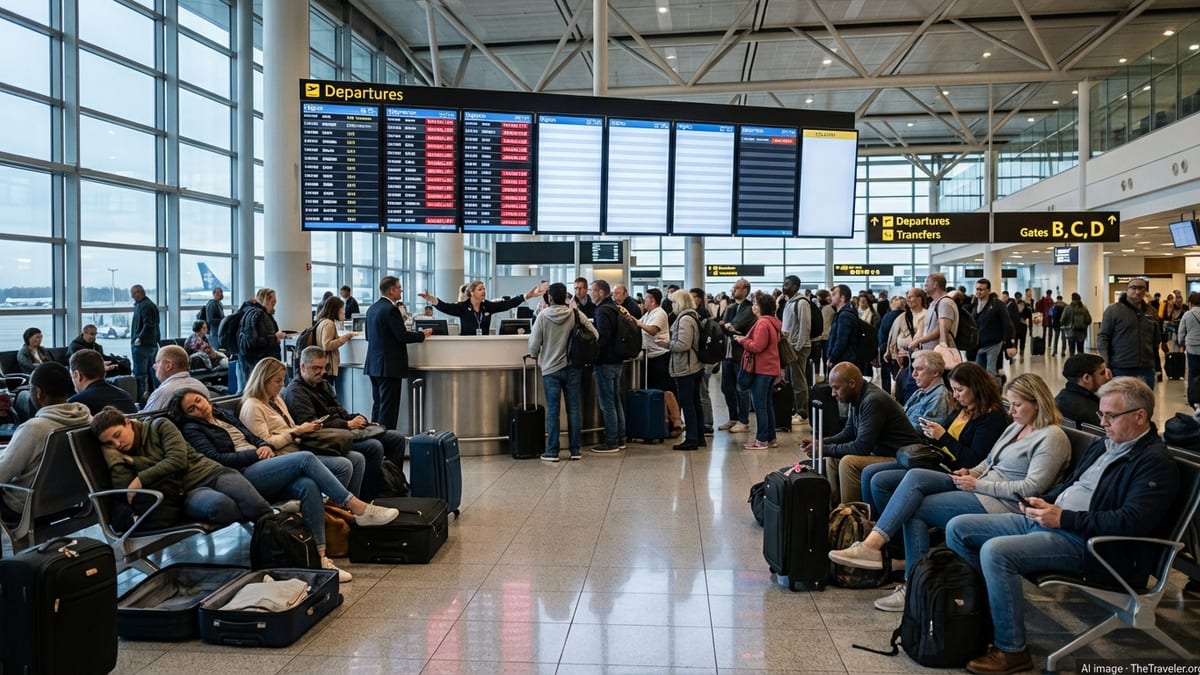
The updated advisories stress that Americans considering travel to or within the 13 affected countries should be prepared for significant disruption. Alerts circulated by U.S. missions and summarized by news organizations warn of possible short‑notice flight cancellations, temporary airspace closures and tightened security around airports and other transport hubs.
Travelers already in the region are urged, in available public guidance, to maintain flexible itineraries, keep essential supplies and documentation on hand, and identify alternative routes in case primary airports or border crossings are affected by security incidents. For some destinations at Level 4, the message is more stark, with U.S. citizens advised against travel and reminded that evacuation or emergency assistance could be severely limited if conditions deteriorate.
Airline and tourism industry bulletins reviewed by travel intelligence firms point to adjustments in schedules and routing, including the use of alternative corridors to avoid specific conflict areas. Some carriers are offering rebooking or refund options for itineraries involving higher‑risk airports, although the exact terms vary by operator and are being updated as the situation evolves.
How Travelers Can Monitor and Respond
The State Department continues to direct U.S. citizens to its online travel advisory portal for the most current, country‑specific information, and encourages enrollment in its email‑based alert system so that updates from embassies and consulates reach travelers directly. Public advisories recommend that individuals in the region regularly review security alerts from the nearest U.S. mission and monitor local news in the places they plan to visit.
Security guidance summarized in government publications and specialist risk reports also highlights practical steps such as avoiding demonstrations and large gatherings, minimizing time spent near government or military sites and major transport infrastructure, and maintaining a low profile in areas where anti‑U.S. sentiment is reported.
Analysts following the region note that advisory levels and specific language can change quickly in response to new incidents. Travelers planning trips that include any of the 13 countries are therefore encouraged to check the official advisory pages repeatedly in the days before departure and to stay alert for new security messages throughout their journeys.