


More news on this day
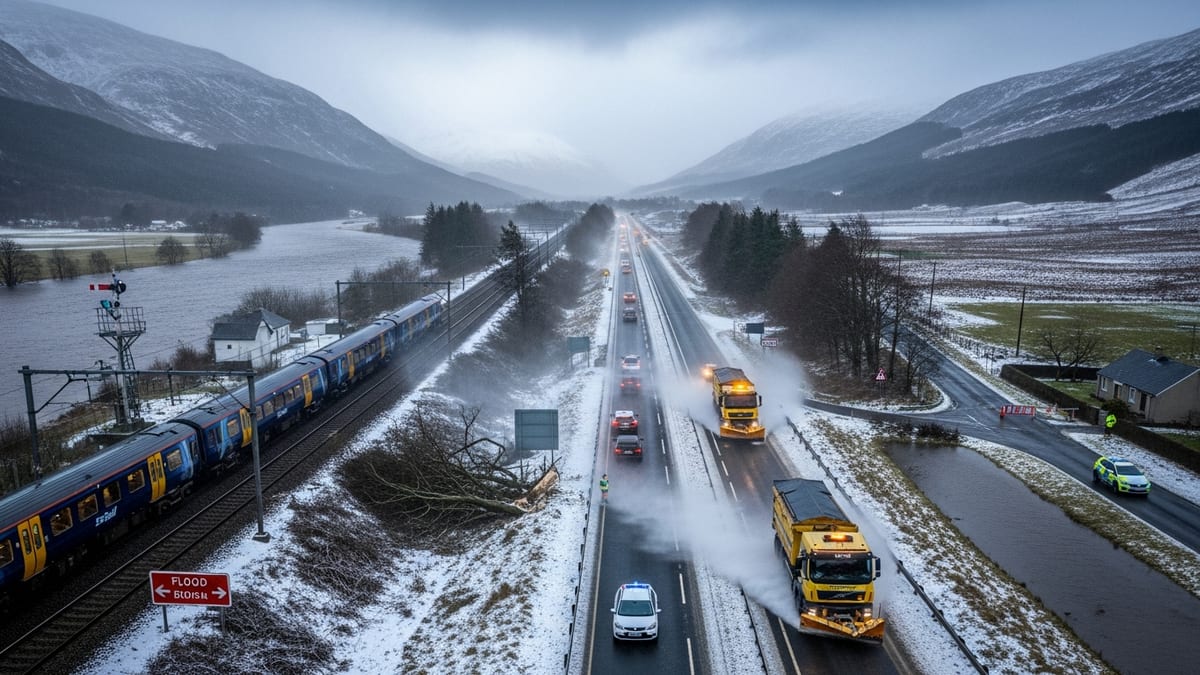
Storm Boelo is disrupting travel across Scotland this weekend, with rail services cancelled, road warnings in force and major bridges facing restrictions as forecasters warn of gusts approaching 80 miles per hour and intense bands of rain.
Get the latest news straight to your inbox!
Amber alerts and severe wind as Storm Boelo arrives
Amber and yellow weather warnings are in place across much of Scotland from the evening of Saturday 24 October into Sunday 25 October as Storm Boelo sweeps in from the Atlantic. Publicly available information from the Met Office shows that the strongest winds are expected overnight and through Sunday morning, particularly in western and central parts of the country, before gradually easing later on Sunday.
Forecasts indicate gusts widely in the range of 60 to 70 miles per hour in exposed areas, with the potential for 75 to 80 mile per hour gusts over higher ground and along the west coast. Heavy and persistent rain is also expected, especially in northern and western Scotland, where rainfall totals of 25 to 30 millimetres are possible, with higher accumulations over upland areas. The combination of saturated ground, strong winds and high rainfall is increasing the risk of fallen trees, surface water flooding and debris on key transport routes.
Travel advice from national and Scottish transport agencies is urging people to plan journeys carefully, check forecasts regularly and be prepared for sudden changes to warnings as the storm tracks across the country. Guidance stresses that conditions may be hazardous even away from the coast, with crosswinds, standing water and reduced visibility likely to affect both urban and rural networks.
Local authorities across central and western Scotland report that outdoor events have been scaled back or cancelled, including popular seasonal attractions, as operators seek to limit the need for nonessential travel during the peak of the storm. In several areas, clean-up teams have been placed on standby to respond quickly to blocked roads, damaged street furniture and fallen branches once conditions allow.
Rail cancellations hit key Scottish routes
Rail passengers are facing widespread disruption as Storm Boelo moves in, with services on several key routes in Scotland cancelled or operating on reduced timetables. Network Rail has introduced speed restrictions across parts of the Scottish network, particularly on more exposed sections of line, in response to the risk that high winds could bring trees or other debris onto the tracks and damage overhead equipment.
According to published coverage and operator updates, trains between Edinburgh and Glasgow have already been affected, with temporary suspensions and reduced frequencies reported from Friday afternoon due to earlier flooding and further cancellations expected as wind speeds increase. Travellers using central belt routes late on Saturday and into Sunday are being advised to expect longer journey times, last-minute alterations and the possibility of early shutdowns on some lines if conditions deteriorate.
Information shared by rail infrastructure and passenger operators indicates that services on coastal and rural routes are particularly vulnerable. Lines in western Scotland, including corridors serving Ayrshire, Oban and parts of the Highlands, are reporting preemptive cancellations on Saturday night services, reflecting concerns about fallen trees, landslips and spray affecting level crossings and sea walls.
National travel bulletins recommend that anyone planning rail journeys over the weekend checks live departure boards and operator channels on the day of travel, rather than relying on previous timetables. Passengers holding advance tickets are generally being allowed to use them on earlier or later trains where services are still operating, but some journeys may not be possible until weather conditions improve and safety inspections have been completed.
Road warnings, bridge restrictions and driving conditions
Road users are also being urged to take extra care, with Transport Scotland and Traffic Scotland highlighting the likelihood of hazardous conditions on many of the country’s main routes. Amber warnings for wind covering large parts of mainland Scotland from Saturday evening mean that high-sided vehicles, towing caravans and motorcycles are at particular risk on exposed stretches.
Police travel advisories referenced by national travel services point to the potential for restrictions or temporary closures on major bridges, including the Forth Road Bridge, Queensferry Crossing and Tay Road Bridge, if gusts approach the upper end of current forecasts. Past severe storms have seen similar structures moved to limited-access status or closed to certain vehicle classes, and drivers are being encouraged to check for live updates before setting out.
Strong crosswinds, surface water and possible debris are expected to affect trunk roads such as the A9, A82 and A90, as well as smaller rural routes where tree cover is heavy. Reports from local councils indicate that teams are prepared for overnight call-outs to deal with blocked carriageways and to put temporary traffic management in place, but access to some remote areas could still be delayed if conditions remain severe.
Motorists who do decide to travel are being advised by public information campaigns to reduce speed, allow for greater braking distances and carry emergency supplies such as warm clothing, water and a fully charged phone. Where possible, routes that rely on ferries or single-track coastal roads are being avoided by regular commuters, with some opting to postpone discretionary journeys until after the yellow and amber warnings expire.
Impact on flights, ferries and city attractions
While the most severe disruption is currently concentrated on rail and road networks, other modes of transport are also seeing knock-on effects from Storm Boelo. Information from airline and airport channels shows that strong crosswinds and wind shear have the potential to cause delays or cancellations at Scottish airports, particularly during the windiest periods overnight and on Sunday morning.
In the west of Scotland, ferry operators serving island communities and cross-Firth routes have issued warnings of possible timetable changes and short-notice cancellations. Services across exposed stretches of water are vulnerable to both high winds and heavy swell, and operators are advising foot passengers and motorists alike to monitor service updates closely before heading to ports.
Within major cities, attractions and events are adjusting plans as the storm passes through. In Edinburgh, local media report that several outdoor venues and parks have closed temporarily over the weekend, while organisers of large-scale Halloween-themed events elsewhere in the Central Belt have confirmed cancellations or reduced programmes due to safety concerns.
Travel and tourism bodies are emphasising that many indoor venues, hotels and restaurants remain open, particularly in central locations with good shelter and alternative transport options. However, visitors are being encouraged to stay flexible, confirm opening times directly with attractions and allow extra time for journeys within cities, where fallen branches, temporary barriers and localised flooding may affect public transport and road layouts.
Guidance for travellers planning Scotland trips
For visitors already in Scotland or due to arrive over the coming days, publicly available travel advice focuses on flexibility and up-to-date information. Prospective travellers are being encouraged to consider whether they can adjust itineraries to avoid the peak of the storm, shifting journeys to early next week where bookings and personal circumstances allow.
Those holding nonrefundable accommodation or transport reservations are advised to check the specific disruption policies of their rail, air, ferry or tour providers. During similar episodes in previous storm seasons, operators have often allowed rebooking without additional fees when weather warnings reach amber or higher, though the exact approach varies between companies and is subject to capacity.
Travel information services highlight that some of Scotland’s most scenic routes, including roads through the Highlands and coastal rail lines, may need safety inspections before resuming normal operations after Storm Boelo. This means that even once weather warnings are downgraded, reduced timetables, diversionary routes and temporary speed limits may remain in place for a period while engineers assess damage and clear debris.
For now, national and local guidance is clear that anyone who does not need to travel during the height of Storm Boelo should consider postponing trips, particularly in areas covered by the Met Office amber wind warnings. For those who must be on the move, careful planning, regular checks of trusted travel information sources and a willingness to adapt plans at short notice are being presented as the best ways to stay safe and minimise disruption.