


More news on this day
Passengers moving through Chicago O’Hare International Airport on Sunday, August 30, 2026, faced mounting delays and cancellations after a Federal Aviation Administration ground stop, sparked by severe thunderstorms, temporarily halted flights at one of the nation’s busiest hubs.
Get the latest news straight to your inbox!
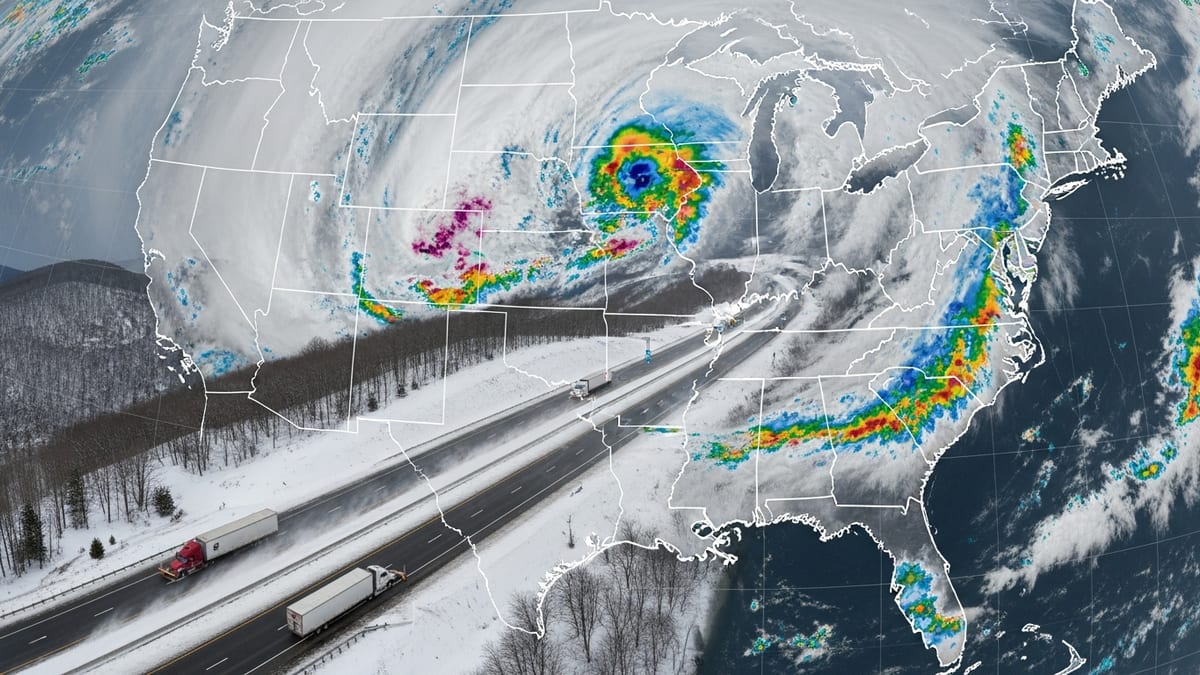
Severe Storms Trigger Sudden Halt at Major U.S. Hub
Publicly available FAA traffic management data show that operations into Chicago O’Hare shifted into disruption mode Sunday morning as thunderstorms swept across northern Illinois, prompting a ground stop that temporarily froze arrivals and departures at the airport.
The FAA’s national operations status page indicated a traffic management program for O’Hare tied to weather and thunderstorms, with arrival rates cut and delays growing as storms moved through the Chicago area. Separate real-time status information for the airport highlighted that general departure schedules were affected as arriving flights were metered into the already constrained airspace.
Local broadcast coverage in Chicago reported that a ground stop was in place early Sunday after storms moved over the metro area, with travelers urged to check with their airlines for the latest flight status. These local reports aligned with independent flight-tracking dashboards and airspace disruption trackers that flagged a formal ground stop at O’Hare beginning in the early morning hours and contributing to a sharp rise in delay times.
While some flights continued to hold in the air or divert to alternate airports, the primary impact fell on aircraft and passengers waiting to depart for Chicago from other parts of the United States and Canada, as departures bound for O’Hare were paused or significantly delayed.
Delays Climb as Ground Stop Ripples Through National Network
According to summaries of FAA operations information and third-party airspace monitoring tools, delay figures at O’Hare rose rapidly once the ground stop took hold. Average inbound delays pushed well beyond standard 15-minute thresholds, and some routes into Chicago experienced waits that stretched past an hour as airlines attempted to re-sequence flights into the reduced arrival stream.
The FAA’s publicly available command center data for Sunday listed Chicago O’Hare among the airports under formal traffic management programs, with noted weather and thunderstorms as the primary constraint. Historical advisory records from earlier this summer show that ground stops at O’Hare can quickly lead to cumulative delays impacting hundreds of flights, a pattern that appeared to be echoed in Sunday’s disruption.
O’Hare’s role as a top connecting hub magnified the effect. Passengers on domestic and international connections encountered missed links and extended airport stays as aircraft arrived late, crews timed out, and downstream flights waited for both passengers and planes to reposition. Even after the strict ground stop parameters began to ease, the residual impact continued to show up as rolling delays across the day’s schedule.
Digital notice boards and airline apps reflected the turbulence, with a growing share of departures listed as delayed due to weather or air traffic control programs. For many travelers, the distinction between local storm conditions in Chicago and national airspace management decisions was largely academic; the immediate reality was a day of uncertain departure times and crowded gate areas.
Weather, Capacity and a Busy Summer Converge at O’Hare
Sunday’s ground stop arrived in the middle of an already intense summer for Chicago aviation. Earlier this year, federal notices and FAA scheduling documents warned that planned flying levels at O’Hare for the Summer 2026 season would exceed the airport’s practical capacity during peak periods, increasing the need for traffic management tools such as ground delay programs and, at times, ground stops.
Public documents describing federal schedule coordination efforts at O’Hare noted that on-time performance had slipped in recent seasons as airlines boosted operations, with the airport handling more than 3,000 flights on the busiest days. In those filings, the FAA outlined concerns that overscheduling could fuel extended delays whenever storms or other constraints reduced the usable arrival and departure rates.
Sunday’s storms fit squarely into that risk profile. With strong weather cells moving through at a time of high planned traffic volume, air traffic managers reduced arrival capacity for safety and spacing, and the ground stop became a tool to prevent excessive airborne holding and congestion in the skies over the upper Midwest.
The combination of heavy summer schedules and convective weather has already produced several notable delay days at O’Hare this season, and the latest event underlined how quickly the system can tip from manageable slowdowns into broader disruption when storms align with peak demand.
Passengers Face Cancellations, Diversions and Lingering Disruptions
Publicly accessible flight-tracking and airport information sites showed that, as the morning progressed, airlines began to cancel a portion of their Chicago flights outright rather than operate significantly delayed services into an already congested hub. Some aircraft diverted to nearby airports when holding patterns became untenable, while others waited on the ground at their departure cities for clearance to proceed.
Travelers passing through O’Hare and regional airports feeding into Chicago took to social media and aviation forums to describe extended waits on tarmacs and in terminals, as well as last-minute gate changes and rebookings. Many accounts referenced notices from flight crews and airline apps attributing the disruptions to a ground stop and weather-related air traffic control restrictions affecting O’Hare.
Even after the most intense thunderstorms moved away from the immediate airport area, recovery was slow. Airlines needed time to reposition aircraft and crews, and to work through backlogs of passengers who missed earlier connections. Based on patterns seen in previous O’Hare disruption days documented in FAA and airline records, similar weather-triggered ground stops can lead to knock-on effects that persist well into the evening, and in some cases into the next day’s schedule.
Publicly available guidance from aviation agencies continues to emphasize that travelers should monitor their airline’s digital channels closely on days when storms intersect with major hubs like O’Hare, since flight-specific information on cancellations, rebookings and baggage handling is controlled by the carriers rather than by airport or federal operations dashboards.
What Sunday’s Event Signals for the Remainder of Summer Travel
Sunday’s ground stop again placed a spotlight on the balance between capacity and demand at one of the country’s most important aviation nodes. Federal scheduling notices issued earlier this year pointed out that, even with recent airfield improvements, O’Hare’s performance remains highly sensitive to summer thunderstorms, and that periods of overscheduling can exacerbate delays when weather or other constraints appear.
Policy materials released in recent months described a set of measures designed to rein in peak-hour operations and encourage airlines to smooth their schedules. The documents cited analysis showing that a large share of O’Hare’s delays can be traced to a relatively small number of weather-impacted days, when intense traffic meets reduced runway and airspace capacity.
As airlines and regulators work through the remainder of the Summer 2026 season, observers will be watching how often tools such as ground delay programs and ground stops are deployed at O’Hare when storms line up with heavy schedules. The weekend disruption illustrated how quickly such measures can transform from an abstract line in aviation data to a very tangible experience for tens of thousands of travelers trying to move through a single hub on a stormy day.
For now, publicly accessible FAA operations pages and the Chicago aviation department’s traveler information portals remain key resources for monitoring the status of O’Hare, particularly on days when forecast maps show thunderstorms building across the region.
FAA National Airspace System Status
FAA Chicago O’Hare Airport Status Page
CBS Chicago: Sunday morning storms prompt ground stop at O’Hare