


More news on this day
Major airports across Asia reported cascading disruption this week, with publicly available flight-tracking data showing 97 cancellations and 1,343 delays affecting services in and out of hubs including Kuala Lumpur, Jakarta, Tokyo, Beijing and New Delhi.
Get the latest news straight to your inbox!
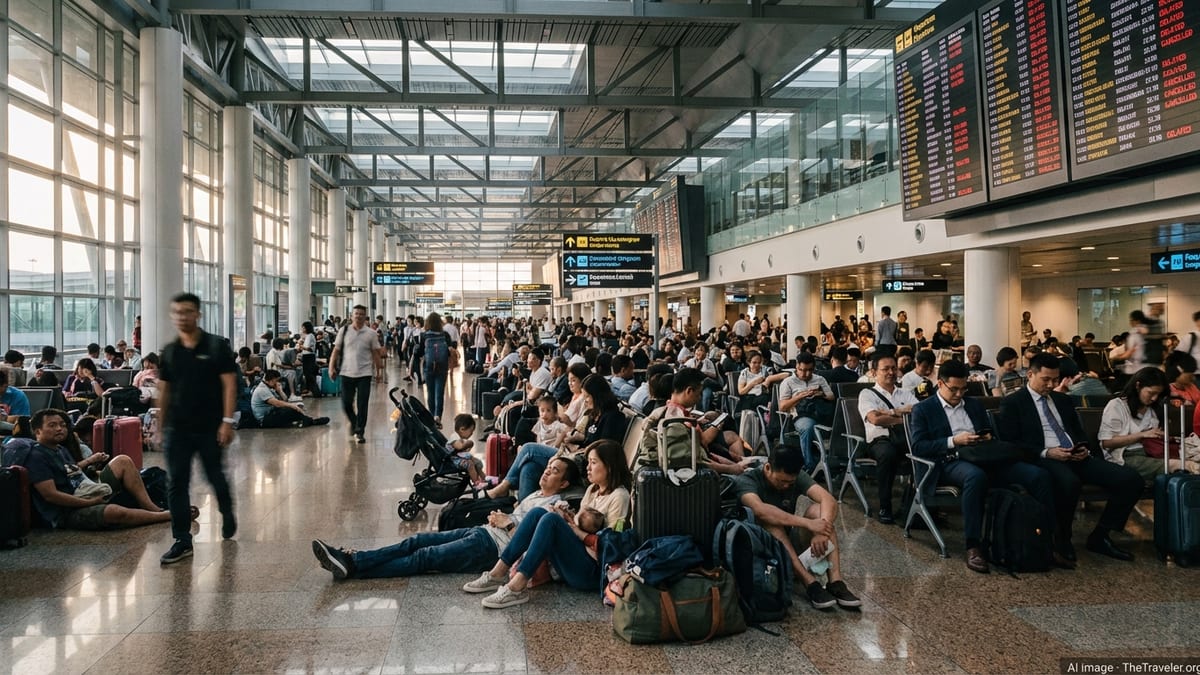
Widespread Disruption at Key Asian Hubs
Operational data compiled from multiple aviation tracking platforms indicates that the latest wave of disruption has hit some of Asia’s busiest gateways, including Kuala Lumpur International Airport, Jakarta Soekarno Hatta, Tokyo’s Haneda and Narita, Beijing Capital and New Delhi’s Indira Gandhi International Airport. A combined 97 flights were reportedly cancelled across the region, while more than 1,300 departures and arrivals ran late, creating knock-on delays that extended well beyond the affected cities.
The disruption has particularly impacted short and medium haul carriers that rely on dense schedules and quick turnarounds. Airlines such as AirAsia, Batik Air, ANA Wings, Air China and SpiceJet experienced a mix of outright cancellations and rolling delays, according to publicly available airport boards and tracking services. Passengers reported missed connections across Southeast and East Asia as aircraft and crew were left out of position for subsequent rotations.
Because many Asian hubs operate near capacity during peak periods, even a relatively modest number of cancellations can create significant congestion. Aviation analysts note that once departure banks are disrupted at large transfer airports, late arriving flights can quickly cascade into missed onward services, extended ground holds and crew duty-time limitations that further constrain operations.
Weather and Operational Strains Drive Cancellations
Recent weeks have seen severe weather compound existing operational pressures on airlines in Japan, China and Southeast Asia. Published coverage from regional outlets described how tropical systems tracking across the western Pacific brought heavy rain and strong winds to parts of Japan, prompting hundreds of cancellations by major Japanese carriers and their regional affiliates. In earlier weather events this month, carriers including All Nippon Airways and Japan Airlines collectively scrubbed several hundred flights over a multiday period as storms approached Okinawa and moved toward Kyushu and central Japan.
Similar patterns have been observed in China, where recent days of intense rainfall and thunderstorms around major hubs such as Beijing, Shanghai and Guangzhou triggered extensive delays and dozens of cancellations. Aviation data cited in industry reporting for mid June showed hundreds of delayed flights and well over two hundred cancellations in a single day at Chinese gateways, underscoring the vulnerability of dense domestic networks to localized weather disruptions.
In Southeast Asia, Malaysia and Indonesia have faced a mix of heavy seasonal showers and operational challenges. Low cost carriers operating out of Kuala Lumpur and Jakarta have, in recent months, already been reported to reschedule or cancel selected services for a combination of weather, aircraft maintenance and broader network adjustments. When fresh storms or congestion emerge, these networks can quickly reach a breaking point, with airlines forced to consolidate lightly booked flights or trim frequencies to restore punctuality.
Low Cost Carriers Under Pressure in Malaysia and Indonesia
Low cost carriers centered on Kuala Lumpur and Jakarta have been among the most visible faces of the current disruption. AirAsia and its affiliated brands, along with Batik Air, operate dense point to point networks that depend on aircraft spending as many hours in the air as possible each day. Publicly available reports over the past several weeks have highlighted individual long delays and ad hoc cancellations from these carriers, particularly on routes linking Malaysian and Indonesian cities with China and other regional destinations.
In May, for example, local Malaysian coverage described an extended delay of nearly two days for an AirAsia X service between Shanghai and Kuala Lumpur after an operational issue required additional technical checks. Separate consumer reports and online postings this month have referred to cancellations and schedule changes on certain AirAsia routes in response to shifting demand and geopolitical considerations. While these instances are not directly tied to the latest one day snapshot of 97 cancellations and 1,343 delays, they underscore the pressure on airlines already working with tight margins of safety in fleet utilization.
In Indonesia, Batik Air and other carriers serving Jakarta have been contending with similar constraints. Jakarta’s status as a primary domestic hub means that any disruption there tends to ripple outward into secondary airports. As aircraft and crews arrive late into Jakarta because of upstream weather or congestion, subsequent departures can be delayed, contributing to the build up of late running flights recorded in regional data this week.
Storm Impacts and Schedule Adjustments in Japan
Japan’s domestic and regional networks, including services operated by ANA Wings and other subsidiaries, have been repeatedly tested by early season tropical systems. At the beginning of June, a named storm passing near Okinawa and moving toward Kyushu led to widespread cancellations at Naha, Ishigaki and Miyako airports. Japanese and regional media reported that major carriers removed hundreds of flights from their schedules between June 1 and June 3, with additional disruption on certain mainland routes as the weather system tracked northeast.
As Japan’s storm season progresses, airlines have been publishing advisories urging passengers to monitor the status of domestic flights closely and to allow additional time for transfers at Tokyo and Osaka. Operational notices posted in mid June show that carriers continue to adjust selected services on short notice when forecasts call for deteriorating conditions, especially at coastal and island airports. Regional operators such as ANA Wings, which connect smaller cities to major hubs, can be particularly affected when crosswinds or low visibility make approaches unsafe for turboprop and small jet aircraft.
These pre emptive cancellations are designed to keep safety margins intact, but they can also contribute to the sort of aggregate numbers seen in the latest disruption figures. When multiple days of weather induced schedule changes are combined with normal seasonal traffic and tight crew rosters, even relatively contained storms can lead to a measurable spike in cancellations and delays across Japanese airports.
Chinese and Indian Hubs Grapple With Congestion
In China, Beijing and other key hubs have been at the center of the latest wave of irregular operations. Industry focused reporting for June 16 highlighted that major Chinese carriers, including Air China and China Eastern, logged thousands of delays and close to three hundred cancellations across the country’s primary airports in a single day. Beijing Capital in particular recorded more than four hundred delayed flights and several dozen outright cancellations, adding strain to an already congested airspace environment.
These figures feed into the broader regional pattern reflected in the 97 cancellations and 1,343 delays across Asia. With Beijing serving as both an origin and a transfer point for flights to Southeast Asia and India, prolonged delays there can reverberate through schedules at airports such as Kuala Lumpur and New Delhi. Aircraft arriving several hours late into Southeast Asian or South Asian hubs often cannot turn around quickly enough to operate their next sectors on time, creating fresh delays for passengers who may never pass through China themselves.
New Delhi has faced its own pressures as Indian carriers and foreign airlines navigate a combination of strong demand, evolving airspace restrictions in parts of West Asia and persistent infrastructure constraints. Recent advisories and media coverage have documented schedule retimings and occasional cancellations by Indian airlines as they juggle long haul and regional operations. Carriers such as SpiceJet, which already operate on lean fleets, are particularly susceptible when a single aircraft goes out of service or arrives late, leaving limited capacity to absorb additional disruptions.
The convergence of weather, airspace and operational pressures at these major Chinese and Indian hubs helps explain why a day of disruption measured in fewer than one hundred outright cancellations can still produce over a thousand delayed flights across Asia. In such a tightly interconnected system, relatively small disturbances in one market can quickly amplify into region wide travel headaches.