


More news on this day
Multiple rail cars ended up off the tracks near Monmouth after a freight train derailment, disrupting service through the area and prompting a large response from emergency and railroad crews, according to early regional news reports.
Get the latest news straight to your inbox!
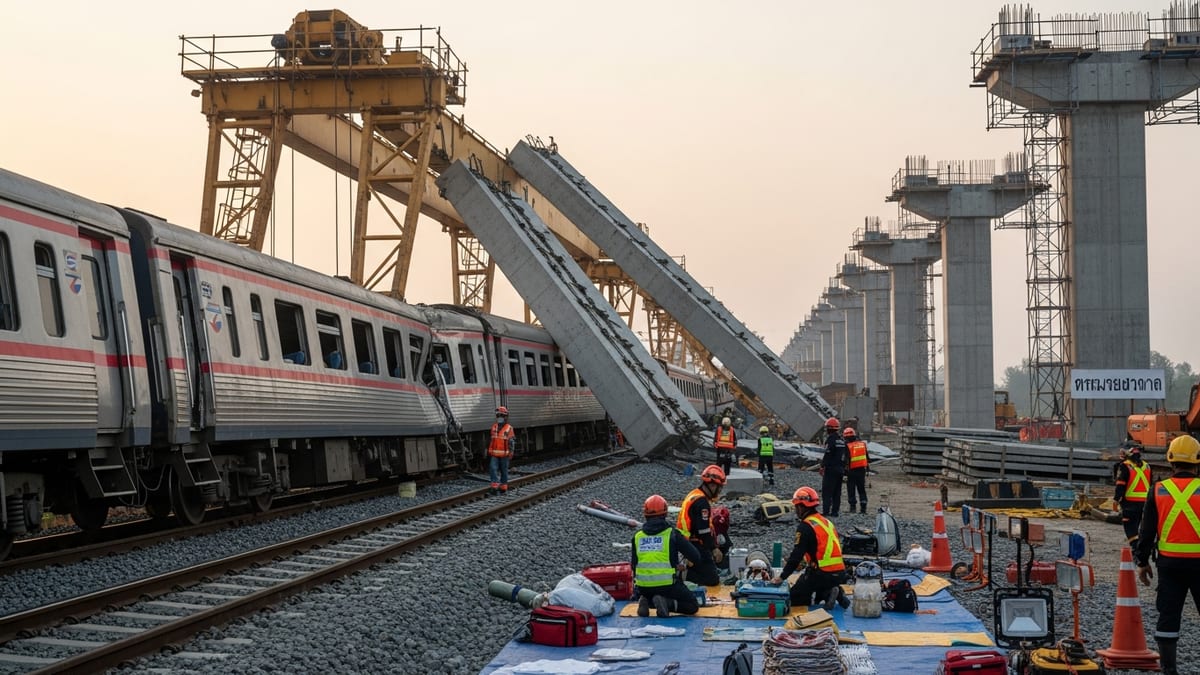
Derailment sends several cars off the tracks
Initial coverage from regional outlets describes a freight consist traveling through the Monmouth area when a portion of the train left the rails, leaving multiple cars on the ground beside the right of way. Images shared by local media and on social platforms show cars tipped or lying on their sides, with a visible jumble of wheels and undercarriage equipment along the ballast.
Reports indicate that the incident occurred along a stretch of track used regularly by both freight and, at times, connecting passenger services, heightening concern about potential disruption. Early accounts suggest that the locomotives remained upright while a block of cars in the middle or rear section of the train derailed.
As of the latest publicly available information, there have been no widely reported serious injuries. Coverage so far focuses on the scale of the derailment, the condition of the equipment, and the immediate operational impact on rail traffic in and around Monmouth.
Rail personnel and contractors moved into the area quickly, with heavy machinery visible at the site to support rerailing work and debris removal. Given the number of cars involved, observers expect the scene to remain active for much of the day and possibly into subsequent days.
Safety and hazardous material concerns under review
Any modern freight derailment raises questions about hazardous materials, even before specific cargo details are confirmed. In the Monmouth incident, early descriptions of the cars involved appear to show a mix of standard freight equipment that can include boxcars, covered hoppers, and tank or flat cars. Publicly available information so far has not indicated a large-scale hazardous release at the scene.
Nearby residents and motorists reported seeing emergency vehicles staging around the site, a common precaution when train cargo has not yet been fully identified. In similar derailments around the United States, responders typically establish monitoring for air quality and runoff, and that pattern appears to be guiding the response near Monmouth as well.
Railroads routinely move commodities ranging from grain and construction materials to fuels and industrial chemicals, so verification of what each derailed car was carrying is a standard part of the post-incident checklist. According to published coverage of other recent derailments, such as events in the Midwest and Mountain West, rail operators now emphasize public statements about cargo and containment to address community concerns about health and environmental risk.
At this early stage, available reports on the Monmouth derailment focus more on the visible mechanical damage and traffic disruption than on any confirmed contamination, suggesting that responders are treating the scene as a controlled but serious operational incident.
Rail traffic disruptions and local travel impacts
With several cars off the tracks, rail traffic through the Monmouth area faces delays and potential rerouting. Freight trains moving along the affected corridor may be held at sidings, detoured over alternative lines where possible, or rescheduled to move once track and signal inspections are complete. Published accounts of comparable derailments show that mainline closures can range from hours to multiple days depending on the extent of track damage.
Road travel near the site is also affected. Early footage and reports suggest that level crossings closest to the derailment were blocked as responders staged equipment and as railcars remained scattered near or across access points. Local drivers are being directed to alternate routes while crews work and until railroad personnel clear any obstructions from the roadway approaches.
Businesses and residents who rely on rail for inbound materials or outbound shipments could face short-term logistical challenges, echoing patterns seen after other recent freight derailments elsewhere in the country. In those cases, shippers temporarily shifted loads to trucking or adjusted production schedules while rail carriers restored normal operations.
Once wreckage is cleared, track infrastructure, signaling, and communications systems typically undergo multiple inspections and test runs before full-speed operations resume. That process is likely to shape the timeline for reopening the line near Monmouth.
Early focus on track conditions and train makeup
The cause of the Monmouth derailment has not yet been formally outlined in public reports, but early technical attention often centers on a familiar set of factors, including track condition, rail defects, equipment failures, and train handling. Federal investigations of prior derailments across the United States have documented instances where broken rails, faulty wheels, or misaligned switches contributed to cars leaving the tracks.
Modern freight trains can stretch well over a mile and include a mix of loaded and empty cars, which affects how forces are distributed along curves, gradients, and through junctions. Safety analyses of earlier incidents note that heavier loaded cars combined with lighter empties can increase the likelihood of cars “stringlining” or “buckling” under certain conditions, especially if a rail flaw or track geometry problem is present.
In addition to physical evidence at the scene, investigators typically review data from locomotive event recorders and wayside detectors placed along the route. These systems monitor speed, braking, and mechanical issues such as hot bearings or dragging equipment. The same approach is expected to guide the technical review of what happened near Monmouth.
Rail safety advocates point to derailments like this one as reminders of the ongoing need for investment in track maintenance, inspection technology, and crew training, even in locations that have long histories of heavy rail traffic without major incidents.
Community response and next steps
Community reaction around Monmouth reflects a blend of concern and cautious relief, with early information suggesting limited injuries despite the number of cars on the ground. Residents have turned to local news outlets and municipal channels for updates on road closures, any recommended precautionary measures, and estimates of how long cleanup might last.
Railroads commonly coordinate debris removal, track repair, and environmental assessment with regional and state agencies, and that cooperative framework is expected to shape the response here. Once the line is cleared and temporary repairs are complete, longer-term work may follow, including replacement of damaged rail, ties, and ballast and the inspection of nearby bridges or culverts.
Publicly available information on similar derailments indicates that formal findings on probable cause can take months, especially when metallurgical testing or complex simulations are involved. In the meantime, the Monmouth derailment is likely to remain a point of discussion in the broader conversation about freight rail safety, infrastructure resilience, and the communities that host some of the country’s most heavily used rail corridors.
For travelers and residents in the region, the key issues in the coming days will be the pace of cleanup, the restoration of reliable rail service, and assurances that any lessons from this latest incident are incorporated into day-to-day operations along the line.