


More news on this day
Hundreds of passengers remained marooned at Hartsfield-Jackson Atlanta International Airport on July 4 as thunderstorms, airspace restrictions and peak holiday traffic combined to derail flight schedules and trigger cascading delays for Delta, Frontier, United, American, JetBlue and other carriers across North America and on transatlantic routes.
Get the latest news straight to your inbox!
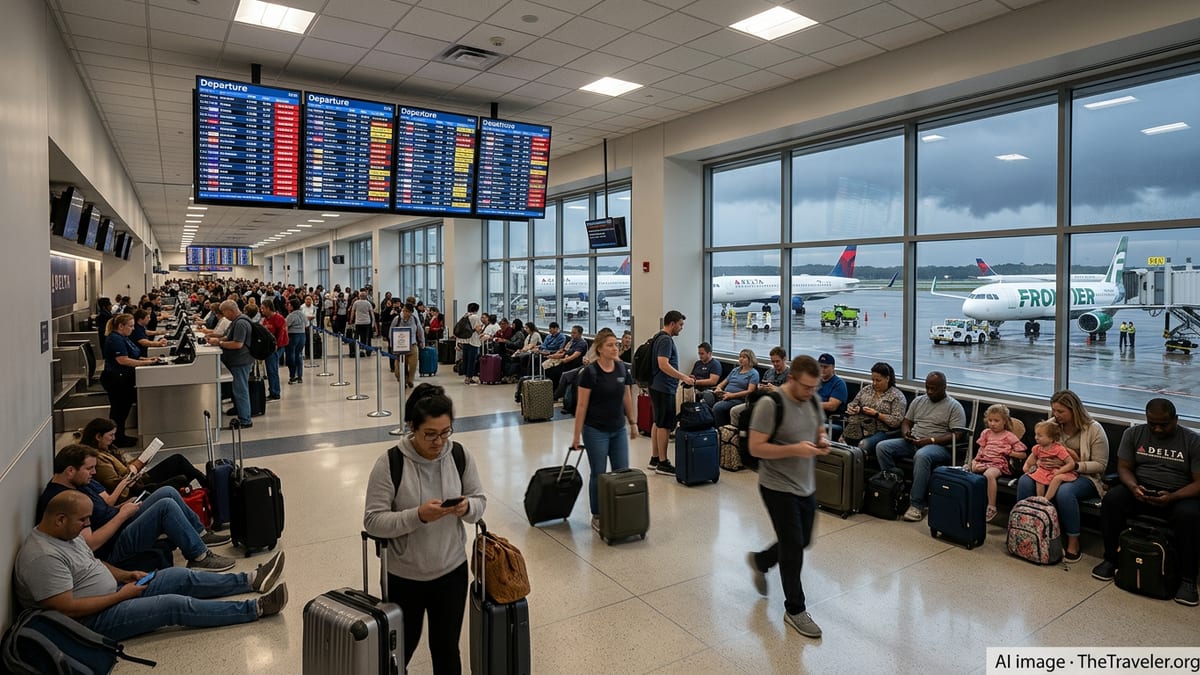
Atlanta Ground Delays Ripple Across Carriers and Routes
Publicly available aviation data for July 4 show Hartsfield-Jackson Atlanta, the world’s busiest airport by passenger volume, struggling under a combination of summer storms and record holiday demand. A Federal Aviation Administration ground delay program into Atlanta led to average departure holds of around 100 minutes for flights heading to the Georgia hub, sharply reducing the airport’s ability to process arrivals and departures efficiently.
Delta Air Lines, which uses Atlanta as its primary hub, was among the most heavily affected carriers. Tracking dashboards and airport status pages indicate that dozens of Delta-operated departures and arrivals into Atlanta were delayed well beyond scheduled times, complicating connections for travelers heading onward to destinations in the United States, Canada and Europe. Regional partners operating under Delta’s brand added to the disruption as late inbound aircraft and crew scheduling challenges compounded weather problems.
Other major airlines, including American, United, Frontier and JetBlue, also reported delayed services into and out of Atlanta. With the airport functioning as a central connection point for travel throughout the eastern United States, any interruption in the flow of aircraft quickly translated into long lines at gate areas and crowded concourses as passengers waited for updated departure times and rebooking options.
By midafternoon, reports from real time flight trackers indicated that more than 200 flights had been delayed and at least a dozen had been cancelled across major U.S. hubs, with Atlanta among the airports experiencing some of the longest average delays. Passengers arriving from secondary cities frequently missed onward connections, leaving many to seek overnight accommodation or alternate routings through other hubs.
Holiday Travel Surge Collides With Stormy Weather
The disruption at Hartsfield-Jackson unfolded against the backdrop of one of the busiest travel periods of the year. Airport planners expected well over 300,000 passengers to pass through the Atlanta terminal complex over the Independence Day weekend, part of a wider national surge in air travel as leisure demand remained strong into the summer peak.
Thunderstorms moving through the Southeast on July 3 and into the early hours of July 4 forced temporary ground stops and subsequent flow-control measures at Atlanta and other regional airports. These weather systems reduced arrival rates into the hub and triggered knock-on delays as aircraft repositioning and crew duties fell out of sequence. Even after the most severe weather moved away, residual congestion left airlines working through backlogs of aircraft awaiting takeoff or arrival slots.
This pattern mirrored broader conditions across the United States, where aviation data on July 4 pointed to more than 300 cancellations and several thousand delays nationwide. Airports in Illinois, Florida, California and the mid-Atlantic region all registered elevated disruption, illustrating how local storms and airspace constraints in one part of the system can quickly affect travelers thousands of miles away.
For many passengers, the timing of the disruption amplified the impact. Families and vacationers starting long-planned trips over the extended weekend often had limited flexibility to shift dates, and available seats on alternative flights were constrained as planes operated close to capacity at the height of the holiday rush.
International Networks to Europe and the Caribbean Affected
Atlanta’s role as a major gateway to Europe and the Caribbean meant that delays radiating from the hub quickly spread to airports across multiple regions. Flights between Atlanta and major European cities including London, Frankfurt, Paris, Madrid and Istanbul encountered significant schedule disruptions, according to live departure and arrival boards monitored on the evening of July 4.
Some transatlantic services pushed back from gates hours behind schedule, while others departed close to on time but arrived late because of flow restrictions along key routes and congestion during approach sequences into busy European hubs. Travelers originating in U.S. and Canadian cities and connecting in Atlanta for onward flights to Europe faced a heightened risk of missed connections and forced rebookings onto later services.
Caribbean and Atlantic island destinations also experienced knock-on effects. Publicly available status pages for hubs such as San Juan’s Luis Muñoz Marín International Airport showed dozens of delays and several cancellations, particularly on JetBlue and Frontier routes, with additional disruption recorded on American, Delta and United operations. Many of these flights were linked to the broader U.S. network, so bottlenecks at Atlanta and other mainland hubs contributed to rolling delays throughout the day.
Travelers heading to resort destinations across the region frequently found themselves waiting in crowded departure lounges as crews and aircraft arrived out of rotation. With aircraft utilization schedules tightly packed during the peak season, a single extended delay on one leg often left the same plane arriving late at its next departure city, perpetuating the cycle of disruption into the evening.
National System Strain From Weather and Airspace Restrictions
The situation at Atlanta formed part of a wider pattern of holiday-weekend problems in the United States air transport system. Aviation monitoring platforms on July 4 cited a mix of strong thunderstorms, heavy traffic volumes and temporary flight restrictions as key contributors to nationwide delays and cancellations.
In the Washington, D.C. region, one of the most significant bottlenecks emerged at Ronald Reagan Washington National Airport, where operations were temporarily suspended into the night because of airspace restrictions and military flyovers linked to Independence Day commemorations. This closure forced diversions and schedule changes across multiple carriers, adding further stress to an already stretched network and complicating connections for passengers traveling through other hubs, including Atlanta.
Elsewhere, major airports such as Chicago O’Hare and key Florida gateways also reported elevated delays and cancellations tied to storms and traffic management initiatives. Combined with local operational challenges, including aircraft maintenance issues and crew duty-time limits, these factors created the conditions for rolling disruption across domestic and international routes.
Industry data from earlier in the year show that airlines have continued to operate their schedules with little spare capacity, particularly at large hubs. This lean approach can help maximize efficiency when conditions are normal, but it also reduces flexibility when unexpected weather or airspace constraints arise, making it more likely that a problem in one city will quickly spread across multiple regions.
What Stranded Passengers Are Being Advised to Do
For travelers caught in the disruption at Hartsfield-Jackson and other affected airports, publicly available guidance from airlines and aviation agencies emphasizes the importance of monitoring flight status closely and making use of digital tools. Most major carriers are encouraging passengers to use mobile apps and websites to rebook flights, adjust itineraries or request travel credits, which can reduce the need to wait in lengthy airport service lines.
Many airlines have also issued flexible travel policies around the July 4 period, allowing customers headed into affected hubs such as Atlanta to change travel dates or reroute without additional change fees under specified conditions. Travelers whose flights have been cancelled outright may be offered refunds or re-accommodation on the next available departures, though limited seating during the peak season can mean extended waits for open seats.
Consumer advocates commonly recommend that passengers whose trips involve critical connections, international segments or cruise departures build additional buffer time into itineraries when severe weather is forecast. Travel insurance policies that specifically cover delays and missed connections can also provide some financial protection for accommodation, meals and alternative transport costs when schedules unravel.
As airlines and airports work through the July 4 backlog, operational data suggest that recovery may continue into the weekend, particularly on long-haul and high-demand leisure routes. Travelers planning to pass through major hubs such as Atlanta in the coming days are being urged by public travel advisories and airline bulletins to check status early and often, arrive at airports well in advance of departure times and prepare for potential last-minute changes.