


More news on this day
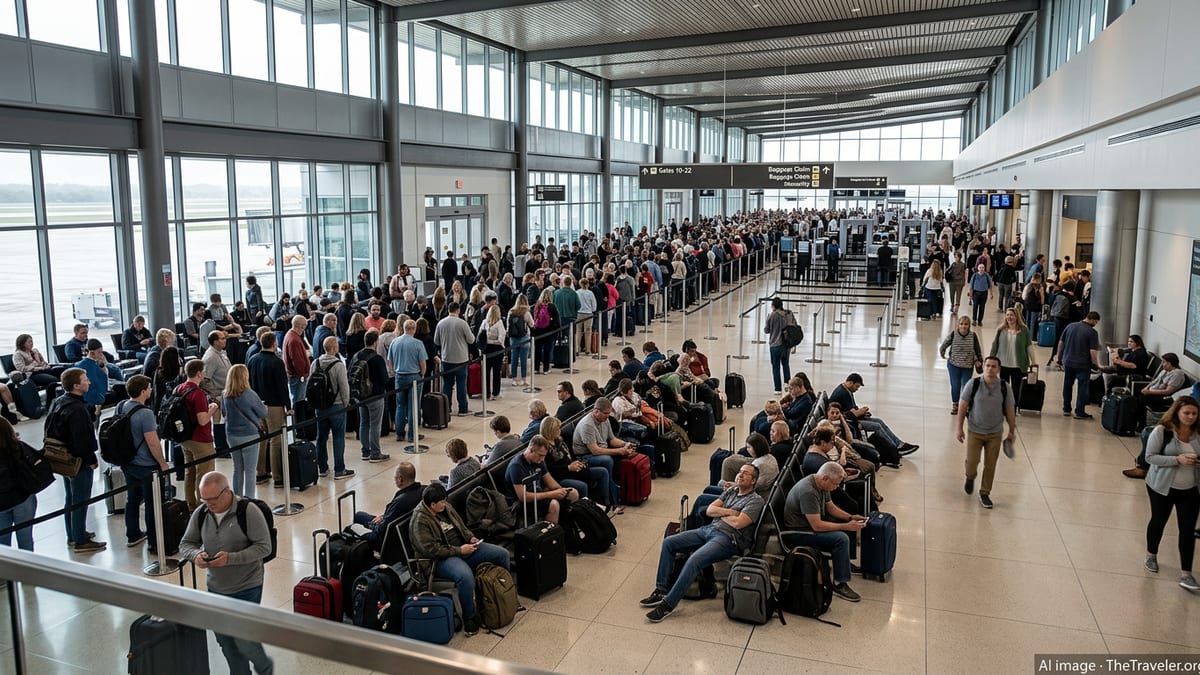
Travelers moving through Austin-Bergstrom International Airport on June 12 are facing mounting disruptions as flight tracking data shows 99 delays and three cancellations linked to routes touching the Texas capital, with problems radiating across Dallas, Houston, Chicago, New York and other major US cities.
Get the latest news straight to your inbox!
Weather And Congestion Drive A New Day Of Disruption
Publicly available aviation data for June 12 indicates that operations involving Austin-Bergstrom International Airport have become entangled in a wider pattern of interference across the national air network. While Austin itself is functioning, flights connecting the airport with major hubs in Texas and the Midwest are being slowed by weather-related congestion and operational knock-on effects rather than a single localized failure.
According to flight status boards and delay trackers, the 99 delayed flights and three cancellations associated with Austin routes are primarily concentrated among large domestic carriers including Southwest Airlines, American Airlines, Delta Air Lines and United Airlines. Regional affiliates and a handful of smaller carriers are also affected as their schedules depend on the same aircraft and crew rotations feeding the largest hubs.
The pattern is consistent with a cascading disruption: storms and congestion in one region complicate traffic flows nationally, leading to late inbound aircraft, missed connections and aircraft reassignments. Once those issues reach high-volume airports such as Dallas-Fort Worth, Chicago O’Hare and the New York area, smaller spokes like Austin experience secondary delays even when local conditions appear manageable.
Travelers in Austin are encountering typical symptoms of such a systemwide event, including rolling departure time changes, gate swaps and longer-than-usual waits for both check-in and baggage. Airport and airline websites, as well as third-party tracking platforms, are advising passengers to monitor their flights closely and build extra time into today’s travel plans.
Chicago And New York Amplify Nationwide Ripple Effects
The latest figures for June 12 show that Chicago-area airports, particularly O’Hare, are among the largest contributors to cancellations and delays across the country. Published coverage points to thunderstorms and unstable weather around Chicago, which routinely ranks among the busiest aviation hubs in the United States and therefore plays a disproportionate role in nationwide traffic patterns.
When a large share of cancellations and extended arrival holds originate in Chicago, disruptions quickly spill over into other major markets. Routes linking Austin to Chicago and onward to the East Coast encounter both crew timing complications and gate bottlenecks, slowing the return of aircraft needed for later departures out of Texas.
The New York metropolitan area, served by several international gateways, is also experiencing slower operations and a rise in departure and arrival delays. For Austin passengers booked on itineraries that include connections in New York, this creates additional uncertainty about missed connections and same-day rebooking options, particularly on already crowded afternoon and evening flights.
Such pressure on Chicago and New York tends to squeeze capacity on long-haul domestic sectors. As a result, disruptions affecting a relatively small number of Austin-originating flights can quickly multiply, affecting travelers whose journeys begin in other cities but rely on Austin as a through-point or final destination.
Texas Triangle Hubs Struggle To Absorb Schedule Shocks
Within Texas, the interconnected hubs of Austin, Dallas and Houston form one of the country’s densest domestic aviation corridors. Dallas-Fort Worth International and Dallas Love Field function as key centers for American Airlines and Southwest Airlines respectively, while Houston’s airports play a central role for United Airlines. Any instability at these hubs tends to affect Austin more quickly than disruptions occurring further afield.
Recent weeks have already highlighted how storms and heavy traffic in North Texas can lead to short-notice ground stops and diversions, with some flights rerouted to Austin when Dallas traffic exceeds safe or manageable thresholds. Today’s figures indicate that while Austin’s own operations remain constrained but functional, delays propagating from Dallas and Houston are contributing to the 99 delayed flights tied to Austin’s schedule.
Operationally, this manifests in tight aircraft turnarounds, late-arriving crews and shuffled gate assignments as airlines attempt to keep key trunk routes open. For passengers, it translates into uneven wait times, particularly for services connecting Austin with Dallas-Fort Worth, Love Field and Houston Intercontinental, where aircraft may already be arriving behind schedule from earlier rotations.
For carriers such as Southwest, American, Delta and United, the challenge is balancing recovery at heavily used hubs with the need to maintain service to mid-sized markets like Austin that depend on reliable connections to the rest of the country. The concentration of delays on routes within the Texas Triangle underscores how critical these corridors are to overall network stability.
Major Carriers Face Operational Strain Across Networks
The disruption numbers touching Austin are part of a broader nationwide picture in which hundreds of flights are delayed and well over a thousand have been cancelled across the United States today. Flight statistics show that large network airlines are absorbing the majority of the impact, in part because of their reliance on complex hub-and-spoke systems.
Southwest Airlines, with its substantial presence at Dallas Love Field, Houston Hobby and Austin-Bergstrom, is particularly exposed when storms or congestion affect any portion of its Texas operations. American Airlines remains closely tied to Dallas-Fort Worth and the East Coast, while United Airlines’ exposure stems from activity in Houston and other hub cities. Delta Air Lines faces pressure through its nationwide hub network when conditions deteriorate around Chicago and the Northeast.
Because these carriers operate extensive connecting banks, a single delay on a morning departure can echo through the rest of the day’s schedule. Aircraft and crews arriving late into Austin from Chicago, Dallas, Houston or New York may not be turned quickly enough to protect subsequent flights, compounding the count of affected departures and arrivals and contributing to the 99 delays reported for Austin-linked routes.
Published data and historical patterns suggest that airlines typically prioritize stabilizing their largest hubs first, which can lead to longer recovery times for secondary airports. Austin’s status as a fast-growing but still mid-sized hub means that schedules may take several hours to normalize once major disruptions begin to ease elsewhere in the network.
What Travelers Through Austin And Other Hubs Can Expect
For passengers traveling today through Austin-Bergstrom or connected hubs in Dallas, Houston, Chicago and New York, publicly available information points to a challenging but navigable situation. Many flights are still operating, but departure and arrival times are less predictable than usual, and same-day rebooking options may be limited on the most popular routes and time slots.
Travel data suggests that the heaviest impacts are concentrated during peak banks in the late morning and late afternoon, when the highest number of connecting passengers move through major hubs. As the day progresses, airlines often attempt to consolidate lightly booked flights and reposition aircraft to restore balance, which can help reduce but not entirely eliminate delays.
Passengers departing Austin are likely to see the clearest effects on flights to Chicago, New York and key Texas Triangle cities, particularly when those routes rely on aircraft coming from already strained hubs. Travelers booked on evening services may experience rolling schedule adjustments as airlines work to absorb the backlog created earlier in the day.
Based on current patterns, a full return to normal operations across the affected networks may extend into the late-night and early-morning hours, as carriers reposition aircraft and crews for the next day’s schedules. For now, the 99 delays and three cancellations involving Austin routes underscore how quickly local travel plans can be affected by weather and congestion hundreds of miles away.